


Increasing Whiteness from 75 to 92: A Plan to Improve the Whiteness of Quartz Sand
Increasing the whiteness of quartz sand from 75 to 92 is a significant leap, and it is difficult to achieve through any single process step alone.The greatest challenge in this range lies in process coordination—if iron and titanium are not thoroughly removed, whiteness cannot be improved; if acid washing is excessive, particle size cannot be maintained. The core logic of a comprehensive quartz sand whiteness improvement plan can be summarized in four points.
What Are the Challenges in Raising Whiteness from 75 to 92?
When inspecting slab-grade sand, a whiteness of 92 degrees versus 93 degrees—a difference of just 1 degree—can mean one batch is rejected while the other passes. The price difference is significant, and the order is not necessarily guaranteed. This is why the process must be stabilized when raising whiteness from 75 degrees to 92 degrees.
The 75-degree mark is a bit of a catch-22. It\'s not exactly low, but it\'s not exactly high either. It\'s slightly better than untreated raw sand, but it still falls short of the requirements for engineered quartz slabs. Many factories get stuck at 75 degrees and can\'t go any higher—the bottleneck lies in the incomplete removal of iron and titanium.
Iron exists in quartz sand in two forms: Fe₂O₃ and FeO, both of which absorb light. Even a slightly higher Fe₂O₃ content can cause whiteness to drop. If the sand you\'re working with has a whiteness of 75 degrees, the iron content may be on the high side, or titanium may be dragging it down.
Titanium is even more difficult to deal with than iron. When rutile and ilmenite are finely dispersed, they cannot be removed by magnetic separation or leached by acid washing; the only options are flotation or early tailings rejection during mineral processing.Many plants have reduced their iron content but still cannot improve whiteness; upon inquiry, it turns out that titanium is still present. When developing a plan to improve the whiteness of quartz sand from ore with high titanium content, flotation and tailings disposal must be taken into consideration.
Another issue that\'s easily overlooked is uneven particle size distribution.Iron cannot be fully removed from the coarse-grained fraction, while fine particles are washed away by the acid leaching solution, leading to a drop in yield and fluctuations in whiteness. When the particle size distribution is broad, the results for coarse and fine particles can vary significantly under the same acid leaching conditions. Therefore, a comprehensive plan for improving quartz sand whiteness must take particle size control into account.
Quartz Sand Whiteness Enhancement Plan: A Four-Step Process
To increase whiteness from 75 degrees to 92 degrees, the process logic consists of four steps: grinding and liberation, magnetic separation to remove impurities, flotation to remove silicates, and acid washing for final refinement. The sequence must not be altered; this is the basic framework of the quartz sand whiteness enhancement plan.
Step 1: Grinding and Classification
The purpose of grinding is not to achieve a fine particle size, but to ensure thorough liberation of iron minerals from quartz. Particle size control must be determined based on the distribution characteristics of the ore; if the particle size is too coarse, liberation will be insufficient, while if it is too fine, subsequent acid washing will result in significant losses.
Classification is even more critical than grinding. The particle size range must be narrowed, and coarse, medium, and fine fractions must be processed separately. If a single line currently processes all fractions together, significant fluctuations in whiteness are inevitable. By narrowing the particle size range as much as possible, acid leaching results will be much more stable.
Many plants struggle to achieve high whiteness; the problem lies not in the acid washing stage, but in the grinding and classification processes. The effectiveness of all subsequent purification stages depends on uniform particle size. This is the foundation for successfully implementing a plan to improve quartz sand whiteness.
Step 2: Magnetic Separation to Remove Strongly Magnetic Iron
For vertical-ring high-gradient magnetic separators, the magnetic field strength must be set separately for the coarse and fine grain fractions, with the fine fraction typically requiring a higher strength. If the magnetic field strength is insufficient, weakly magnetic iron minerals will not be removed and will be carried over to the acid leaching stage, resulting not only in high acid consumption but also in reduced effectiveness.
High-gradient magnetic separation, combined with subsequent acid leaching, is particularly effective for removing iron from marine-deposited quartz sand.The number of magnetic separation stages is determined by the iron content in the raw ore. Only when the magnetic separation is thorough can the acid leaching stage effectively improve whiteness. In plans to enhance the whiteness of quartz sand, the number of magnetic separation stages is not a fixed value but is adjusted based on the iron content and the form in which iron is present in the raw ore.
Step 3: Flotation to Remove Weakly Magnetic Iron and Iron-Bearing Silicates
Weakly magnetic iron minerals and iron-bearing silicates cannot be removed by magnetic separation or leaching; they must be removed by flotation. Mica has good floatability and can be recovered using amine-based cationic collectors. Iron-bearing minerals are collected using sodium petroleum sulfonate under weakly acidic conditions.
Flotation serves another purpose: aluminum reduction. The separation of feldspar and quartz is a classic challenge in flotation, but when whiteness requirements reach the 92-degree level, aluminum content must also be controlled. High Al₂O₃ content also affects whiteness.Fluoride-free flotation, conducted under neutral conditions using mixed cationic and anionic collectors, aids in reducing both aluminum and iron. In the quartz sand whiteness enhancement process, the flotation stage serves as the link between magnetic separation and acid washing.
Step 4: Acid Washing and Refining
Acid leaching is the key to making the leap from 75 degrees to 92 degrees. However, if the acid leaching system is not properly formulated, the leaching process will be ineffective.
Pure hydrochloric acid has a low dissolution rate for certain iron minerals, particularly the surface iron oxide film. Oxalic acid forms complexes with iron, while hydrochloric acid dissolves metal oxides; hydrofluoric acid corrodes the quartz surface, widening the fissures to allow the acid solution to penetrate. A mixed acid system typically yields better results than a single acid.
The acid washing temperature, duration, and acid mixture ratio must be determined through gradient tests based on the actual ore. If the temperature is too high or the duration too long, the fine-grained fraction will be excessively corroded, causing the particle size distribution to deviate. If the temperature is too low or the duration too short, the iron will not be fully removed. This balance must be determined through testing.
A calcination process is also worth considering. Gas-liquid inclusions and crystalline water within quartz particles cannot be removed by acid leaching alone; high-temperature calcination is required to shatter the inclusions and expel the moisture, which naturally improves whiteness.Calcination temperature and duration are determined based on the characteristics of the ore; cooling the material before acid washing is particularly effective for quartz sand associated with kaolin. This also serves as an effective supplement to quartz sand whiteness enhancement solutions for specific ore types.
Quartz Sand Whiteness Improvement Solutions by Industry Scenario
Different industries have varying acceptance criteria for whiteness, so the focus of quartz sand whiteness enhancement solutions also differs. The following breakdown by industry scenario facilitates comparison and reference.
Engineered Quartz Slab Industry
Slab-grade sand is sensitive to both whiteness and particle size distribution. A difference of just one grade in whiteness—such as between 92 and 93—can affect acceptance, and black spots or discolored particles can also impact grading.In the slab sand context, the key to improving quartz sand whiteness lies in a combination of scrubbing and desliming, magnetic separation and screening, flotation to remove mica and iron-containing silicates, and acid washing for refinement—all while maintaining strict control over particle size distribution.Improving the whiteness of slab sand cannot rely solely on acid washing; if magnetic separation and flotation are not performed thoroughly, and the acid washing stage is overloaded, whiteness is actually more likely to fluctuate.
Photovoltaic Glass and Ultra-Clear Glass Industries
Photovoltaic glass and ultra-white glass have strict requirements for low iron content; while whiteness is one of the appearance criteria, the core focus remains on controlling iron content.In this context, the solution for improving the whiteness of quartz sand involves prioritizing the number of magnetic separation stages and the reduction of aluminum and iron through flotation, with acid washing serving as a means of deep purification. The particle size distribution must be narrowed to prevent excessive fine powder from affecting subsequent glass melting.
Optical Glass and Electronic Glass Industries
Raw materials for optical glass have specific requirements for iron, aluminum, and titanium, with whiteness being just one of the indicators. In the optical glass context, the quartz sand whiteness enhancement plan requires placing equal emphasis on aluminum reduction via flotation and deep iron removal via acid leaching, with magnetic separation serving as a pre-treatment step before impurity removal.For ores with high mica and feldspar content, the flotation stage cannot be omitted.
Foundry Sand and Specialty Glass Sand Industries
The whiteness requirements for foundry sand and specialty glass sand are not as stringent as those for sheet glass sand and optical glass sand, but there are specific requirements for particle shape and particle size distribution.In this context, the quartz sand whiteness enhancement plan can appropriately simplify the acid washing stage, focusing instead on scrubbing to remove silt, magnetic separation to remove iron, and classification to control particle size. Increasing whiteness from 75 degrees to 92 degrees is not mandatory for all foundry sand applications; the plan should be tailored based on the final product\'s specifications.
High-Purity Quartz Sand and Silica Fume Industry
In the high-purity quartz sand and silica fume industries, purity metrics take precedence over whiteness; however, abnormal whiteness levels often indicate residual iron and titanium impurities.In this context, solutions for improving quartz sand whiteness serve primarily as supplementary guidance for the purification process. The combination of magnetic separation, flotation, acid washing, and calcination-acid leaching should be determined based on purity targets; parameters for improving whiteness in sheet metal sand cannot be directly applied here.
Reference for Process Configuration Based on Different Raw Ore Conditions
Process configurations vary depending on the conditions of the raw ore; the table below provides a general guideline. The table does not include absolute recovery rates or investment figures; specific parameters must be determined through raw ore testing.
| Ore Conditions | Initial Whiteness | Recommended Process Route | Expected Outcome |
|---|---|---|---|
| Iron consists primarily of a surface oxide film, with relatively uniform particle size | 75–80 degrees | Scrubbing and desliming → High-gradient magnetic separation → Oxalic acid + hydrochloric acid pickling | Significant improvement in whiteness |
| Contains a high proportion of mica and feldspar; iron and titanium coexist | 70–78 degrees | Magnetic separation → Flotation (fluoride-free) → Mixed-acid leaching | Whiteness can be improved to a high level |
| Fine iron distribution; contains weakly magnetic iron minerals | 72–80 degrees | Fine grinding and classification → Two-stage magnetic separation → Flotation → Mixed-acid washing | The degree of whiteness improvement depends on the degree of liberation |
| Contains organic matter or gas-liquid inclusions | 75–82 degrees | Calcination → Water quenching → Magnetic separation → Acid leaching | The direction of whiteness improvement is clear; the extent is determined by testing |
For each specific project, the number of process stages, chemical dosing regimens, and acid washing conditions must be determined based on tests conducted on the raw ore.No single solution works for all ores; the key to a quartz sand whiteness enhancement plan lies in proper matching. Raising whiteness from 75 degrees to 92 degrees cannot be achieved with a fixed set of parameters; rather, it is the result of the combined factors of the raw ore\'s properties, the process combination, and operational limits.
Key Considerations for Equipment Configuration
When aiming to achieve a whiteness level of 92 degrees, there are several pitfalls to avoid in equipment selection. The successful implementation of a quartz sand whiteness enhancement plan ultimately depends on equipment configuration and operating parameters.
In the crushing and grinding stages, contact with iron is strictly prohibited. The jaw plates of jaw crushers, the liners of ball mills, and the grinding media must be made of wear-resistant rubber, ceramic, or high-alumina balls.Exposed steel will introduce iron contamination during the grinding process, undoing all the hard work done in the previous beneficiation stages. This is the hidden cause behind the significant fluctuations in whiteness observed in many plants.
| Process Stages | Recommended Configuration | Key Parameters | Key Points to Avoid Pitfalls |
|---|---|---|---|
| Crushing and Grinding | Jaw Crusher + Cone Crusher + Ball Mill with Ceramic Liners | Use high-alumina balls or zirconia balls as grinding media | Iron must not come into contact with the slurry |
| Classification | Vibrating Screen + Hydrocyclone | Minimize the particle size range as much as possible | Separate processing of coarse, medium, and fine fractions |
| Magnetic Separation | Vertical-ring high-gradient magnetic separator | Magnetic field strengths set separately for coarse and fine particle fractions | Clean the magnetic media regularly |
| Flotation | Mechanically Agitated Flotation Cell | Collectant dosage and flotation time determined based on testing | Pulp pH adjusted in stages |
| Acid Leaching | PTFE-lined reactor | Temperature, time, and acid solution ratios determined through testing | Automatic chemical dosing ensures a stable ratio |
| Water washing | Multi-stage countercurrent rinsing | Rinse until neutrality is achieved and conductivity meets standards | Rinse water consists of pure water or low-iron water |
| Drying | Electric heating or natural gas-fired indirect heat exchange | Moisture content meets specifications | Avoid direct contact with coal-fired hot-air furnaces |
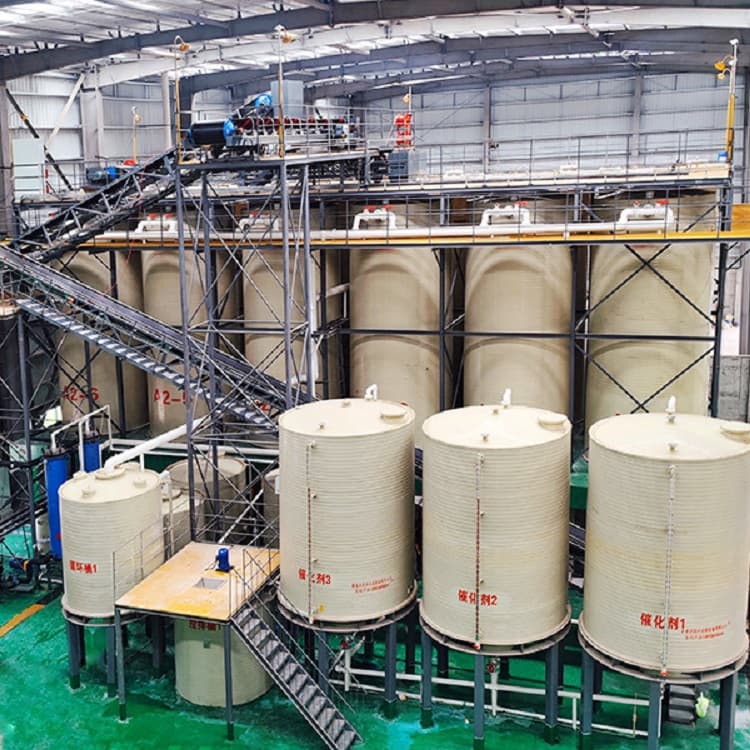
The material of the acid washing reactor is critical. A PTFE lining offers excellent corrosion resistance and is suitable for mixed acid systems. For heating, either a jacket with thermal oil or electric heating is acceptable, depending on production capacity and energy availability. Paddle-type agitators are suitable for large volumes, but the shaft seal is a weak point and requires regular maintenance.
One more detail: The rinse water used after acid washing must be pure water or low-iron groundwater. If iron ions accumulate in the recirculating water, the washed sand will turn yellow again, and the whiteness will be compromised. Many people have fallen into this trap. In solutions for improving the whiteness of quartz sand, the water washing stage is often underestimated, yet it has a significant impact on the stability of the final whiteness.
Common Technical Issues
Don\'t rush to extend the acid washing time just yet. If whiteness is stuck at 85 degrees, it\'s most likely due to the form in which the iron exists. If the remaining iron is lattice iron or iron trapped within fine-grained inclusions, extending the acid washing time won\'t remove it.Conduct a phase analysis to determine the exact form of the iron. Lattice iron cannot be removed by acid washing alone; calcination or chlorination roasting should be considered. If surface iron has not been thoroughly washed away, the problem likely lies with the acid solution ratio or temperature, not the duration.When the whiteness of quartz sand is stuck at 85 degrees, a phase analysis should be performed first to determine whether to adjust the acid washing parameters.
If the acid concentration or temperature is too high, the quartz surface may be excessively corroded, creating new active sites that are more prone to adsorbing impurities or causing yellowing. Another possibility is that the rinse water quality is poor, causing iron ions to re-deposit on the surface. Gradient testing of acid washing conditions is necessary to find the optimal balance; a higher acid concentration does not necessarily yield better results.In the quartz sand whiteness improvement plan, the goal of the acid washing stage is steady improvement, not pushing the acid to its limit in a single pass.
Removing titanium is indeed more difficult than removing iron. For rutile and ilmenite with fine-grained embedding, magnetic separation is largely ineffective; flotation is the only viable option. If flotation fails, it indicates that the titanium embedding is too fine, and it may be necessary to consider early tailings rejection during mineral processing to separate the high-titanium portion of the ore.Additionally, roasting can help remove titanium to some extent; at high temperatures, some titanium-bearing minerals undergo a phase transformation, making them easier to dissolve during subsequent acid leaching. When implementing a quartz sand whiteness improvement plan with elevated titanium levels, flotation and tailings separation should be performed earlier in the process—the entire feed should not be sent directly to acid leaching.
Acid leaching is suitable for ores where iron exists in a surface-bound form, and the costs are relatively manageable. Calcination is suitable for ores containing gas-liquid inclusions, organic matter, or high levels of lattice iron. These are not mutually exclusive; in many cases, they are used in combination—first calcination to open the inclusions, followed by acid leaching for deep iron removal.The specific combination depends on the process mineralogy of the raw ore. When raising whiteness from 75 to 92 degrees, the decision between acid leaching and calcination must be based on the specific conditions of the raw ore; parameters from other mining areas cannot be applied directly.
Note: The process flow, equipment configuration, and parameter settings described in this article must be determined based on specific raw ore testing; for actual production, please refer to test reports and on-site conditions.