


A Comprehensive Analysis of Quartz Sand Purification Equipment Lists and Quartz Sand Processing Production Line Configurations
The configuration of quartz sand purification equipment and quartz sand processing production lines determines the process flow from raw ore to finished sand.In many high-purity sand projects, despite repeated adjustments to acid washing parameters and the addition of magnetic separation equipment, iron content levels remain a bottleneck—the root cause often lies not in any single piece of equipment, but rather in a lack of overall logic in the quartz sand purification equipment list or a failure to fully understand the ore characteristics before designing the production line.This article provides a practical reference for selecting quartz sand purification equipment, organized around mineral processing tests, the main process flow, equipment breakdown, product positioning, and delivery services.
I. Conduct Mineral Processing Tests Before Designing the Line: Knowing “Where” Impurities Are Located Is More Critical Than “How Much” They Contain
The biggest pitfall in quartz sand purification is “feeling one\'s way in the dark.” Rushing to provide quotes and build a plant without first clarifying the ore characteristics poses the greatest investment risk for a quartz sand processing production line—the state of impurity occurrence determines the process route more than their content:
- Surface iron film and clay-dominated impurities: Can be resolved through scrubbing with chemical additives followed by magnetic separation;
- Weakly magnetic black specks such as tourmaline and hornblende: With a density close to that of quartz, these require high-gradient magnetic separation combined with flotation for precise removal;
- Lattice-bound iron or microscopic inclusions: These require enhanced calcination to open the inclusions, followed by deep acid leaching or even chemical synthesis.
The equipment investment and environmental pressure associated with these three approaches are not even in the same order of magnitude. The standard procedure is to first conduct spectral analysis, microscopic observation, and multi-element chemical analysis to assess the ore\'s composition, then run multiple comparison tests involving magnetic separation, flotation, and acid leaching to determine the product\'s specifications based on the maximum purification data obtained. A production line without experimental support is simply a gamble on the ore.
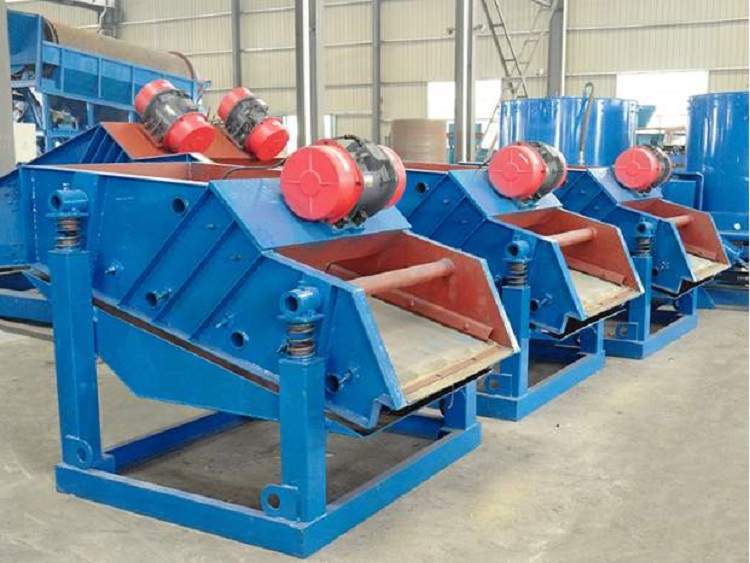
II. The Five Main Stages of a Quartz Sand Processing Production Line
Once the ore characteristics are understood, the framework of a quartz sand processing production line can be summarized into five stages, with each stage addressing a specific type of impurity:
|
Process Stage |
Core Task |
Main Equipment |
|
Crushing and Shaping |
Disaggregation without over-crushing to preserve particle shape |
Jaw Crusher (Primary Crushing), Cone/Impact Crusher (Secondary and Tertiary Crushing), Rod Mill |
|
Washing and Desliming |
Removal of Surface Iron Oxide and Clay |
High-Power Scrubber, Agitation Tank, Hydrocyclone, Desliming Hopper |
|
Magnetic separation for iron removal |
Rough and scavenging separation to remove weakly magnetic minerals |
Flat-bed magnetic separator (roughing), vertical ring high-gradient magnetic separator (sweeping/concentration), electromagnetic slurry magnetic separator |
|
Flotation/Acid Leaching |
Removal of black spots, feldspar, and mica, or deep iron removal |
Aerated mechanical agitation flotation cells, automatic dosing systems, acid-resistant reaction vessels |
|
Classification and Dewatering |
Particle size control, whiteness enhancement, and final processing |
Hydraulic classifiers, high-frequency vibrating screens, thickeners, filter presses, dryers |
This table serves as a framework, not a purchase order. For foundry sand, particle shape is critical; rod mills are typically used to follow the “more crushing, less grinding” principle. For sheet metal sand, whiteness and black spot removal are paramount; washing and flotation are essential steps that cannot be omitted. Equipment selection depends on the specific ore characteristics.
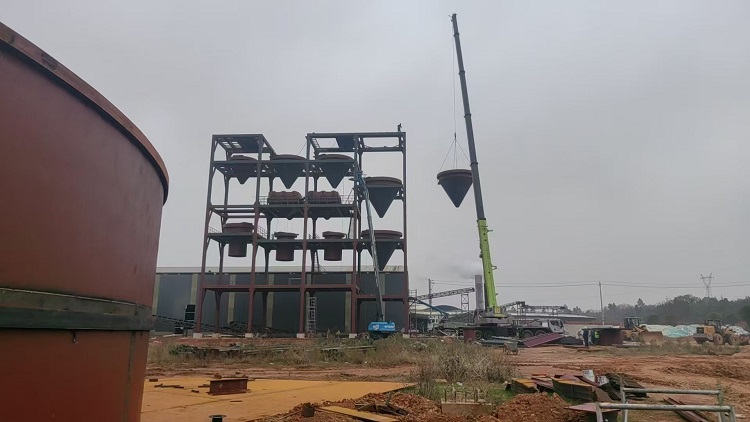
III. Detailed Breakdown of the Quartz Sand Purification Equipment List
1. Crushing and Grinding: The First Point of Entry for Iron Contamination
The equipment configuration consists of a jaw crusher + cone crusher or a double-roll crusher + rod mill or ball mill. This is the primary entry point for iron contamination; if the grinding media contains iron, each grinding cycle introduces a batch of iron.Replace the liners with ceramic, quartz, or polyurethane, and use quartz balls or ceramic balls as grinding media. This is the most easily overlooked step in the quartz sand purification equipment list—many projects allocate their budgets to magnetic separators, yet the iron introduced during grinding exceeds the amount that magnetic separation can remove.
2. Scrubbing and Desliming: First, wash away surface impurities
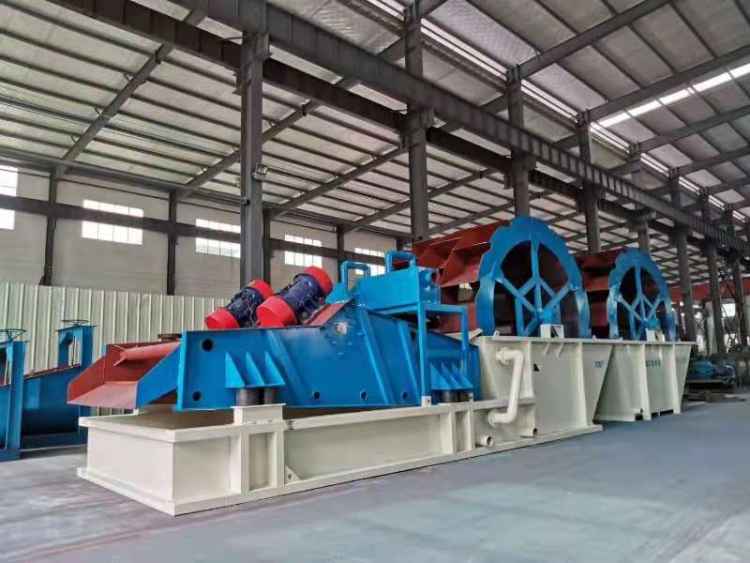
The equipment configuration consists of a high-intensity scrubber + hydrocyclone + spiral classifier or high-frequency screen. Clay, iron films, and fine particles adhering to the surface are stripped away by scrubbing and flushed out through desliming.For high-end sheet glass sand and optical glass sand, specialized scrubbing agents can be used to remove stubborn iron films. Without prior scrubbing and desliming, the acid washing solution will be consumed by fine slime, and the magnetic separator will be unable to capture the mud-coated iron films.
3. Magnetic Separation for Iron Removal: The Main Method, but Not a Panacea
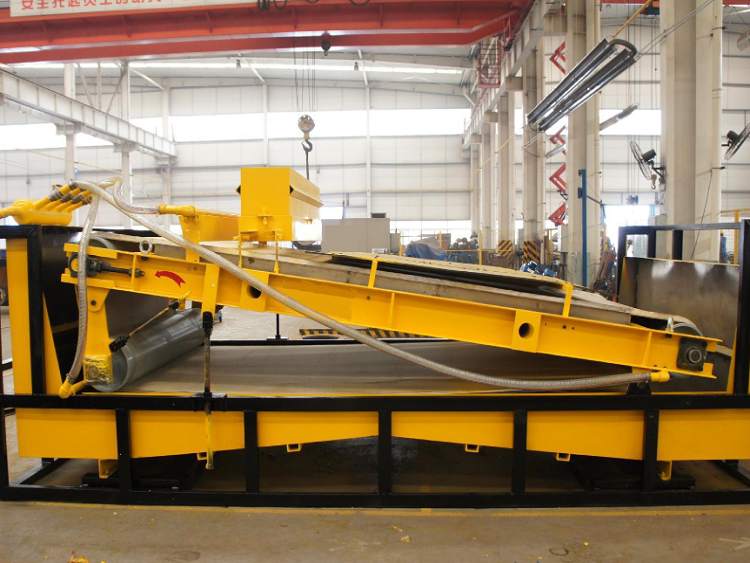
The equipment configuration consists of a permanent magnet separator (roughing) + an electromagnetic slurry separator (refining) + a high-gradient separator (deep processing). Magnetic separation is effective against isolated iron mineral particles but is ineffective against iron embedded within the crystal lattices of feldspar and mica.Rough separation removes large particles, fine separation captures fine-grained, weakly magnetic minerals, and high-gradient separation serves as the final check. The background magnetic field strength is determined based on tests of the raw ore—higher is not necessarily better; slurry flow rate, concentration, and media packing density must be properly adjusted from the outset.
4. Acid Leaching: Dissolving Intracrystalline Iron
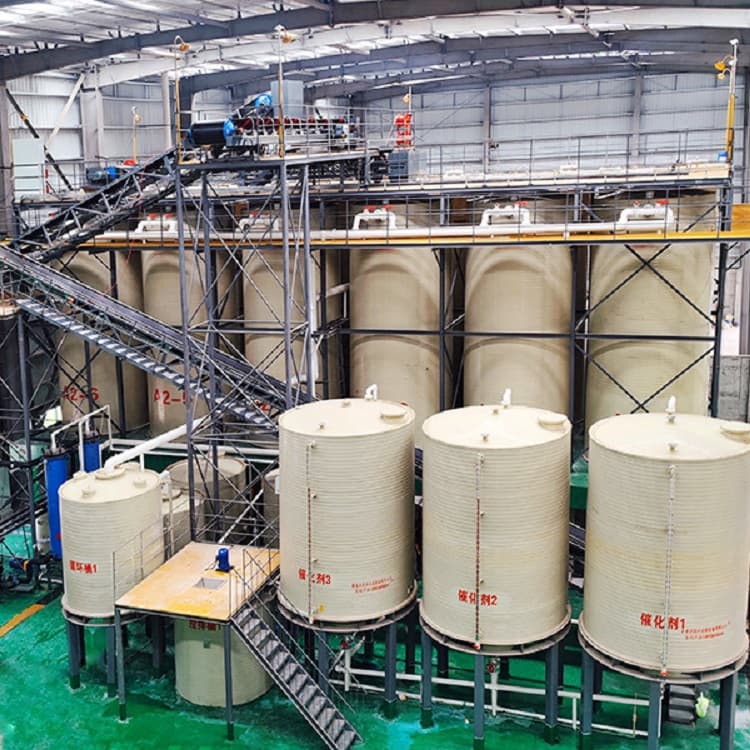
The equipment configuration consists of an acid- and heat-resistant reaction vessel + acid preparation system + waste acid treatment system. Crystal lattice iron and iron-containing films that cannot be removed by magnetic separation are dissolved using acid solutions. Commonly used acids include hydrochloric acid, sulfuric acid, oxalic acid, or mixed acids; concentration, temperature, and duration must be properly matched. Parameters must be determined through testing and cannot be applied directly from a standard formula.Waste acid treatment must not be overlooked—failure to meet environmental standards will result in the shutdown of the entire production line.
5. Flotation: Addressing feldspar, mica, and black spots
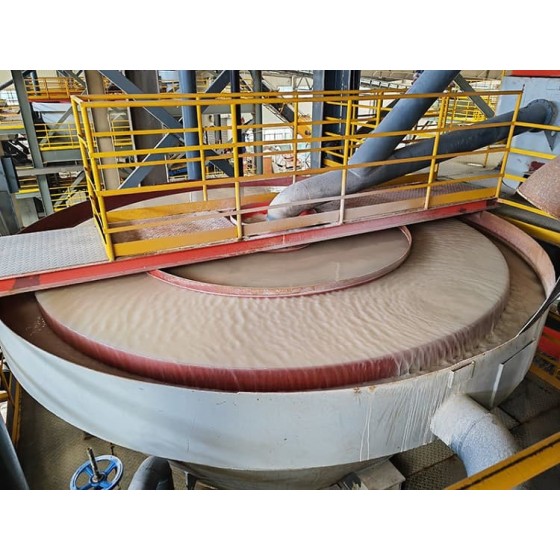
The equipment configuration consists of flotation cells (roughing, cleaning, and scavenging) plus an automatic chemical dosing system. Feldspar and mica naturally contain iron and have physical and chemical properties similar to quartz; they are difficult to completely remove via magnetic separation or acid leaching and must be separated by flotation.For black spots caused by tourmaline and hornblende, specialized flotation techniques and reagents can precisely strip these impurities without compromising particle size; taking ElevateSilica\'s flotation purification solution as an example, it can even separate quartz from iron-bearing minerals under neutral conditions, reducing reliance on acid leaching.Flotation places the highest demands on reagent formulations and operational expertise, making it the most challenging stage in quartz sand purification equipment.
6. Dewatering and Drying: Don\'t Let the Final Step Derail the Process
The equipment configuration consists of a thickener plus a filter press or a centrifuge plus a dryer.Incomplete dewatering can lead to caking; if the drying temperature is too high, quartz may react with metal components, causing iron to re-enter the product. After reducing the moisture content, feed the material into the dryer using indirect heating. Many production lines are well-designed up to this point but ultimately fail at the drying stage.
IV. Backward Engineering the Process Based on Product Positioning
Product positioning determines the required specifications of the quartz sand purification equipment. The process differences between panel-grade sand and electronic-grade sand are even greater than those between “sand washing” and “sand production”:
|
Product Positioning |
Key Control Indicators |
Process Path (in Order) |
Core Requirements |
|
High-End Panel-Grade Sand |
Whiteness, Fe₂O₃, black spots, and particle size distribution |
Crushing and shaping → Classification → Scrubbing → Magnetic separation + high-gradient scavenging → Flotation → Acid washing |
Whiteness and Black Spots |
|
Photovoltaic/Ultra-White Glass Sand |
Low iron, high SiO₂ |
Multi-stage screening → Stepwise magnetic separation → Flotation (can replace acid washing) |
Low iron content, environmentally friendly |
|
TFT Substrate Glass Powder |
High SiO₂, stable particle size distribution |
Gravity separation to remove heavy minerals → grinding → wet precision classification → iron removal |
Stable particle size distribution and iron content |
|
High-Purity Sand for Photovoltaics/Optical Fibers |
High purity (4N grade) |
Pre-enrichment → Magnetic separation → Flotation → Calcination-acid leaching coupling |
Inclusion disruption, deep impurity removal |
|
Electron-Grade Ultra-High-Purity Sand |
Ultra-High Purity (5N Grade and Above) |
Deep magnetic separation → flotation → multi-stage acid leaching → chlorination roasting, or chemical synthesis |
Ultimate purity, ultra-clean environment |
ppm refers to parts per million; D50 and D90 are particle size distribution indicators, with limits subject to the order specifications. In recent years, as environmental regulations have tightened and acid leaching discharges have been restricted, the low-iron sand production route has shifted toward “multi-stage magnetic separation plus flotation as an alternative to acid leaching,” stabilizing iron under neutral conditions.
V. Configuration Logic for Different Types of Raw Ore
Why does the same list of equipment for purifying quartz sand work for others but not for this project? Because the raw ores are different:
- Veined quartz ore: Low iron content, with iron primarily present as isolated minerals. The key is to control iron contamination during crushing and grinding; magnetic separation plus acid leaching is generally sufficient.
- Quartzite ore: High hardness and difficult to grind; iron may be present in mica and feldspar. Magnetic separation is often followed by flotation, with acid washing as a final check; the liner must be made of ceramic or quartz.
- Natural quartz sand deposits: High clay content; scrubbing and desliming are key. Iron is mostly present as a surface film; scrubbing + magnetic separation + acid washing yields good results.
Approaches vary depending on the context: For technical upgrades at mines and processing plants, the focus is on diagnosis and performance improvement; for end-users building their own production lines, the process is designed by working backward from finished product specifications; and for new plant investments, a feasibility assessment should be conducted first to mitigate risks.
VI. Common Misconceptions and Key Points to Avoid Pitfalls
- Iron in grinding media: The most insidious source of contamination; choose ceramic or quartz liners—do not skimp on this.
- Insufficient magnetic field strength: Permanent magnet separators are suitable for roughing, but electromagnetic or high-gradient separators are required for fine separation.
- Blindly copying acid leaching parameters: Since raw ore and iron forms vary, parameters must be determined through in-house testing.
- Contamination introduced during drying: Use indirect heating, temperature control, and rubber or polyurethane-coated contact parts.
When iron levels remain stuck, first conduct a process mineralogy analysis of the raw ore. A quartz sand processing production line in Shandong was equipped with permanent magnet separation plus acid leaching, but the iron levels consistently remained stuck in the middle stage. Analysis revealed that the iron was primarily present in mica—the problem was not the acid leaching, but rather that a flotation stage had been omitted after grinding.Only after adding a flotation stage to first float the mica did the indicators stabilize: the form in which iron exists determines the process route, and the process route determines the equipment configuration.
VII. Scope of Delivery Beyond the Selection of Quartz Sand Purification Equipment
Beyond the equipment list, achieving full production capacity depends on the scope of delivery. Taking ElevateSilica\'s EPC model as an example: mineral processing tests, process design, drawings, core equipment, specialized reagents, installation guidance, and commissioning training are coordinated by the service provider; civil engineering construction and general installation labor are organized locally by the project owner.This approach ensures performance targets are met while saving on expenses for expatriate personnel; on-site engineers oversee installation standards, preventing the transfer of responsibility for equipment or process issues.
Here are a few key commitments that often draw attention: upfront mineral processing test and design fees can be offset against equipment costs upon signing the equipment or EPC contract; free replacement of parts due to equipment defects within the warranty period, followed by lifetime technical support after the warranty expires, with spare parts charged at cost;commissioning and reaching full production capacity do not mean withdrawing personnel; the project team will be trained on chemical dosing protocols, magnetic field strength, and acid washing parameters until they can operate independently. Services can also be broken down—such as conducting trials only, purchasing standalone equipment only, purchasing drawings only, or hiring engineers for commissioning only—and combined according to the project\'s funding schedule.
VIII. Frequently Asked Questions
Q: Can we purchase equipment and build a plant directly even if the ore deposit has not yet been fully explored? A: We do not recommend this. Without representative ore sample data, any equipment selection is like “a blind man feeling an elephant.” If the plant fails to meet specifications upon completion, the investment will be wasted.
Q: What are the differences in equipment for panel-grade sand, photovoltaic-grade sand, and electronic-grade sand? A: The processing logic differs, so the equipment cannot be used interchangeably.For panel-grade sand, the focus is on maintaining whiteness, removing black spots, and controlling particle shape; this typically involves scrubbing + magnetic separation + flotation. For photovoltaic-grade sand, the focus is on low iron content; this typically involves cascaded magnetic separation + flotation to replace acid leaching. For high-purity electronic-grade sand, extreme impurity removal is required, necessitating enhanced calcination, acid leaching, or even chemical synthesis.
Q: With strict environmental regulations and a ban on acid washing discharge, what should be done if iron content cannot be reduced? A: Flotation can be used as an alternative to acid washing. By using specialized flotation reagents to separate quartz from iron-bearing minerals under neutral conditions, the pressure to discharge waste acid is reduced; specific feasibility must be verified through testing.
Conclusion
There is no one-size-fits-all template for configuring quartz sand purification equipment and quartz sand processing production lines. The core logic remains consistent: use mineral processing tests to identify the distribution of impurities, work backward from the product specifications to determine the process route, and then use that process route to finalize the list of quartz sand purification equipment. Specifications are designed, not adjusted.Rather than having to rework the process after purchasing all the equipment, it is better to conduct a thorough analysis of the raw ore, ensuring that each section of equipment targets a specific type of impurity and has corresponding quality control checkpoints. This approach—“test first, calculate costs next, then install equipment”—is often the most effective way to minimize overall costs.