






How to Set Up a Quartz Sand Processing Production Line? A Comprehensive Approach from Raw Ore to Finished Sand
I. Let\'s Start with the Conclusion
A complete quartz sand processing production line consists of five main stages: “crushing and shaping—scrubbing and desliming—magnetic separation—flotation/acid leaching—classification and dewatering.” To produce high-purity sand, additional steps such as calcination, acid leaching, and even chemical synthesis are required.
Before designing a quartz sand production line, conduct mineral processing tests to determine exactly where the impurities are located—whether they are surface iron films, tourmaline black spots, or inclusions within the crystal lattice—as the process routes for each are entirely different.
Determine the process by working backward from the product specifications: for panel-grade sand, focus on whiteness; for photovoltaic sand, focus on low iron content; and for high-purity sand, focus on purity. Do not apply a single quartz sand processing method to all types of ore.
Whether a quartz sand processing production line is configured correctly is largely determined before the equipment is even purchased. Anyone can draw up an equipment list; the real challenge lies in first determining which products are suitable for a given ore batch and then working backward to identify the necessary process stages.
II. “Where impurities are located” is more critical than “how much is present”
The biggest pitfall in quartz sand purification is taking a “blind man feeling an elephant” approach. Quoting prices and planning plant construction before the ore has been fully explored—or even before representative ore samples have been submitted—is the greatest risk in quartz sand projects.
Surface iron film and clay: Scrubbing combined with magnetic separation is sufficient. Black spots such as tourmaline and hornblende—which are weakly magnetic and have densities close to quartz—require high-gradient magnetic separation combined with flotation for removal. Crystal lattice impurities or fine inclusions: Intensive calcination combined with deep acid washing, or even chemical synthesis.
These three approaches involve equipment, investment, and environmental compliance pressures that are not even in the same order of magnitude. The standard process begins with spectral analysis, microscopic observation, and multi-element chemical analysis, followed by laboratory testing of multiple scenarios—including magnetic separation, flotation, and acid leaching—to compare results. Only after obtaining data on the limits of purification should the product positioning be determined.A quartz sand production line not supported by mineral processing tests is essentially gambling on the ore. Standard tests typically yield reports within a few weeks; for complex ores or those targeting 4N purity or higher, scaled-up tests are required—this step cannot be rushed.
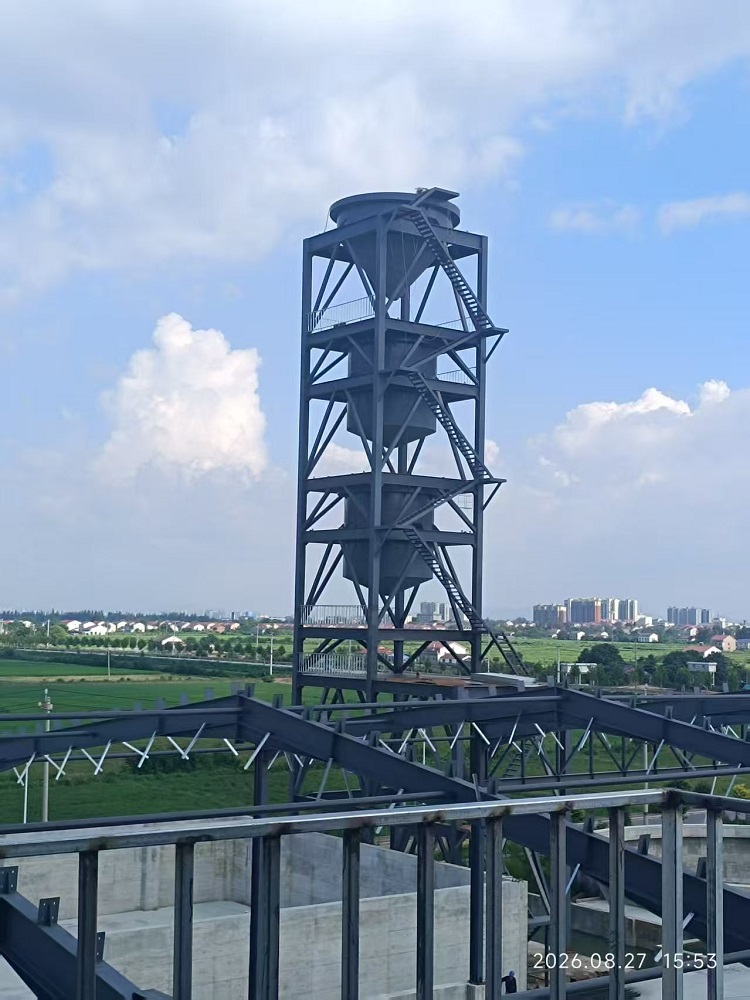
III. The Three-to-Five-Stage Main Process: Each Piece of Equipment Targets a Specific Type of Impurity
| Process Section | Core Task | Main Equipment |
|---|---|---|
| Crushing and Shaping | Disintegration without over-grinding; preserving particle shape | Jaw Crusher (Primary Crushing), Cone/Impact Crusher (Secondary and Tertiary Crushing), Rod Mill (to Prevent Over-grinding) |
| Washing and Desliming | Removal of Surface Iron Oxide and Clay | High-Power Scrubber, Agitation Tank, Hydrocyclone, Desliming Hopper |
| Magnetic separation for iron removal | Rough and scavenging separation to remove weakly magnetic minerals | Flat-bed magnetic separator (roughing), vertical ring high-gradient magnetic separator (sweeping/concentration), electromagnetic slurry magnetic separator |
| Flotation/Acid Leaching | Removal of black spots, feldspar, and mica, or deep iron removal | Aerated mechanical agitation flotation cells, automated dosing systems, acid leaching reactors (with corrosion-resistant linings), counter-current washing towers |
| Classification and Dewatering | Particle size control, whiteness enhancement, and final processing | Hydraulic classifiers, high-frequency vibrating screens, thickeners, filter presses, dryers |
This table serves as a framework, not a purchase order. For foundry sand, focus on particle shape and use a rod mill to “crush more, grind less”; for sheet metal sand, focus on whiteness and black spots—the scrubbing agents and flotation stages cannot be skipped. Quartz sand equipment must be tailored to the specific ore; do not simply copy the list.
For high-purity sand production, add “enhanced calcination—acid leaching coupling” after the main process line,where high-temperature phase transformation opens inclusions for deeper impurity removal; when physical and chemical purification reaches a ceiling at 5N or higher, switch to chemical synthesis—sol-gel or vapor deposition methods—to reconstruct SiO₂ at the molecular level.
Process flow: Raw ore undergoes closed-circuit size control via jaw crushers, cone crushers, and vibrating screens; qualified material enters a scrubber to remove iron film and mud, followed by de-sliming; the slurry proceeds to flat-bed magnetic separation for roughing and vertical ring high-gradient scavenging;Material requiring removal of black spots or feldspar and mica proceeds to flotation; material with excessive iron content undergoes acid leaching, where oxalic acid or a mixed acid solution dissolves iron and aluminum in the fissures; neutralization of waste acid and negative-pressure absorption of fluoride-containing exhaust gas are essential steps that cannot be omitted; finally, the material is classified, filter-pressed, and dried to produce finished sand.Inspection points are set up at each stage; only by closely monitoring whiteness, Fe₂O₃, and particle size can the purity indicators for quartz sand be maintained.
IV. Depending on the product, quartz sand processing techniques differ by an order of magnitude
Common product positioning and process routes are roughly as follows; the specifications represent typical industry target ranges, with final results subject to mineral processing test outcomes:
| Product Positioning | Key Specifications | Process Path (in order) | What to Focus On |
|---|---|---|---|
| High-end sheet sand | Whiteness ≥ 85, Fe₂O₃ ≤ 150 ppm, no black spots | Crushing and shaping → Classification → Scrubbing → Flat-plate magnetic separation + high-gradient sweeping → Flotation → Acid washing | Whiteness, black spots, particle size distribution |
| Photovoltaic/Ultra-White Glass Sand | Fe₂O₃ ≤ 0.008%, SiO₂ ≥ 99.5% | Multi-stage screening → Stepwise magnetic separation → Flotation (as an alternative to acid washing) | Low iron content, with environmental considerations |
| TFT Substrate Glass Powder | SiO₂ ≥ 99.7%, narrow particle size distribution | Gravity separation to remove heavy minerals → grinding → two-stage wet precision classification → iron removal | Stable particle size distribution and iron content |
| High-Purity Sand for Photovoltaics/Optical Fibers | SiO₂ ≥ 99.99% (4N) | Pre-enrichment → Magnetic separation → Flotation → Calcination-acid leaching coupling | Inclusion disruption, deep impurity removal |
| Electron-Grade Ultra-High-Purity Sand | SiO₂ ≥ 99.999% (5N or higher) | Deep magnetic separation → flotation → multi-stage acid leaching → chlorination roasting, or chemical synthesis | Ultimate purity, ultra-clean environment |
There has been a noticeable change in the photovoltaic sand industry over the past two years: environmental inspections have become stricter, and acid wash wastewater cannot be discharged indiscriminately.A seashore sand project in Indonesia adopted a “multi-stage magnetic separation plus flotation to replace acid washing” approach, stabilizing iron content at low levels under neutral conditions—thus meeting quality standards while avoiding waste acid discharge. This route has now become the de facto standard for low-iron quartz sand production lines—not because flotation is some kind of miracle solution, but because the environmental costs of acid washing simply don\'t add up.
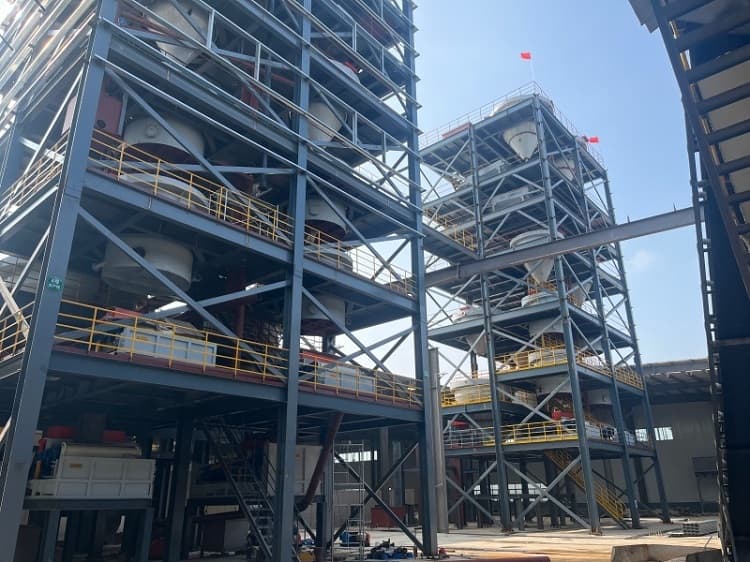
V. Timeline and Investment: Where Money and Time Are Spent
Conventional silica sand projects typically take anywhere from several months to over a year from contract signing to production commencement. Mineral processing trials, engineering design, equipment manufacturing, logistics, and installation and commissioning each have their own timelines; for cross-border projects, additional buffer time must be allocated for customs clearance and weather-related delays. A photovoltaic sand project in Southeast Asia “bridged” the design and manufacturing phases and began civil engineering work early, thereby significantly shortening the construction period.
Many project delays aren\'t caused by equipment manufacturing issues, but rather by indecision in the early stages and a failure to overlap project phases. Once core parameters (number of magnetic separation stages, flotation process, and acid washing configuration) are finalized, custom-made equipment can be ordered; simultaneously carrying out site preparation (“three utilities and one leveling”) and the corrosion-resistant civil engineering for acid washing and sedimentation tanks during the manufacturing and shipping period can save a significant amount of time.
Clarify the scope of the EPC contract in advance: testing, process design, drawings, core equipment, chemicals, installation guidance, and commissioning training are the responsibility of the general contractor; civil engineering and general installation labor are organized locally. Sending a large number of workers from China abroad—covering airfare, visas, room and board, plus daily wages—significantly increases costs.Recruiting locally and having our engineers provide on-site guidance ensures compliance with standards while keeping labor costs down. While the project owner organizes the workers, our engineers have the final say on installation standards; the general contractor assumes full responsibility for equipment and process issues, without shifting blame to the design institute, equipment manufacturer, or construction crew.
Preliminary testing and design fees are fully offset against the equipment cost upon signing the equipment or EPC contract; during the warranty period, defective equipment parts are replaced free of charge, and after the warranty expires, technical support is provided with spare parts charged only at cost;Commissioning and reaching full production capacity do not mean we will withdraw our personnel; we will provide training on chemical dosing protocols, magnetic separation field strength, and acid washing parameters until the client\'s team can operate independently.
VI. Clarifying Several Frequently Asked Questions
Q: The ore deposit hasn\'t been fully explored yet. Can we purchase equipment and launch a quartz sand production line directly?
Not recommended. Without representative ore sample data, any equipment selection is like “a blind man feeling an elephant”; if performance targets are not met, the investment will essentially go down the drain.
Q: Can we skip the pilot testing and proceed directly to the design drawings?
The occurrence of impurities varies greatly—whether they are surface iron films or lattice-encapsulated—which determines whether magnetic separation, flotation, or calcination and acid washing should be used. Blueprints without supporting data cannot guarantee effective implementation.
Q: What purity level can you guarantee?
We do not promise absolute figures that are divorced from the ore\'s inherent properties. What we can promise is that, through rigorous testing and design, we will produce the best possible quality from this ore at a reasonable cost.
Q: Can you still handle it if the ore properties change or reagent consumption is high?
Yes. These issues are usually related to the process, interference from slime, or improper dosing points. By conducting a process diagnosis and optimizing slime removal, adjusting the reagent combination, and optimizing the addition sequence, we can reduce costs.
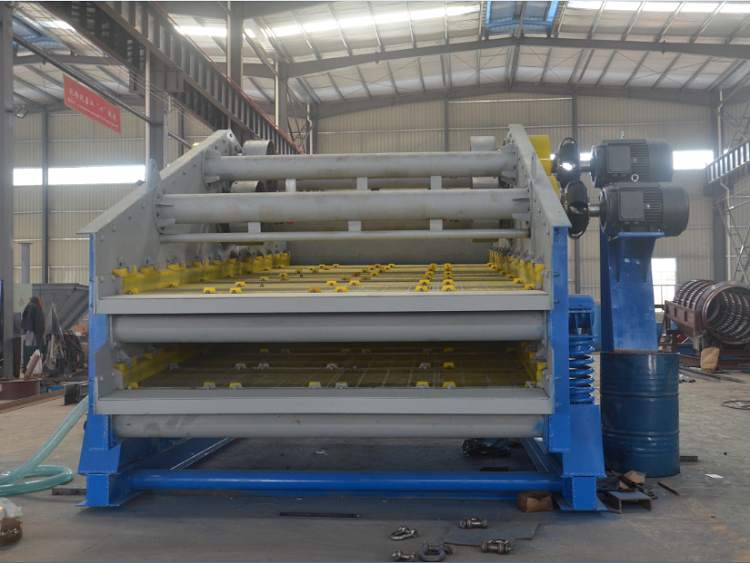
A Complete Quartz Sand Processing Production Line—How Should It Be Configured from Raw Ore to Finished Sand? To circle back to the opening statement: First, thoroughly understand the ore and precisely define the product specifications; the list of quartz sand equipment will naturally follow. Test first, then do the math—don\'t rush to install equipment. This is the shortest path to saving money.
The quality of a quartz sand processing production line isn\'t determined by how much equipment you pile on, but by your understanding of the distribution of impurities, your decisions regarding the quartz sand purification process, and your control over every detail of each stage of the production line. Get these three aspects right, and whether you\'re producing panel-grade sand, photovoltaic-grade sand, or high-purity quartz sand, the direction will become clear.