


A Solution for Purifying Photovoltaic Glass Using Quartz Sand Flotation Technology as an Alternative to Acid Washing
I. Solution Overview
The quartz sand flotation technology for purifying photovoltaic glass—a solution designed to replace acid leaching—is a physicochemical purification process centered on magnetic separation and flotation. Its core principle involves using the selective adsorption of flotation reagents to replace acid immersion, thereby separating iron-containing impurity minerals from the quartz sand.Traditional acid leaching involves soaking sand in acid to dissolve iron; in contrast, this solution adds reagents to the slurry, causing them to selectively act on iron-bearing minerals, which are then separated by flotation using air bubbles.Quartz remains at the bottom of the cell, while iron is discharged with the froth. This essentially follows the flotation logic of “inhibiting iron and floating impurities” or “inhibiting impurities and floating quartz,” with the specific route depending on the properties of the ore.
Photovoltaic glass is the target product, quartz sand is the raw material, flotation purification is the method, and replacing acid leaching is the chosen approach. The prerequisite for applying the flotation technology to purify quartz sand for photovoltaic glass—as a replacement for acid leaching—is that the iron\'s occurrence state and particle size dissociation conditions meet the requirements for flotation.
II. Core Issues Addressed
The flotation-based purification solution for photovoltaic glass using quartz sand, designed to replace acid washing, primarily addresses three issues inherent to the acid washing process: environmental pressure, equipment corrosion, and wastewater treatment.
Acid leaching reactors require corrosion-resistant materials; neutralizing waste acid requires lime and filter press equipment; and acid fumes must be treated with alkaline water spray. The investment in the entire set of environmental protection facilities sometimes exceeds that of the main mineral processing operation. The solution using flotation technology to purify photovoltaic glass quartz sand and replace acid leaching addresses this very issue.The solution is tailored to specific scenarios: photovoltaic sand processing plants with a daily output of several hundred metric tons, where the ore consists of iron-oxidized quartz, vein quartz, or types in which iron is primarily hosted within silicate minerals such as feldspar and mica. Magnetic separation is often insufficient to achieve optimal results for these ores, making the flotation process a more suitable approach.Projects involving plant construction in environmentally sensitive areas, those facing lengthy approval cycles for waste acid treatment, and those with high maintenance costs for acid leaching equipment show even greater interest in this solution.
III. Core Components and Principles
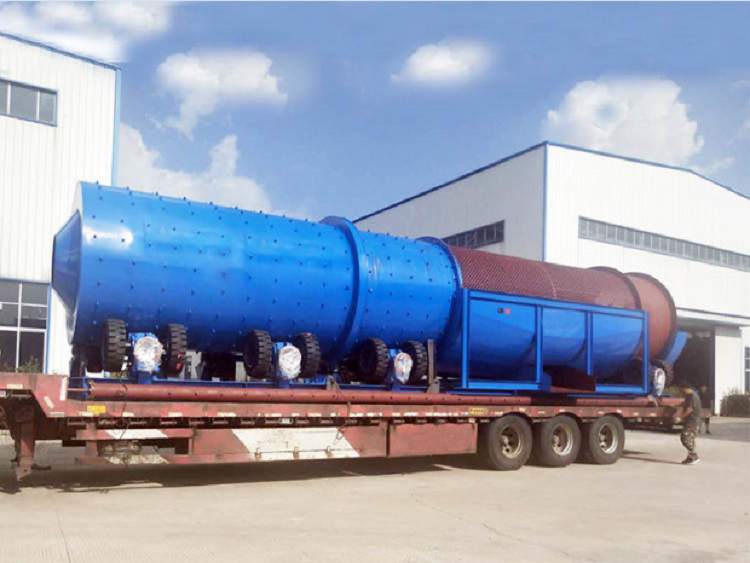
The photovoltaic glass quartz sand flotation technology—a solution for purifying quartz sand to replace acid leaching—typically consists of four stages: crushing and grinding, magnetic separation for pre-concentration, flotation for purification, and dewatering of the final product.
Crushing, Grinding, and Classification. A three-stage crushing process followed by a single-stage rod mill is employed, with the output particle size controlled and screened for classification. The objective is to ensure thorough dissociation of iron minerals from quartz. Insufficient grinding fineness will significantly limit the effectiveness of subsequent flotation.
Magnetic Separation and Pre-concentration. Medium-strength magnetic separation is followed by high-strength magnetic separation to remove mechanical iron and strongly magnetic minerals, thereby reducing the load on the flotation stage. Some processes incorporate a scrubbing step at this stage to remove clay and oxide films from the mineral surfaces.
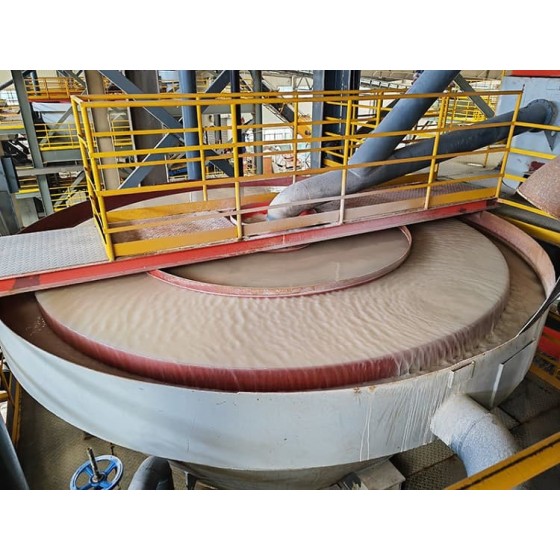
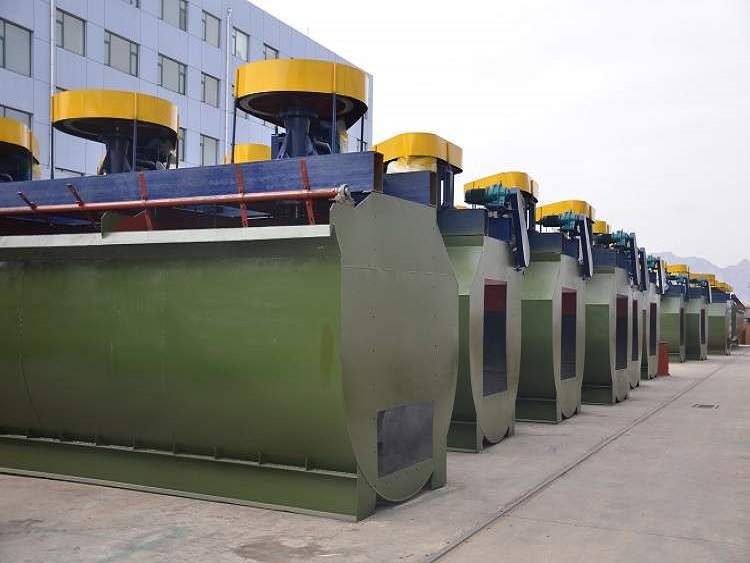
Flotation Purification. This is the core process. The slurry is adjusted to the appropriate concentration, and modifiers, inhibitors, and collectors are added. For quartz impregnated with iron oxide, positive flotation under neutral conditions can be employed, using starch-based inhibitors to suppress iron-bearing minerals and amphoteric collectors to float the quartz.Published research indicates that neutral direct flotation of iron-stained quartz achieves iron-reduction results that meet the quality requirements for silica feedstock used in ultra-white photovoltaic glass. The maximum feed particle size should not exceed 0.6 mm, with even better results achieved at ≤0.5 mm.For vein quartz, a two-stage flotation process under acidic conditions can be employed, using sodium oleate and cocoyl propylenediamine as collectors. The reagent regime must be determined through testing based on the properties of the ore, as formulations vary significantly among different ores.
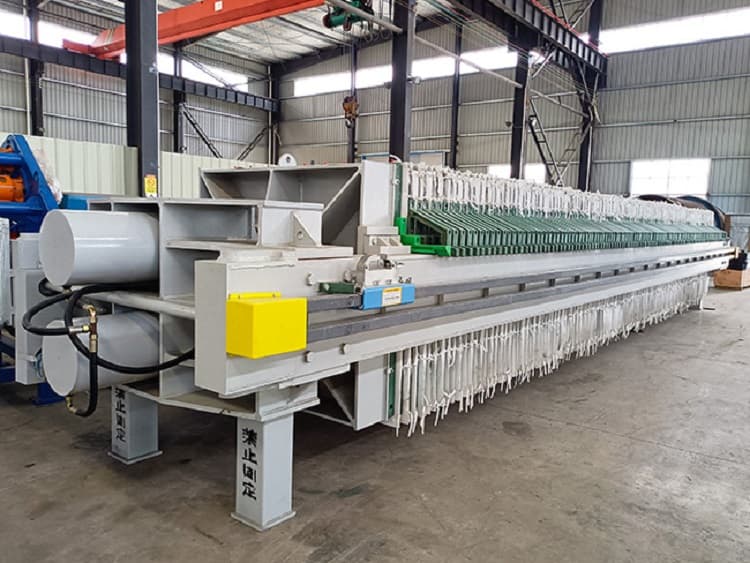
Dewatering and Final Product. The flotation concentrate is concentrated, filtered, and dewatered to yield the final product.
The degree of ore liberation is a prerequisite for the effectiveness of the flotation technology for purifying quartz sand for photovoltaic glass as an alternative to acid leaching. If the grinding fineness is insufficient, even highly selective reagents will struggle to capture iron minerals, and the effectiveness of the solution will be compromised.
IV. Advantages of the Solution
Compared to the acid leaching process, the advantages of the flotation-based purification solution for photovoltaic glass quartz sand—which serves as an alternative to acid leaching—are concentrated in four areas: environmental protection, equipment, stability, and cost.
Lower environmental pressure. The treatment systems for waste acid, acid mist, and acidic wastewater generated by acid leaching require significant investment; in contrast, flotation wastewater has a relatively simple composition, consisting mainly of reagent residues and suspended solids, which can be treated through neutralization and precipitation. This advantage is particularly practical for projects involving plant construction in environmentally sensitive areas.
Lower equipment material requirements. Acid-washing reactors must be lined with PTFE or made of PP, and valves, pipes, and pumps must all be corrosion-resistant; flotation equipment can operate using standard carbon steel with an anti-corrosion coating, resulting in relatively lower equipment investment and maintenance costs.
Process parameters are more stable. In acid leaching, the key variables—acid concentration, temperature, and soaking time—are prone to fluctuations between batches; in contrast, flotation operates continuously and remains relatively stable once parameters are properly adjusted.Research on neutral flotation for iron-oxidized quartz has also shown that its iron-reduction effectiveness for iron-bearing aluminosilicate minerals and iron-oxidized quartz can be superior to that of the acidic reverse flotation route.
Reagent costs are manageable. Although there are many types of flotation reagents, the specific consumption is generally low. Taking the vein quartz flotation scheme as an example, the dosage of sodium oleate and cocoyl propylenediamine falls within a reasonable range, keeping reagent costs at an acceptable level.Specific costs must be calculated based on ore properties and reagent regimens, and there can be significant variations among different schemes.
V. Applicable Scenarios and Limitations
The quartz sand flotation technology for purifying photovoltaic glass—a solution that replaces acid leaching—is not suitable for all types of quartz sand.
Situations where results are particularly effective: Iron-oxidized quartz sand, where iron is present as a distinct mineral with good liberation, and the feed particle size is controlled within an appropriate range; in such cases, magnetic separation is ineffective, but flotation is suitable; veined quartz ores with moderate iron content in the raw ore, where the goal is to achieve the low-iron levels required for photovoltaic glass.
Situations requiring careful evaluation: When iron exists as a lattice impurity within the quartz crystal, flotation reagents have difficulty reaching it; such ores require acid leaching or even high-temperature chlorination roasting.When the iron content in the raw ore is excessively high, the flotation process requires multiple stages, results in high reagent consumption, and yields a low concentrate recovery rate; the economic viability must be carefully evaluated. For ores with a high proportion of fine particles, flotation efficiency decreases in the fine fraction, leading to significant tailings losses.
Situations Not Recommended: When the iron content in the raw ore is inherently low, and magnetic separation followed by washing is sufficient to meet standards, proceeding to flotation would entail unnecessary costs.
| Ore Type | Suitability | Notes |
|---|---|---|
| Iron-oxidized quartz | Suitable | Iron is present as a separate mineral; flotation is effective |
| Veined quartz | Suitable | Two-stage flotation can achieve low iron content |
| Granite-pegmatite-type quartz | Fairly suitable | Requires evaluation of the distribution of mica and feldspar |
| Lattice-iron-bearing quartz | Not suitable | Flotation reagents cannot penetrate the crystal lattice |
| Quartz sand with high iron content | Evaluate with caution | High reagent consumption; economic feasibility must be evaluated |
| Ore with a high proportion of fine-grained particles | Careful evaluation | Reduced flotation efficiency for fine-grained ore, resulting in significant tailings loss |
VI. Implementation Process
From ore sampling to stable production, the five-step process for the quartz sand flotation technology to purify photovoltaic glass as an alternative to acid leaching is as follows:
Step 1: Analysis of ore properties. Collect representative ore samples and conduct a comprehensive chemical analysis and mineralogical identification to determine the form, occurrence, and particle size distribution of iron. This step determines the feasibility of flotation.
Step 2: Laboratory flotation testing. Conduct process tests to determine grinding fineness, pH, inhibitor type, and collector ratio, and identify a reagent regime suitable for the specific ore.
Step 3: Scaled-up continuous flotation testing. Favorable laboratory results do not guarantee production feasibility; continuous flotation testing is required to verify process stability, the compatibility of reagent dosing, and the impact of returning intermediate concentrate.
Step 4: Equipment Selection and Engineering Design. The choice between an aerated mechanically agitated or self-aspirating flotation cell depends on the pulp concentration and reagent regime; magnetic separators are selected based on magnetic field strength requirements; pulp adjustment tanks must have corrosion-resistant linings; and concentration control must be precise, as flotation is more sensitive to pulp concentration than magnetic separation.
Step 5: Commissioning and Optimization. The first month after production begins is the reagent adjustment period, during which reagent dosages and the number of flotation stages must be fine-tuned based on actual production data. Flotation recipes should not be copied verbatim, as parameters from other projects may not be applicable.
VII. Services Offered
We offer the following services related to flotation technology for purifying quartz sand used in photovoltaic glass as an alternative to acid leaching: analysis of ore properties and assessment of flotation feasibility; laboratory flotation testing and recommendations for reagent regimes; design and implementation of pilot-scale continuous flotation test plans; flotation process design, equipment selection, and engineering support; and guidance on commissioning and reagent optimization.Our services are primarily aimed at small and medium-sized photovoltaic sand processing plants, though we also undertake the development of purification processes for vein quartz and granitic pegmatite-type quartz ores.
VIII. Key Considerations
Use the following criteria to determine whether the flotation-based purification solution for photovoltaic glass quartz sand—as an alternative to acid washing—is suitable for a specific ore sample: Iron is present as an independent mineral, not as lattice iron; the iron content in the raw ore is moderate, not in the ultra-high-iron range; the proportion of fine particles is not high, and the -0.1 mm fraction is controllable;There is pressure regarding environmental approvals, making it difficult to proceed with the acid leaching route; there is a willingness to conduct trials before finalizing the plan. If three or more of these criteria are met, this solution warrants serious evaluation; if two or fewer are met, it is recommended to first conduct an ore property analysis before making a decision.