






Complete production line for ultra-white, low-iron quartz sand, including crushing, magnetic separation, flotation, acid washing, and drying—all delivered in one package
I. What Exactly Makes the Ultra-White, Low-Iron Quartz Sand Production Line So Challenging?
The challenge of a complete ultra-white, low-iron quartz sand production line lies entirely in the word “iron.”
While ordinary glass sand has a relatively high tolerance for iron content, this is not the case for an ultra-white, low-iron quartz sand production line. The light transmittance requirements for photovoltaic glass push iron content down to an extremely low level. Removing iron at this level cannot be achieved simply by installing a magnetic separator.
Iron exists in quartz ore in three forms: first, as discrete iron mineral particles, such as magnetite, hematite, and limonite; second, as iron-bearing silicate minerals, such as mica, amphibole, and chlorite;and third, as thin-film iron and inclusions present on the surface of quartz grains or within microcracks in the crystal lattice.
Physical separation can handle most of the first two forms, while the third requires chemical methods.This is why a complete ultra-white, low-iron quartz sand production line must integrate crushing, magnetic separation, flotation, acid washing, and drying into a continuous process—each step addresses a specific form of iron. If any link in the chain is missing, the iron content in the final ultra-white, low-iron quartz sand cannot be consistently controlled.
II. Crushing and Sand Making: Iron Contamination Must Be Prevented from the Very First Impact
In many ultra-white, low-iron quartz sand production line projects, initial planning discussions focus entirely on magnetic separation and acid leaching, while the crushing stage is given only cursory attention. As a result, after production begins, it is discovered that no matter how much the iron content is adjusted, it still falls just short of the target.
Where does the problem lie? During crushing and grinding, if the materials used in the parts of the equipment that come into contact with the feed are not suitable, iron powder generated by abrasion is directly mixed into the final product. This iron is “newly introduced”—it is not present in the raw ore—and no matter how hard subsequent processes try to correct it, they are merely playing catch-up for what was missed earlier.
The crushing walls and liners of jaw crushers and cone crushers must be made of high-manganese steel or high-chromium cast iron. For the linings of chutes, hoppers, and transfer points, ceramic or polyurethane is far more reliable than carbon steel.The grinding stage is even more critical—for ultra-white, low-iron quartz sand production lines, rod mills equipped with ceramic or high-chromium rods are now the standard. The value of a rod mill lies not only in the material of the grinding media but also in preventing over-grinding and preserving particle shape; the fine iron particles generated by over-grinding are precisely the hardest to remove in subsequent stages.The combination of ball mills and steel balls may be passable for ordinary quartz sand lines, but in the low-iron environment of an ultra-white, low-iron quartz sand production line, it is simply asking for trouble.
The grinding fineness must also be carefully controlled. If the grinding is too coarse, the iron-bearing minerals and quartz will not be sufficiently liberated, making them impossible to recover via magnetic separation or flotation; if the grinding is too fine, the ultrafine iron particles generated by over-grinding become even harder to remove. Specific fineness targets depend on the grain size distribution of the ore and can only be determined through pilot testing.
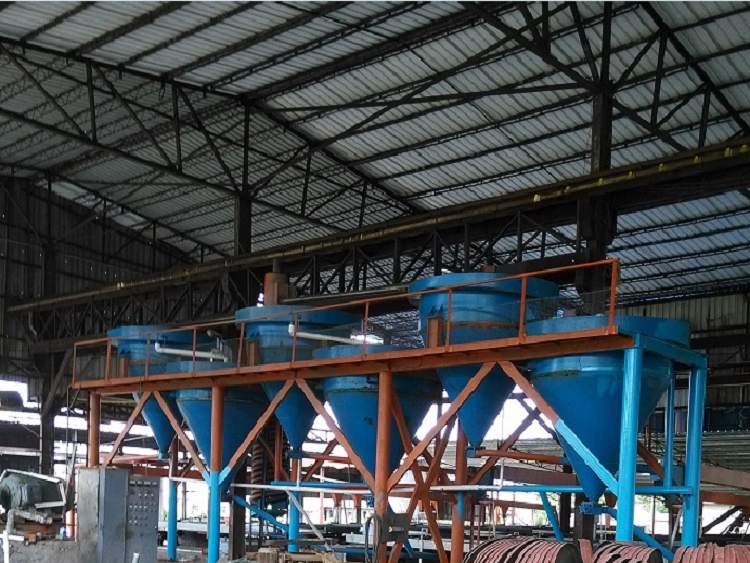
III. Scrubbing and Desliming: The Underestimated Frontline of Iron Removal
The washing process is often regarded as merely an auxiliary step for “removing silt” in ultra-white, low-iron quartz sand production lines; in reality, however, it plays a direct and crucial role in iron removal.
The thin film of iron oxide on the surface of quartz particles cannot be captured by magnetic separation—the film adheres too tightly to the particles, leaving no magnetic difference to exploit.It also cannot be removed by flotation—since it is not a distinct mineral phase. However, the vigorous agitation of the scrubber causes high-speed friction between the particles, stripping away the film and transforming it into discrete iron particles that can be processed in subsequent stages.
Sufficient pulp concentration and scrubbing time must be ensured; this approach yields more reliable results than simply adding more chemicals. For some mines where the raw ore is heavily contaminated with surface iron, a thorough scrubbing stage can significantly reduce the burden on subsequent magnetic separation and acid leaching processes.This isn\'t merely a matter of skipping a single process step; it\'s a question of whether the iron removal efficiency of the entire ultra-white, low-iron quartz sand production line can be improved.
IV. Magnetic Separation: Multi-stage Gradient—Not a Single Stage Can Be Omitted
Magnetic separation is the primary iron removal process in the ultra-white, low-iron quartz sand production line, but its configuration requires careful consideration.
The first stage uses a weak magnetic field—the field strength does not need to be too high—to first capture mechanical iron and strongly magnetic magnetite. The purpose of this stage is to protect the media boxes of the subsequent high-gradient magnetic separators from clogging by strongly magnetic particles.Skipping this stage will result in unacceptably short cleaning cycles for the high-gradient magnetic separators. In terms of equipment, the first stage typically uses a flat-bed magnetic separator for rough separation.
The second stage employs medium-strength magnetic separation to handle medium- to weakly magnetic minerals such as limonite and biotite. The magnetic field strength is one order of magnitude higher than in the first stage, with the specific value depending on the content and distribution characteristics of weakly magnetic iron minerals in the ore. Electromagnetic slurry separators are commonly used in this stage.
The third stage involves high-gradient magnetic separation, where the background magnetic field strength is raised to a higher level; this is the physical separation step with the highest iron removal precision in the entire ultra-white, low-iron quartz sand processing line. Vertical-ring high-gradient magnetic separators are most commonly used in this position; the specifications of the media box, the flushing cycle, and the slurry flow rate all affect the iron removal efficiency.
The logic behind the three-stage magnetic separation in series is that each stage processes the tailings from the previous stage, progressively reducing the iron content.In terms of equipment configuration, this involves a combination of a flat-bed magnetic separator for roughing, an electromagnetic slurry magnetic separator for medium-to-high-intensity separation, and a vertical ring high-gradient magnetic separator for scavenging and concentrating. The cleaning cycle of the media boxes and the slurry flow rate are the key parameters to adjust in this stage.For some ores, a single stage is sufficient to reduce iron content to an acceptable range, while for others, even after completing all three stages, acid leaching is still required as a backup measure. This depends on the properties of the raw ore; there is no one-size-fits-all configuration for an entire processing line handling ultra-white, low-iron quartz sand.
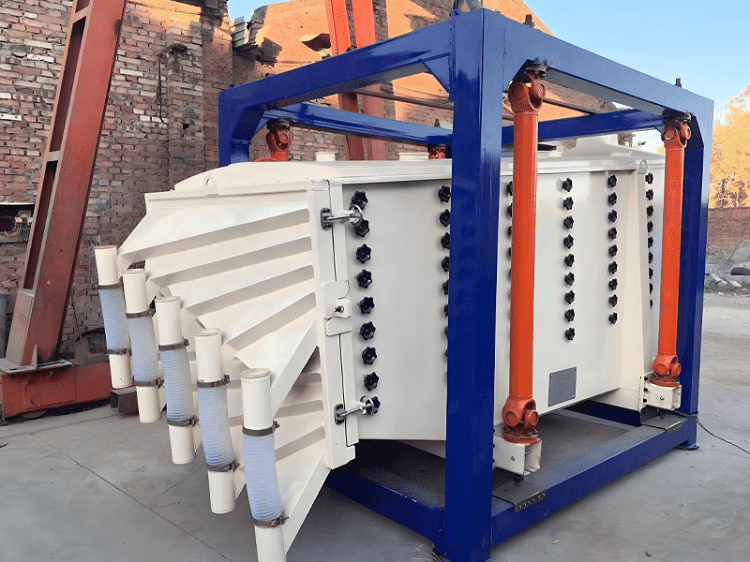
V. Flotation: Targeted Removal of Iron-Bearing Silicates
The role of flotation in the ultra-white, low-iron quartz sand production line is to process iron-bearing silicate minerals—particularly mica—that cannot be effectively removed by magnetic separation.
Mica has very weak magnetic properties, so high-gradient magnetic separators have limited removal efficiency for it. However, the surface chemistry of mica differs significantly from that of quartz, allowing them to be separated using flotation.The conventional approach involves using amine collectors or sodium petroleum sulfonate under acidic conditions to float mica and iron-bearing aluminosilicates.
Flotation performance is highly influenced by temperature. When the slurry temperature is low, collectors do not disperse well, the flotation foam becomes unstable, and selectivity decreases. In high-latitude regions, equipping the flotation section of ultra-white, low-iron quartz sand production lines with heating devices is standard practice; this operating cost must be factored into the plan during the design phase.
Another function of flotation is to control the particle size distribution of the product. Mica is prone to pulverization; if it is not floated out in advance, it will break down into fine particles during grinding and mix with the finished product, affecting the particle size distribution and subsequent performance of the ultra-white, low-iron quartz sand.Furthermore, under certain ore conditions, enhanced flotation can also reduce the burden on subsequent acid leaching; however, whether it can replace acid leaching—and to what extent—must be determined based on the results of mineral processing tests and cannot be generalized.
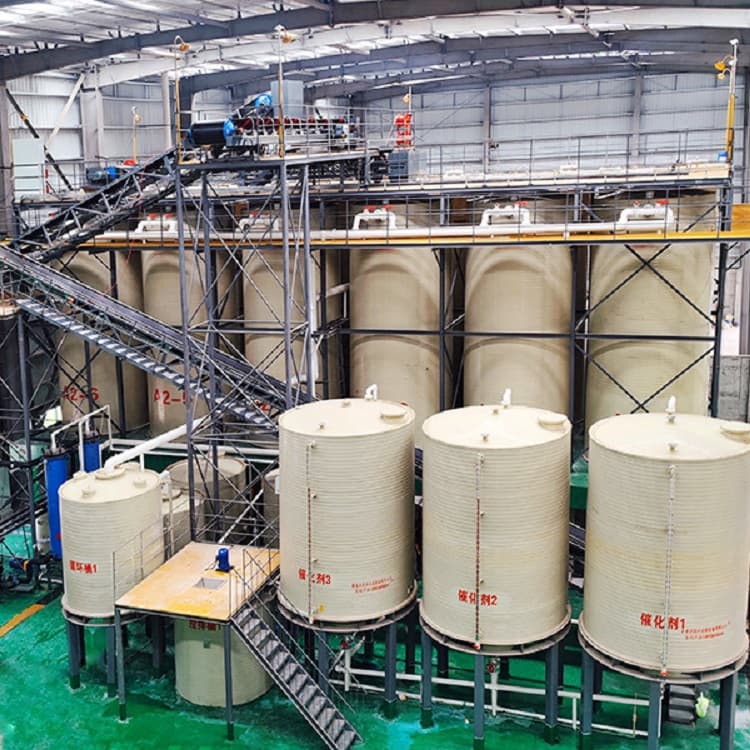
VI. Acid Leaching: The Final Line of Defense Against Iron
Even when physical separation is taken to the extreme, some iron will always remain on the surface film of quartz particles and within microcracks in the crystal lattice. Neither magnetic separation nor flotation can reach this iron; it can only be removed through acid leaching.
The acid leaching formulation is determined by the form in which the iron exists. Iron in thin films can be treated with a mixed acid solution of hydrochloric acid and sulfuric acid, which keeps costs relatively under control. Iron within crystal lattice inclusions requires hydrofluoric acid to penetrate the microcracks and dissolve it; however, the use of HF and the treatment of waste liquid are subject to strict requirements.Organic acids such as oxalic acid and citric acid can be used as auxiliaries, and fluorosilicic acid is also a common component of mixed acid formulations; when used in combination with inorganic acids, it yields better results under specific ore conditions.
Temperature and duration are adjusted based on the difficulty of processing the ore. Rinsing after acid washing must be thorough, as residual chloride and fluoride ions can affect the product\'s whiteness and subsequent applications. Simply rinsing to near-neutral pH is insufficient; ultra-white, low-iron quartz sand has specific requirements for soluble ion content, so the step of rinsing with deionized water cannot be omitted.
The treatment of acid washing waste liquid is a key component of the environmental protection measures for the entire ultra-white, low-iron quartz sand production line. Neutralization and precipitation, acid solution reuse, and waste residue disposal—each step involves costs and must be carefully considered during the planning phase.In terms of supporting equipment, counter-current scrubbers, negative-pressure absorption towers for fluoride-containing exhaust gases, and waste acid neutralization systems are standard configurations.
VII. Drying: Don\'t Let the Final Step Eat Into Your Profits
Ultra-white, low-iron quartz sand emerging from the acid washing process has a relatively high moisture content and must be dried to the required moisture level before packaging.
Energy consumption during the drying process accounts for a significant portion of the operating costs for an ultra-white, low-iron quartz sand production line. Single-drum dryers have low thermal efficiency, as heat is extracted before it can fully transfer to the material. In contrast, three-pass dryers allow the material to circulate within the drum, resulting in significantly higher thermal efficiency.For an ultra-white, low-iron quartz sand production line, drying is not merely about moisture removal; it must also prevent secondary contamination caused by contact between the material and iron-containing components during the drying process. The choice of material for the dryer\'s inner cylinder and temperature control both affect the iron content of the final product.
VIII. Key Configuration Considerations for Ultra-White, Low-Iron Quartz Sand Production Lines by Application Industry
Different end-user industries place varying emphasis on the performance metrics of ultra-white, low-iron quartz sand production lines, and the choices made regarding process combinations also differ. The following sections provide detailed explanations based on major application areas.
- 1. Low-Iron Quartz Sand Production Line for Photovoltaic Glass Photovoltaic glass has strict requirements for light transmittance and iron content. Ultra-white low-iron quartz sand production lines typically employ a combination of multi-stage screening, cascaded magnetic separation, flotation, and acid leaching for deep purification.The magnetic separation stage requires a wide gradient, while the flotation stage focuses on controlling mica and iron-bearing silicates; the acid leaching stage serves as a backup. In environmentally sensitive areas, priority should be given to evaluating the feasibility of enhanced flotation to reduce the acid leaching burden; however, feasibility must be determined based on mineral processing tests.Photovoltaic glass sand is one of the primary applications for ultra-white, low-iron quartz sand production lines.
- 2. Complete Production Line for Low-Iron Quartz Sand Used in Ultra-White Float Glass Ultra-white float glass is nearly as sensitive to iron content as photovoltaic glass, while placing even greater emphasis on the stability of particle size distribution.When configuring a complete production line for ultra-white, low-iron quartz sand for this application, in addition to magnetic separation and flotation, emphasis should be placed on controlling grinding fineness and classification accuracy to avoid fine iron particles and particle size fluctuations caused by over-grinding.
- 3. Sand Processing Lines for Engineered Quartz Slabs The key requirements for slab-grade sand are whiteness, black spot control, and particle size distribution.When an ultra-white, low-iron quartz sand production line is used for slabs, the scrubbing section must be equipped with powerful scrubbing capabilities; the magnetic separation section should primarily use flat-plate magnetic separation combined with vertical ring high-gradient sweeping; and the flotation section should target the selective removal of black spot minerals such as tourmaline and hornblende.Iron content requirements are relatively less stringent than for photovoltaic sand, but whiteness and black spot control are even more critical.
- 4. Complete Production Line for Quartz Powder Used in Electronic Display Substrates Quartz powder for electronic display substrates has dual requirements for particle size distribution and iron content. For this application, the ultra-white, low-iron quartz sand production line must incorporate grinding and precision classification stages,magnetic separation and iron removal must be positioned appropriately before or after classification, and acid leaching and washing processes must ensure soluble ions meet specifications.
- 5. Complete Production Line for Sand Used in High-End Household and Specialty Glass For applications such as high-end glass bottles, borosilicate glass, and microcrystalline glass, the ultra-white, low-iron quartz sand production line must control not only iron but also harmful elements such as chromium,cobalt, copper, manganese, nickel, and other harmful elements and refractory minerals. A combination of water washing for iron removal and magnetic separation is a common approach, with acid washing configured as needed.
IX. Key Configuration Points for Ultra-White, Low-Iron Quartz Sand Production Lines
The following breaks down the core equipment, key considerations, and their impact on iron content by process step, presented in a card-style format for easy reference.
X. Common Issues with the Entire Production Line
XI. What to Consider When Selecting a Complete Ultra-White, Low-Iron Quartz Sand Production Line
- First, determine whether the process route is suitable for the specific ore. Even with the same list of equipment, performance can vary significantly when applied to different ores. It is essential to have the supplier conduct tests using the actual ore and provide performance forecasts—this is the most basic requirement. Standard mineral processing tests and comprehensive reports take time to complete, so this timeframe must be factored into the project schedule.
- Second, verify whether the equipment materials are resistant to iron contamination. Components that come into direct contact with the material—such as crushing liners, grinding media, chute linings, and the inner drum of the dryer—can compromise the iron removal efficiency of the entire ultra-white, low-iron quartz sand processing line if the wrong materials are selected.
- Third, verify that the acid washing and waste liquid treatment plans comply with regulations. Acid washing is the most environmentally sensitive stage in the ultra-white, low-iron quartz sand production line; plans that fail to properly handle waste acid pose significant operational risks down the line.
- Fourth, verify whether the supplier has experience with complete production lines for similar types of ore. An ultra-white, low-iron quartz sand production line is not a standardized product; process parameters must be adjusted for each specific ore deposit. An experienced supplier will ensure a shorter commissioning period and faster achievement of full production capacity and target standards.
- Fifth, verify that performance commitments are included in the contract. Core indicators—such as Fe₂O₃ content, SiO₂ purity, particle size distribution, and whiteness—must be clearly specified in the technical agreement, along with agreed-upon acceptance criteria and procedures.