






Purification of Ultra-White, Low-Iron Silica Sand: A Turnkey Production Line from Design to Commissioning
I. What Problems Does the Low-Iron Quartz Sand Mechanical Production Line Solution Address?
The requirements for low-iron quartz sand used in photovoltaic glass, electronic glass, and high-end quartz crucibles are becoming stricter every year. Iron content must be reduced to the ppm level, whiteness must be sufficient, and particle size distribution must be consistent.While many mine owners have access to silica sand resources, simply purchasing a few pieces of equipment is far from sufficient to reliably purify ultra-white, low-iron silica sand.
The core of the low-iron quartz sand production line solution is to transform the process of iron reduction and purification—which previously relied on piecemeal equipment procurement—into a complete system. Every step—from raw ore analysis, process design, equipment selection, installation and commissioning, to personnel training and achieving production standards—must be seamlessly integrated. This is the essence of a turnkey production line.
The following breaks down the entire process of a turnkey production line—from design to commissioning—specifically focusing on the purification of ultra-white, low-iron silica sand. If you are considering implementing a low-iron silica sand processing line or already have a production line but are experiencing inconsistent iron-reduction and purification results, the information below can serve as a reference.
II. The Raw Ore Determines the Process: Where Exactly Is the “Dirt” in Silica Sand?
Quartz sand purification essentially involves removing impurities other than quartz. Iron is the number one enemy, and it hides in several places:
-
Iron films on particle surfaces: iron oxide scale and iron hydroxide films adhering to the surfaces of quartz particles
-
Iron in clay minerals: kaolin, montmorillonite, etc., which inherently contain iron
-
Heavy mineral inclusions: ilmenite, hematite, and magnetite—which have high density and are mixed with quartz
-
Iron within the quartz crystal lattice: Iron ions have replaced silicon in the lattice, making them difficult to remove through physical beneficiation
-
Feldspar and mica-type minerals: These naturally contain iron and have physical properties similar to quartz, making separation difficult
Different forms of iron require different purification methods. Surface iron films can be treated by scrubbing and acid washing; heavy minerals are processed via gravity separation or magnetic separation; and lattice-bound iron requires advanced treatment such as high-temperature chlorination or acid leaching. Therefore, the first step must always be to conduct a process mineralogy study of the raw ore.Where the iron is located, how much is present, and what form it takes—this is an investment that cannot be skimped on. The process flow for a mechanical processing line targeting low-iron quartz sand is entirely based on the data obtained from this step.
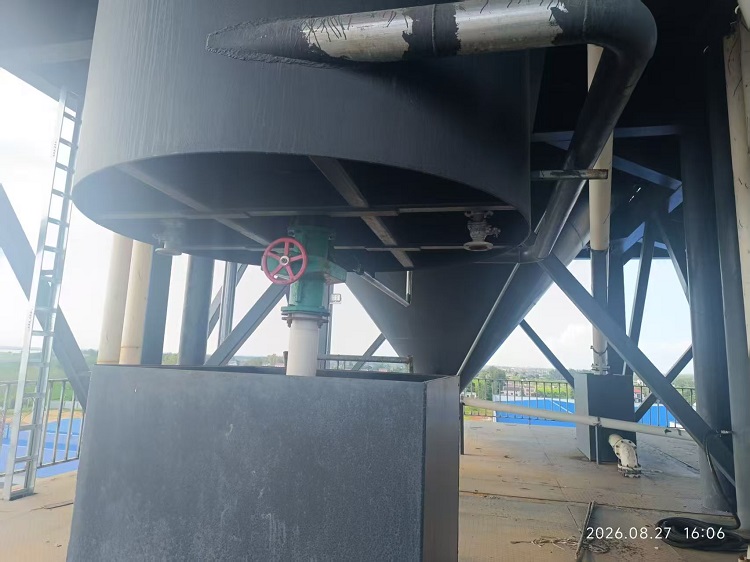
III. Determining the Process Flow: There Is No Standard Answer; Suitability Is More Important Than Advanced Technology
The conventional route for purifying ultra-white, low-iron silica sand is a combination of “scrubbing—classification—gravity separation—magnetic separation—flotation—acid leaching.” However, the specific configuration depends on the properties of the raw ore. There is no universal template for low-iron quartz sand processing plant designs; suitability is more important than advanced technology.
Option 1: Simple Scrubbing + Magnetic SeparationSuitable for situations where the raw ore has low iron content and the iron is primarily on the surface. The scrubber removes the surface iron film, and the strong magnetic separator removes free iron and weakly magnetic minerals. The process is short and requires minimal investment.
Option 2: Gravity Separation + Magnetic Separation + FlotationFor raw ore with a high content of heavy minerals, such as feldspar and mica, gravity separation is used first to discard the tailings, followed by magnetic separation, and finally flotation to separate feldspar from quartz. In the flotation stage, the proper combination of collectors and inhibitors is critical.
Option 3: Full-Process Deep PurificationFor raw ore with complex impurities and diverse forms of iron, the entire process—scrubbing, classification, gravity separation, magnetic separation, flotation, and acid leaching—is employed. This achieves more thorough iron reduction and purification, but also entails higher capital and operating costs.
In practice, two common mistakes have been observed: one is attempting to use the most complex process from the outset, resulting in significant investment and operating costs that are difficult to absorb; the other is omitting acid leaching when it is necessary, causing product purity to plateau and preventing the product from commanding a higher price.Process design must be determined based on the characteristics of the raw ore and the target product specifications; the extent of iron reduction and purification must align with the required product grade.
IV. How to Configure Core Equipment
Equipment configuration for turnkey production lines is organized by process section. The table below provides a reference.
| Process Section | Main Equipment | Function | Key Parameter Directions |
|---|---|---|---|
| Feeding | Vibrating feeder, belt conveyor | Uniform feeding | Throughput Matched to Downstream Process |
| Scrubbing | High-efficiency scrubber | Removal of surface iron scale and clay | Scrubbing concentration: medium to high |
| Classification | Hydrocyclones, high-frequency screens | Control of particle size distribution | Stable classification efficiency |
| Gravity separation | Spiral Chutes, Shaking Tables | Removal of Heavy Minerals | Concentration ratio determined by ore type |
| Magnetic separation | High-intensity magnetic separators, high-gradient magnetic separators | Removal of magnetic minerals | Adjustable magnetic field strength |
| Flotation | Flotation Machines | Separation of feldspar and mica | Adjustable aeration rate |
| Acid washing | Reaction vessels, acid washing tanks | Deep iron removal | Controllable acid concentration, temperature, and duration |
| Dehydration | Concentrators, filter presses | Product dewatering | Filter cake moisture content meets standards |
| Drying | Rotary Dryer | Finished Product Drying | Discharge moisture content meets specifications |
| Tailings | Tailings Dewatering and Water Reclamation System | Compliance with Environmental Standards | High water recovery rate |
There are several pitfalls to avoid when selecting equipment. For magnetic separators, a higher magnetic field strength isn\'t necessarily better—it depends on the state of iron in the ore. Excessively high field strength can actually introduce some weakly magnetic impurities. The aeration rate of flotation cells must be adjustable, as the floatability varies among different ores.For acid leaching, the materials must be corrosion-resistant; otherwise, subsequent maintenance could hold up the project. The selection criteria for low-iron quartz sand purification equipment should always be based on the actual requirements for iron reduction and purification, rather than being determined by inventory or price.
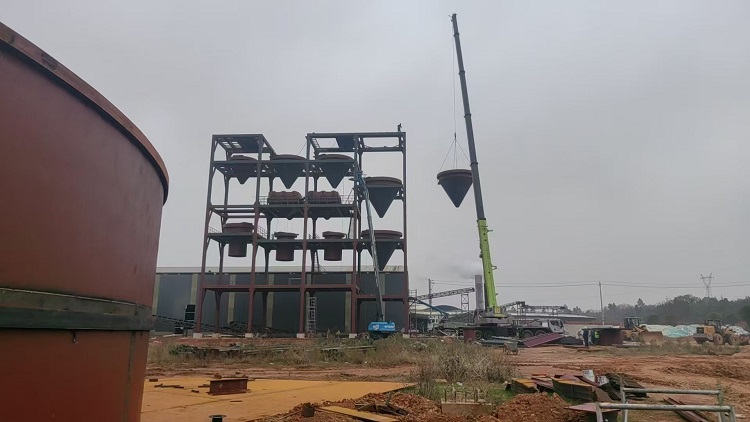
V. What Lies Between Design and Commissioning
Many projects feature beautifully drawn design blueprints, but once on-site, various discrepancies arise. The problem lies in the design failing to fully account for on-site conditions. The process from design to commissioning of a low-iron quartz sand processing line can be divided into six stages:
-
Raw ore sampling and process mineralogy studies. Collect representative samples and conduct chemical analysis, phase analysis, and particle size analysis. This step determines everything that follows.
-
Small-scale trials and scaled-up continuous beneficiation tests. Small-scale trials determine process feasibility, while scaled-up continuous beneficiation verifies the stability of performance indicators. The scaled-up continuous beneficiation phase cannot be skipped; scaling up small-scale trial data to production scale may result in significant deviations.
-
Process design and equipment selection. Based on the test results, the process flow, equipment, and parameters are determined. At the same time, supporting factors such as site layout, water and electricity supply, and environmental protection must be considered.
-
Equipment Manufacturing and Procurement. Core equipment is manufactured in-house or procured from designated suppliers; requirements for auxiliary equipment may be appropriately relaxed. However, critical stages must not be overlooked.
-
Installation, Commissioning, and Trial Runs with Feedstock. After installation, conduct individual unit tests first, followed by integrated system tests, and finally trial runs with feedstock. Trial runs with feedstock must be conducted for a sufficient duration.
-
Acceptance Testing and Personnel Training. Acceptance testing is conducted once performance indicators have stabilized, and operating and maintenance personnel must be thoroughly trained. Ultimately, the line will be operated by the on-site team.
Each stage has its own critical points.It is not uncommon for expanded continuous beneficiation projects to proceed directly to production without proper preparation, resulting in performance metrics significantly lower than those achieved in pilot tests. There are also cases where acceptance was granted after installation without material-based commissioning, only to later discover issues such as clogged pipelines, undersized pumps, and other problems—leading to half a year of back-and-forth modifications. The value of a turnkey production line lies in seamlessly linking these six stages, with a designated person responsible for each step.
VI. What Factors Affect Iron Reduction and Purification Efficiency?
The effectiveness of purifying ultra-white, low-iron silica sand cannot be generalized. The properties of the raw ore determine the upper limit, while process design and operational proficiency determine whether that limit can be reached.
Take a domestic quartz sand mine as an example: the raw ore has a moderately high iron content. After undergoing the full processing sequence—scrubbing, gravity separation, magnetic separation, flotation, and acid leaching—the iron content in the concentrate can be reduced to a low level, the silicon dioxide content can reach a high purity, and the whiteness can meet the raw material requirements for photovoltaic and electronic glass.To achieve even higher purity—such as for the inner lining sand of quartz crucibles—more advanced purification methods are required, and costs will rise accordingly.
Objectively speaking, in the purification of ultra-white, low-iron silica sand, every small step forward in specifications may double the cost. Therefore, it is essential to clearly define the product positioning first and then work backward to determine the process route. The design of this production line essentially involves striking a balance between specifications and cost.
The key factors affecting the effectiveness of iron-reduction purification are primarily as follows:
-
Form of iron in the raw ore: Surface iron is easy to remove, while lattice iron is difficult to treat
-
Grinding fineness: Insufficient liberation prevents the separation of impurities; over-grinding leads to muddiness, which affects subsequent beneficiation
-
Reagent regimen: The selection, dosage, and addition method of reagents for flotation and acid leaching directly affect iron removal efficiency
-
Equipment operating parameters: Magnetic separation field strength, flotation aeration rate, and acid leaching temperature and duration must all be adjusted according to the properties of the ore
-
Water quality: When impurity ions in the recirculated water accumulate to a certain level, they can affect product quality
VII. How to Assess Investment and Operating Costs
Taking a mechanical processing line for low-iron quartz sand with a daily processing capacity of 200 metric tons of raw ore as an example, the investment breakdown is roughly as follows: equipment procurement accounts for the largest share, followed by installation costs, with civil engineering and environmental protection infrastructure each accounting for a portion. The total investment range is significantly influenced by equipment grade, site conditions, and environmental requirements; differences between projects are pronounced, so it is not appropriate to summarize this with a single figure.
In terms of operating costs, electricity consumption, water consumption, and chemical consumption are the primary expenses. Increasing the reuse rate of recirculated water can significantly reduce water consumption. Chemical costs depend on the quantities used in flotation and acid leaching, which vary significantly depending on the type of ore.
As for the payback period, if the product meets photovoltaic glass grade standards and commands a competitive price, the investment can typically be recouped within a few years. However, this assumes full production capacity and compliance with standards, as well as unimpeded market access. The economic viability of this production line ultimately depends on the difference between the product\'s selling price and operating costs.The choice of iron removal process for silica sand directly determines the structure of investment and operating costs, which is a key factor that must be carefully weighed during the process design phase.
VIII. Common Pitfalls to Avoid
IX. Breakdown by Application Scenario: What Matters in Different Industries
Downstream applications for ultra-clear, low-iron, silica-purified glass vary greatly, and process priorities differ accordingly. Breaking this down by industry makes it easier to compare with your own project.
The core metric is Fe₂O₃ content, which is typically required to be reduced to below 0.008%.The process primarily involves multi-stage magnetic separation combined with flotation, with acid washing serving as a backup for deep purification. This sector demands high stability in iron reduction and purification; batch-to-batch variations directly affect glass transmittance and color deviation. For low-iron quartz sand mechanical processing lines in this scenario, the focus lies on the optimal configuration of magnetic separation stages and the stability of the flotation reagent regimen.
In addition to low iron content, there are strict requirements for particle size distribution, with both D50 and D90 needing to be controlled within narrow ranges.Following purification, the process involves grinding and precision classification; the iron removal stage must not compromise the particle size distribution. This sector demands even higher classification precision from quartz sand purification production lines; gravity separation to remove heavy minerals and wet precision classification are common configurations.
The inner layer sand has the highest purity requirements; conventional physical beneficiation methods cannot meet these standards, necessitating a combination of calcination and acid leaching—or even more advanced purification methods. The requirements for the outer layer sand are relatively less stringent. In this scenario, the depth of iron reduction and purification directly determines whether the product can enter the supply chain, and the investment threshold is significantly higher than that for ordinary glass sand.
The core requirements are whiteness and the removal of black spots; weakly magnetic minerals such as tourmaline and amphibole are the primary obstacles.The process primarily involves scrubbing and magnetic separation combined with flotation to remove black spots, while particle size distribution must also be controlled. In this sector, the requirements for silica sand iron removal processes focus on surface iron and weakly magnetic minerals, which differs somewhat from the low-iron logic applied to photovoltaic sand.
This sector has high requirements for clay content and particle shape, while iron content standards are relatively lenient. The process primarily involves scrubbing to remove clay and multiple crushing stages with minimal grinding to preserve particle shape, supplemented by full-line automation. In this scenario, the configuration of a low-iron quartz sand mechanical processing line can be simplified, with the investment focus on the crushing and classification stages.
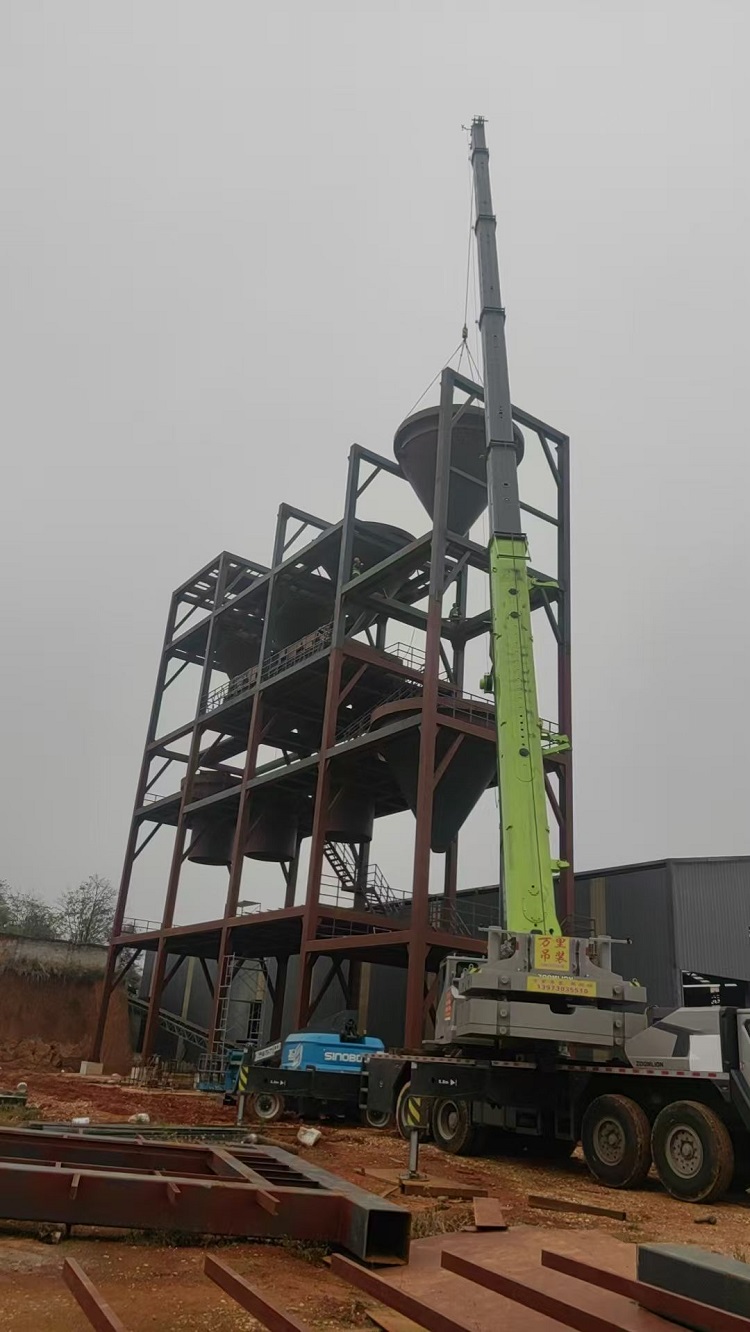
X. About Us
We have been operating this silicon sand purification line for several years. From raw ore testing to process design, and from equipment manufacturing to on-site commissioning, we handle the entire process in-house. We do not outsource core processes because we know where problems are likely to arise.
Our scope of services includes:
- Mineralogical research and small-scale testing of raw ore
- Scaled-up continuous beneficiation testing and process parameter optimization
- Design of ultra-white, low-iron silica sand purification production lines
- Manufacturing of core equipment and turnkey supply
- Installation, commissioning, trial runs with actual feed, and acceptance testing upon meeting standards
- Operator Training and Ongoing Technical Support
Our strength lies in the fact that every stage is backed by practical project experience—we do not rely on theoretical designs alone. We have a clear understanding of the challenges involved in iron reduction and purification, as well as the common issues that arise on-site. The manufacturing and process design of low-iron quartz sand purification equipment are coordinated within the same team, preventing discrepancies between drawings and actual equipment.