






Are the purification specifications appropriate for an annual production capacity of 80,000 metric tons of quartz sand?
Is the purification specification appropriate for an annual production capacity of 80,000 metric tons of quartz sand?
The question “Is the annual production capacity of 80,000 metric tons compatible with the purification specifications?” can be broken down into two parts: what level of purification specifications can be achieved at an 80,000-metric-ton scale, and whether the specifications you desire are economically feasible at this scale.An annual output of 80,000 metric tons (based on 300 operating days per year, with a daily processing capacity of approximately 267 metric tons; based on 20 operating hours per day, with an hourly processing capacity of approximately 13 metric tons) falls within the range of a small-to-medium-sized specialized production line. Scale alone does not determine the upper limit of purity specifications, but scale must align with product positioning, process depth, and investment intensity. This article addresses these questions by scenario.
I. First, let\'s clarify: The upper limit of purity specifications is determined by the ore, not by scale
The purity that can be achieved with quartz sand depends first and foremost on the “genetic makeup” of the ore—specifically, the state in which impurities are present:
Predominantly surface iron film and clay
Scrubbing + magnetic separation can significantly reduce iron content, and a 3N-grade (SiO₂ ≥ 99.9%) process is achievable.
Weakly magnetic associated minerals (tourmaline, amphibole)
Requires high-gradient strong magnetic separation combined with proprietary flotation to remove black spots; whiteness and iron levels suitable for sheet glass sand and optical glass sand can be achieved.
Lattice impurities and fine inclusions
An enhanced calcination–acid leaching coupling process is essential to achieve 4N grade (99.99%) or higher.
Grade 5N and above
Physical and chemical purification of natural ores has reached a bottleneck; chemical synthesis (sol-gel/vapor deposition) is required, which involves a completely different investment logic.
Therefore, the specifications that an 80,000-metric-ton-per-year production line can achieve are determined by mineral processing tests. Discussing “80,000 metric tons paired with X N-grade” without reference to specific ore samples is meaningless.
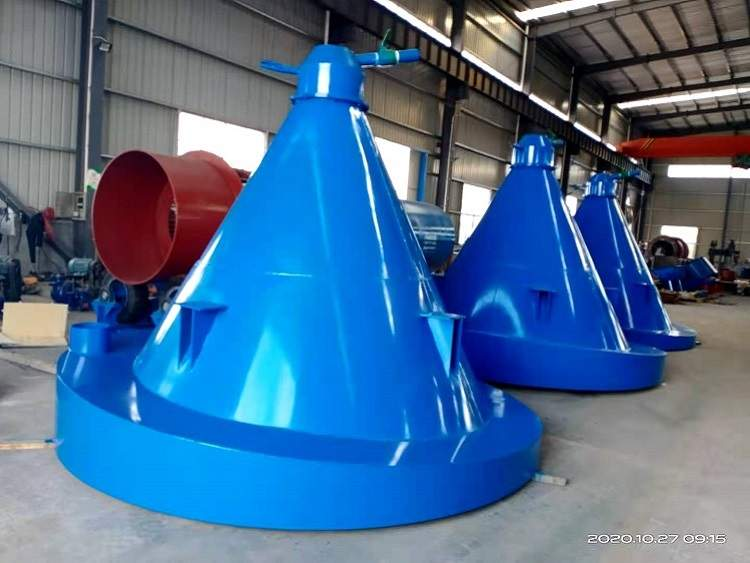
II. Compatibility Between the 80,000-metric-ton Scale and Different Specification Levels
Good Match: Sheet Glass Sand, Photovoltaic/Ultra-White Glass Sand, and Foundry Sand Grades
This represents the most typical and economical positioning for an 80,000-metric-ton annual production line. Target specifications include whiteness ≥85 and Fe₂O₃ ≤150 ppm (for panel sand), or Fe₂O₃ ≤0.008% (for photovoltaic/ultra-clear glass sand).The process route primarily consists of scrubbing + staged magnetic separation + proprietary flotation (replacing acid washing), with equipment configuration and investment intensity highly aligned with the 80,000-metric-ton scale. This category represents the “comfort zone” for an 80,000-metric-ton production line.
Basically compatible but requiring process refinement: 3N–4N grade high-purity sand
If the target SiO₂ content is ≥99.9%–99.99%, a calcination–acid leaching coupling process must be added to the magnetic separation and flotation process.Producing 3N–4N-grade sand at an 80,000-metric-ton scale is feasible, but the investment and energy consumption share of the calcination and acid leaching system will increase significantly, and environmental compliance requirements will be stricter. At this point, it is necessary to assess whether the 80,000-metric-ton scale can spread the fixed costs of deep purification and whether the product price can cover the incremental investment.
Low Feasibility: 4N5–5N Grade and Above
This grade imposes extremely high requirements on equipment materials, ultra-clean environments, and reagent purity; moreover, the global market capacity for 5N-grade products is limited.It is unrealistic to produce 80,000 metric tons of 5N-grade product annually. However, it is reasonable to refine only a portion of the output to 4N5–5N grades to supply high-end niche markets as part of a tiered product structure; if positioned as the main product line, the scale would be mismatched with the market and investment requirements.
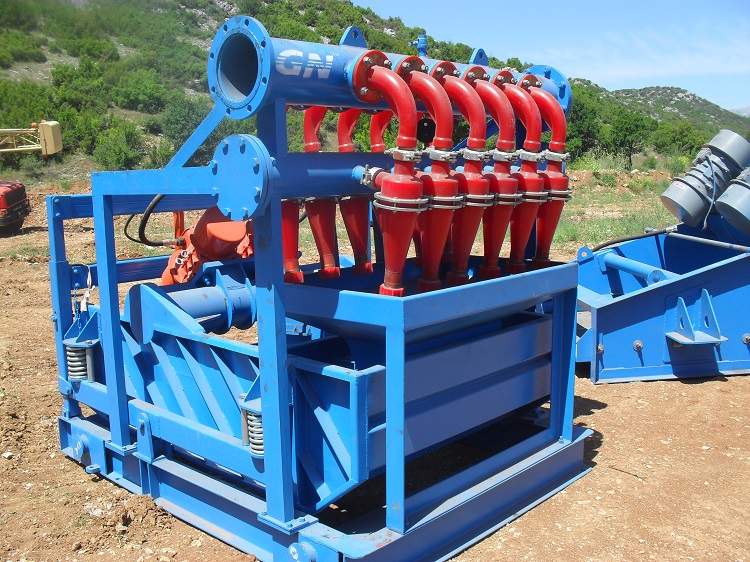
III. Three Criteria for Determining Suitability
- First, do the specifications exceed the ore\'s purification limits? The recommended process and expected purification specifications provided in the test reports serve as concrete evidence for assessing suitability. Specifications that the ore itself cannot achieve cannot be met, regardless of the scale of production.
- Second, are the investment and operating costs economically viable? With each step up in purity specifications, investments in equipment materials, acid leaching and calcination, environmental protection infrastructure, and energy consumption also increase accordingly. At an 80,000-metric-ton scale, the ability to spread fixed costs for deep purification is limited, so a comprehensive cost-benefit analysis is required.
- Third, is there a market to absorb the product? Higher specifications target high-end customers, who typically involve lengthy certification cycles and a highly concentrated market. An 80,000-metric-ton production capacity requires a corresponding order structure to support it; a tiered product mix is more prudent than a single high-end positioning.
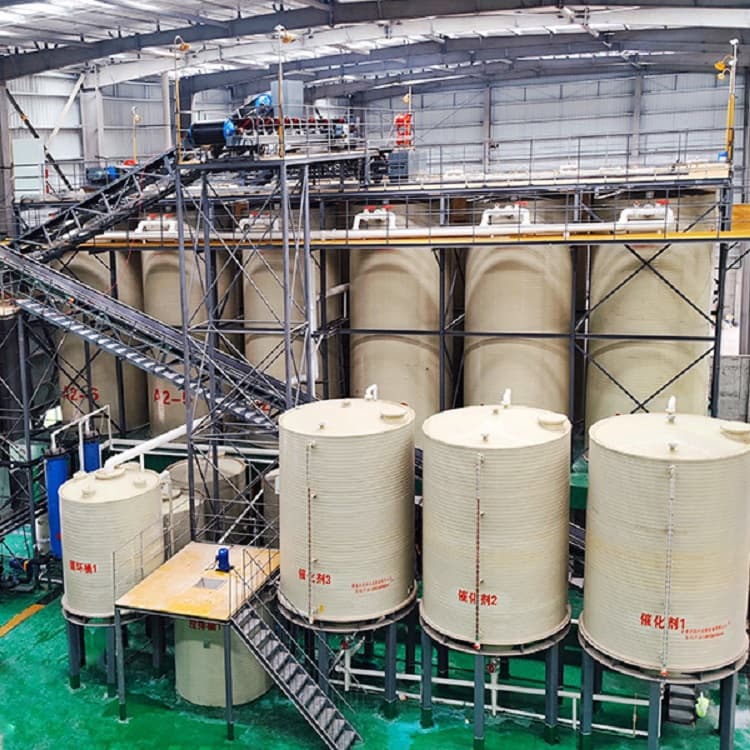
For an 80,000-metric-ton-per-year quartz sand production line, targeting grades suitable for sheet glass sand, photovoltaic/ultra-clear glass sand, and foundry sand constitutes an economically reasonable “comfort zone”;producing 3N–4N grade high-purity sand is feasible but requires more sophisticated processes and careful cost analysis; targeting 4N5–5N grade or higher does not align with the logic of scale and investment and should be treated as part of a tiered product portfolio rather than the primary focus.
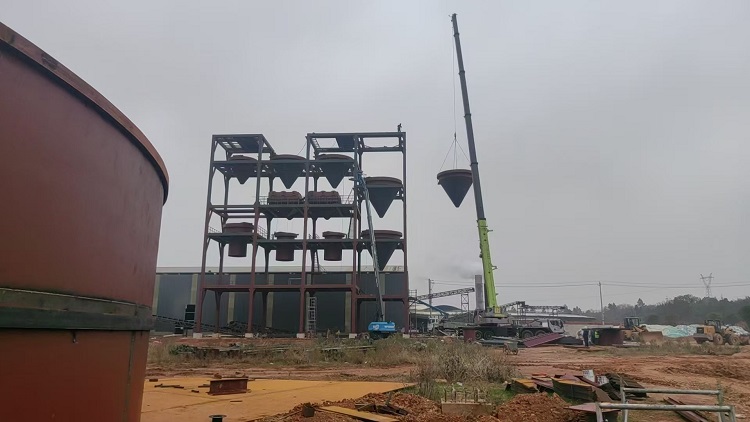
To determine whether your project is suitable, the correct approach is to conduct mineral processing tests using representative ore samples (typically taking 30–45 days), obtain recommended processes, expected purification targets, an equipment selection list, and a preliminary budget, and then calculate the investment and economic viability based on the 80,000-metric-ton scale.Initial testing and design fees can be fully offset against the cost of subsequent equipment or EPC contracts—this investment provides a definitive answer as to whether the specifications align with the scale of operations.
Whether the purification targets for an 80,000-metric-ton annual output of quartz sand are appropriate hinges primarily on the distribution of impurities in the ore (which determines the purification limit), whether the investment and operating costs of the deep purification process can be spread across the 80,000-metric-ton scale, and whether there is a market to absorb high-purity products.Conducting mineral processing tests to obtain recommended specifications first, and then assessing economic viability based on the scale, is the reliable path to determining suitability.