






Optimized Series Configuration for a 400-Metric-Ton-Per-Day Quartz Sand Production Plant
Optimized Series Configuration for a 400-Metric-Ton-Per-Day Quartz Sand Production Line
A daily output of 400 metric tons (calculated based on 300 operating days per year, resulting in an annual output of approximately 120,000 metric tons; based on 20 hours of effective operation per day, the hourly processing capacity is approximately 20 metric tons) constitutes a medium-sized quartz sand production line.A key characteristic of this scale is that while suitable specifications can usually be selected for individual pieces of equipment, the “series connection”—specifically, the coordination, buffering, and load balancing between process stages—often becomes the root cause of underutilized production capacity and unstable performance metrics. This article focuses on optimization strategies for equipment series connection.
I. Prerequisites for Sequencing Optimization: First Define the Product and Process Route
Sequencing equipment is not simply a matter of connecting individual units in order. For a production line with a daily output of 400 metric tons, the length of the process chain and the load at each node will vary significantly depending on the product\'s market positioning:
Sheet Sanding
crushing and shaping → precision classification → scrubbing → magnetic separation → flotation for black spot removal → dewatering—the focus lies on the precision of the flotation and classification stages.
Photovoltaic/Ultra-Clear Glass Sand
Crushing → Multi-stage screening → Cascaded magnetic separation → Flotation (replacing acid washing) → Dewatering; the key lies in the magnetic field gradient and continuous operation of the multi-stage magnetic separation cascade.
Foundry Sand
Crushing → Scrubbing → Water washing → Drying → Coating → Screening, with a focus on the continuous stability of the drying and coating stages.
Therefore, the first step in series optimization remains conducting mineral processing tests to determine the process route—only after the sequence of processes is established can node load matching be addressed. This also embodies ElevateSilica\'s “test first, decide later” logic at the engineering level.
II. The Core of Series Optimization: Load Matching and Buffer Design
- Calculate the processing capacity of each node by working backward from the target product size. If the finished product specification targets a daily output of 400 metric tons, and considering the yield rate (typically 70%–90%), the raw ore processing capacity must be configured for 440–570 metric tons per day. The hourly processing capacity of each node in the series must be calculated step by step to avoid a situation where “the front end runs too fast, while the back end cannot keep up.”
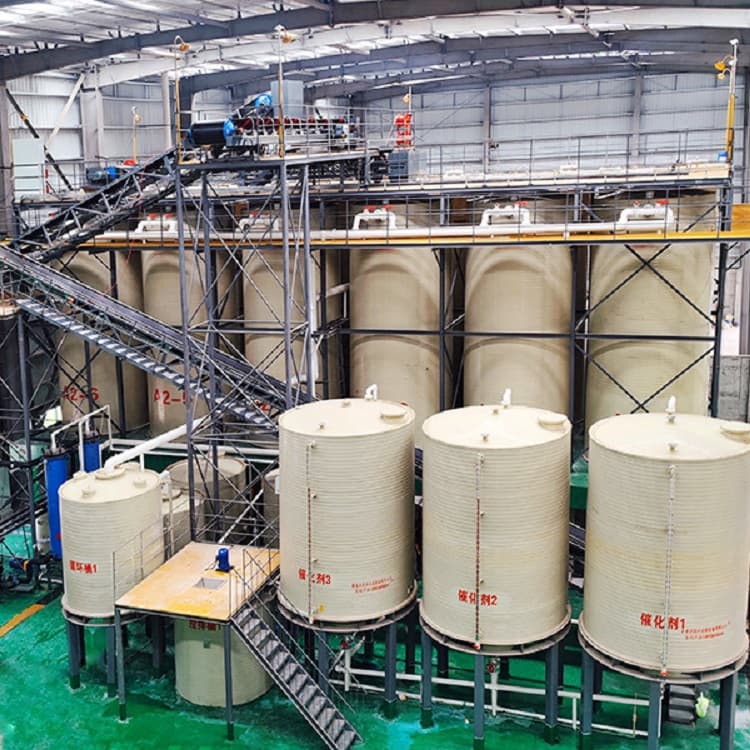
- Incorporate buffers at key nodes. Install buffer bins or slurry tanks between crushing and grinding, grinding and washing, and magnetic separation and flotation to absorb upstream fluctuations and ensure continuous, stable feed to downstream processes. The greatest risk in a series production line is for fluctuations at a single node to propagate throughout the entire line.
- Configure production capacity with a margin of 1.1–1.2 times. Allow for capacity margins when selecting equipment for each stage to accommodate fluctuations in raw ore supply and future production increases.
- Use multiple units of key equipment in parallel rather than a single large-capacity unit. For critical stages such as magnetic separators, flotation cells, and vibrating screens, multiple units should be operated in parallel. This ensures that production can continue on the remaining equipment during maintenance of a single unit, preventing a single-point failure from causing a complete shutdown of the entire series production line.
III. Key Points for Optimizing Module-by-Module Series Configuration
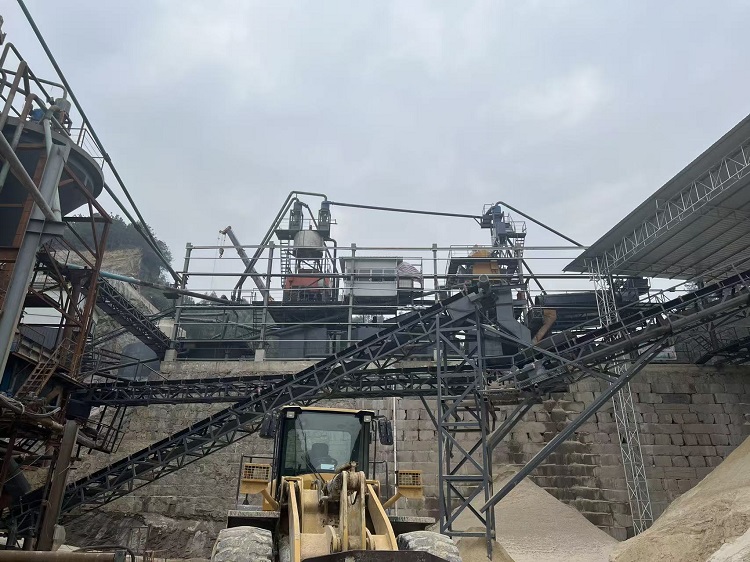
Crushing and Grinding Section: Jaw crusher for coarse crushing → cone crusher/impact crusher for medium and fine crushing → rod mill (to preserve particle shape) for fine grinding.The optimization strategy is “more crushing, less grinding”: fully utilizing the crushing stage to reduce the load on the grinding stage, thereby minimizing over-grinding and energy consumption; a buffer bin is installed between the crushing and grinding stages.
Scrubbing and Desliming Section: High-intensity scrubber → agitation tank → hydrocyclone bank → desliming hopper → vibrating screen. Optimization focuses on uniform reagent dispersion and desliming efficiency; timely desliming after scrubbing prevents iron-containing fine slime from entering subsequent magnetic separation stages and interfering with magnetic field strength.
Magnetic Separation Section: Flat-bed magnetic separator for roughing → Vertical ring high-gradient magnetic separator for scavenging/concentration → Electromagnetic slurry magnetic separator for deep iron removal. Optimization focuses on the rational configuration of magnetic field gradients, as well as stable slurry concentration and flow velocity; when multiple stages are connected in series, care must be taken to prevent new sludge formation between stages.
Flotation Section: Slurry adjustment tank → Flotation cell → Concentrate/tailings thickener, equipped with an automated chemical dosing system. Optimization focuses on maintaining a stable chemical regimen, matching flotation time to throughput, and appropriately setting magnetic separation intervention points before and after flotation.
Dewatering and Drying Section: Thickener → Filter Press → Dewatering Screen → Dryer. Optimization focuses on matching dewatering capacity with upstream throughput to prevent the finished product section from becoming a bottleneck.
Auxiliary Systems: Pumps, pipes, and valves are sized based on flow rates at each node; flow-through components are made of high-chromium alloy or wear-resistant rubber; the electrical control and automation systems enable full-line coordination, with a focus on monitoring material levels, concentrations, and flow rates at each node.
IV. Common Issues and Countermeasures in Series Optimization
Issue 1: Excess capacity in the front end and bottlenecks in the back end. The solution is to calculate the hourly processing capacity at each node to identify bottlenecks and prioritize scaling up those sections.
Issue 2: Lack of buffering; a shutdown in the upstream section causes the entire line to halt. The solution is to install buffer silos or slurry tanks at critical interfaces.
Issue 3: A single failure of a critical piece of equipment causes the entire line to shut down. The solution is to configure critical equipment in parallel.
Issue 4: Mismatch between design and manufacturing, resulting in equipment dimensions that do not align. The solution is for process engineers and mechanical engineers to collaborate, ensuring equipment is manufactured strictly according to process design drawings—this is also why ElevateSilica emphasizes “perfect integration of equipment and process” in its turnkey line delivery.
The optimization of a 400-metric-ton-per-day quartz sand production line through series configuration essentially involves three key aspects: determining the process sequence based on testing and product specifications, matching node loads step by step while allowing for buffers, and configuring critical equipment in parallel to ensure continuous operation.Only by thoroughly implementing these three elements can the production line operate at full capacity and maintain stable performance metrics. For specific configuration lists, please refer to the mineral processing test reports for representative ore samples and the process design plans.