






Feasibility Study on the Purification of 50,000 Metric Tons of High-Purity Silica Sand (3N–5N) Per Year
Feasibility Study for a 50,000-Meter-Tonne Annual Production Capacity of High-Purity Silica Sand (3N–5N)
High-purity silica sand (3N–5N) is a critical foundational material for high-end industries such as photovoltaics, electronics, and optical communications. With a purity range spanning from 99.9% to 99.999%, the depth of the manufacturing process and the level of capital investment required are far beyond those of ordinary silica sand.An annual production capacity of 50,000 metric tons (based on 300 operating days per year, with a daily processing capacity of approximately 167 metric tons) represents a medium-sized, specialized high-purity sand production line. While economically viable, this scale imposes strict requirements on the stability of the purification process. This paper evaluates the feasibility of purification for a project of this scale.
I. Product Positioning: 3N and 5N Represent Two Distinct Technical Levels
“3N–5N” is not a uniform product range but spans two technical tiers:
3N–4N grade (SiO₂ 99.9%–99.99%)
Primarily targeted at high-purity sand for photovoltaics, electronic glass, and certain electronic packaging materials. The process primarily consists of “pre-enrichment → magnetic separation → flotation → calcination-acid leaching coupling.” Physical and chemical purification of natural ore can be achieved, with the core focus on deep iron removal and the elimination of lattice inclusion impurities.
4N5–5N grade (SiO₂ 99.995%–99.999%)
Intended for higher-end applications such as semiconductor packaging and optical communications. Purification of natural ore has nearly reached its limits, requiring an extreme impurity removal combination of “deep magnetic separation → flotation → multi-stage acid washing → high-temperature treatment/chlorination roasting,” which places extremely high demands on equipment materials, ultra-clean environments, and reagent purity.
For a production line with an annual capacity of 50,000 metric tons, a more realistic configuration is to focus on 3N–4N grade as the main product, with a portion refined to 4N5–5N grade to supply high-end niche markets, thereby forming a tiered product structure.If the entire production is targeted at 5N grade, the raw material grade and market absorption capacity must be carefully evaluated—the global market size for 5N-grade products is limited, and it is unrealistic to produce 50,000 metric tons entirely at 5N grade. Product positioning must be precisely determined based on mineral processing test data; this is also the core of ElevateSilica\'s “test first, decide later” principle.
II. Feasibility Assessment of Purification: Raw Materials Are the Decisive Variable
Whether high-purity silica sand can achieve 3N–5N grades depends first and foremost on the ore\'s “genetic makeup”—specifically, the state of impurity distribution.
If impurities consist primarily of surface iron film, clay, and weakly magnetic associated minerals: 3N–5N grades can be achieved through proprietary chemical washing + multi-stage magnetic separation + proprietary flotation, with the process being relatively controllable.
If the impurities are lattice impurities or fine inclusions: An enhanced calcination–acid leaching coupled process must be employed, utilizing high-temperature phase transitions to induce microcracks in the quartz, exposing the inclusion impurities, followed by deep acid leaching.This is an essential step for purification to 4N or 5N grade and above, and it accounts for the lion\'s share of investment and energy consumption.
If the raw material grade is inherently low: For purity levels of 5N and above, physicochemical purification of natural ore has reached a bottleneck, necessitating a shift to chemical synthesis processes (sol-gel or vapor deposition) to reconstruct SiO₂ at the molecular level.However, the investment and scale logic of chemical synthesis routes differ entirely from those of natural ore purification; an annual production capacity of 50,000 metric tons is typically not feasible.
Therefore, the first step in a purification assessment is not to discuss equipment, but to conduct mineral processing tests using representative ore samples: through spectral analysis, microscopic observation, and multi-element chemical analysis, determine exactly what the impurities are; conduct comparative tests of multiple scenarios in the laboratory(How much iron can be removed by magnetic separation? Is flotation necessary? To what nanogram level can acid leaching and calcination be coupled?), and then determine the product positioning based on purification limits, economic costs, and finished product specifications. The testing cycle for complex ores and ultra-high-purity requirements will be extended and may require additional pilot-scale testing or chemical synthesis validation.
III. Process Flow Framework and Key Stages
Typical process route for producing 50,000 metric tons per year (approximately 167 metric tons per day) of 3N–4N grade high-purity sand:
1. Raw Material Preparation, Crushing, and Grinding
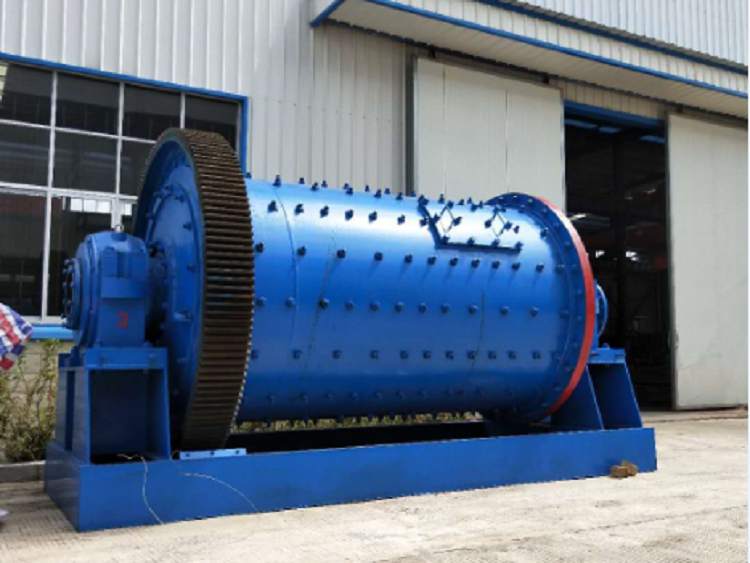
Coarse crushing with a jaw crusher, medium- and fine crushing with a cone crusher or impact crusher, and fine grinding with a rod mill or ball mill, adhering to the principle of “more crushing, less grinding” to preserve particle shape.
2. Scrubbing, Desliming, and Classification
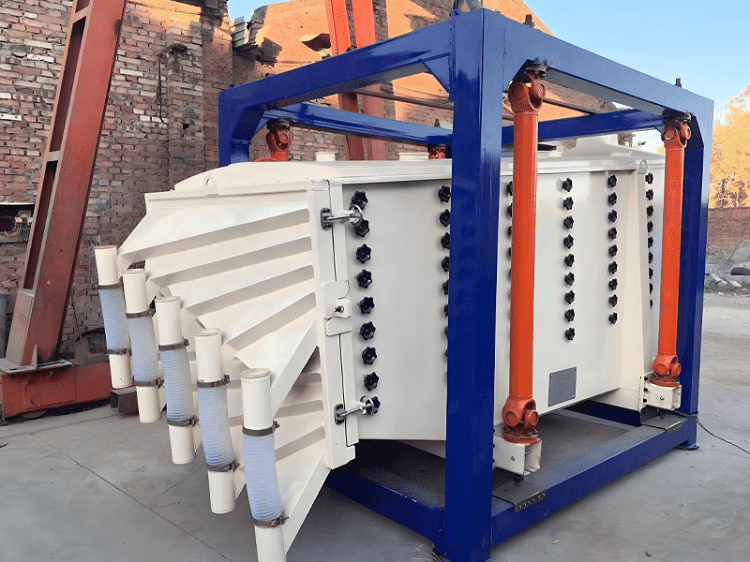
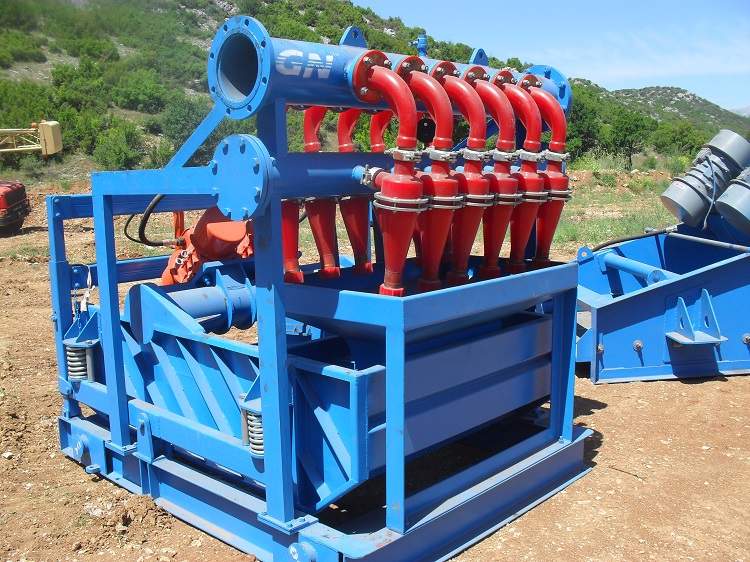
High-intensity scrubbers combined with proprietary scrubbing agents, along with a hydrocyclone bank, desliming hopper, and high-frequency vibrating screen, complete the classification and desliming process.
3. Multi-stage Magnetic Separation for Iron Removal
Coarse separation is performed using a flat-bed magnetic separator; sweeping and concentrating are carried out using a vertical ring high-gradient magnetic separator; and deep iron removal is achieved using an electromagnetic slurry magnetic separator. This tiered configuration ensures consistently low iron content.
4. Flotation Purification
Large flotation cells, combined with an automated dosing system and using the proprietary ElevateSilica flotation reagent, separate quartz from feldspar, mica, and iron-bearing minerals.
5. Calcination–Acid Leaching Coupling
High-temperature calcination in rotary kilns or fluidized-bed furnaces, supported by acid leaching reactors, counter-current scrubbers, waste acid neutralization tanks, and negative-pressure absorption towers for fluoride-containing exhaust gases. This is the core process for purification to 4N grade or higher and a key component of the environmental protection infrastructure.
6. Precision Classification, Dewatering, and Drying
A hydrocyclone bank and horizontal screw centrifuges control particle size, while thickeners, filter presses, and dryers complete the dewatering process.
7. Ultra-Clean Environment and Automation
5N-grade products require a high level of cleanliness in the production environment, necessitating the installation of appropriate cleanrooms and a DCS automation control system to minimize contamination of product specifications caused by human intervention.
IV. Key Points for Investment and Cost Assessment
The investment structure of a 50,000-metric-ton-per-year high-purity sand project differs significantly from that of a standard silica sand project in several key aspects:
Equipment investment accounts for a high proportion of the total and involves a high degree of customization. The calcination-acid leaching coupled system, multi-stage magnetic separation and flotation, upgrades to corrosion-resistant materials (duplex steel, internal corrosion-resistant coatings), and ultra-clean environment infrastructure all drive up equipment costs. Equipment accounts for approximately 45%–60% of the total investment.
Environmental protection measures constitute a fixed expense. Treatment of acid washing waste liquid, absorption of fluoride-containing exhaust gases, and wastewater reuse can account for 8%–15% of the total investment, and environmental approval requirements for high-purity sand are stricter.
Energy costs are a significant factor. Fuel and electricity consumption during the calcination stage constitute the largest portion of high-purity sand operating costs; local energy prices must be evaluated when selecting equipment.
Testing and validation cycles are lengthy. Mineral processing tests for high-purity sand may require scaled-up trials, so additional buffer time should be factored into the project timeline beyond the standard 8–15 months.
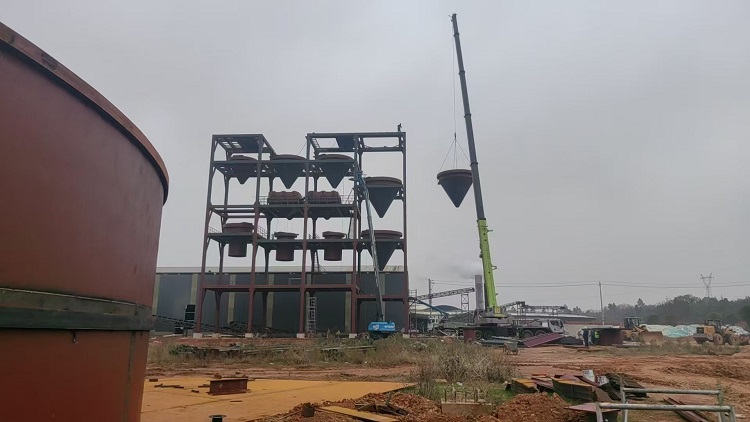
Overall, the total investment for a project with an annual output of 50,000 metric tons of 3N–4N grade high-purity silica sand typically ranges in the hundreds of millions of RMB, depending on raw material characteristics, product purity specifications, and the level of environmental protection measures. If the project involves 5N grade production or deep integration with calcination, the investment will increase further.Any precise budget must be based on mineral processing test reports and process design.
V. Evaluation Conclusions and Recommendations
- First, the feasibility of purification is determined by the raw materials; pilot testing must precede any discussion of scale. The success or failure of a 50,000-metric-ton production line is largely determined the moment the ore sample enters the laboratory. Skipping pilot testing and proceeding directly to equipment planning poses the greatest investment risk.
- Second, product positioning should adopt a tiered configuration rather than betting everything on 5N. A structure centered on 3N–4N, with partial refinement to 4N5–5N, both meets market demand and mitigates technical risks.
- Third, the calcination-acid leaching coupling process is a critical hurdle for 4N-grade and higher products. The process parameters, chemical dosing regimens, and environmental protection measures for this stage must be thoroughly validated during the pilot phase.
- Fourth, environmental protection and energy consumption costs must be factored into the overall budget in advance. The treatment of waste acid and exhaust gases from high-purity sand production, as well as the energy consumption associated with calcination, are core variables in long-term operating costs.
- Fifth, phased construction helps manage risks. It is recommended that Phase I be commissioned first to verify the stability of performance indicators, using operational data to calibrate the design for Phase II expansion.
An annual production capacity of 50,000 metric tons of high-purity silica sand (3N–5N) is a promising project with substantial technical barriers. Conducting rigorous mineral processing tests to define product specifications and process routes, and then preparing an equipment list and investment estimate based on actual conditions, is the only reliable path to ensuring the project “meets standards upon commencement of production.”
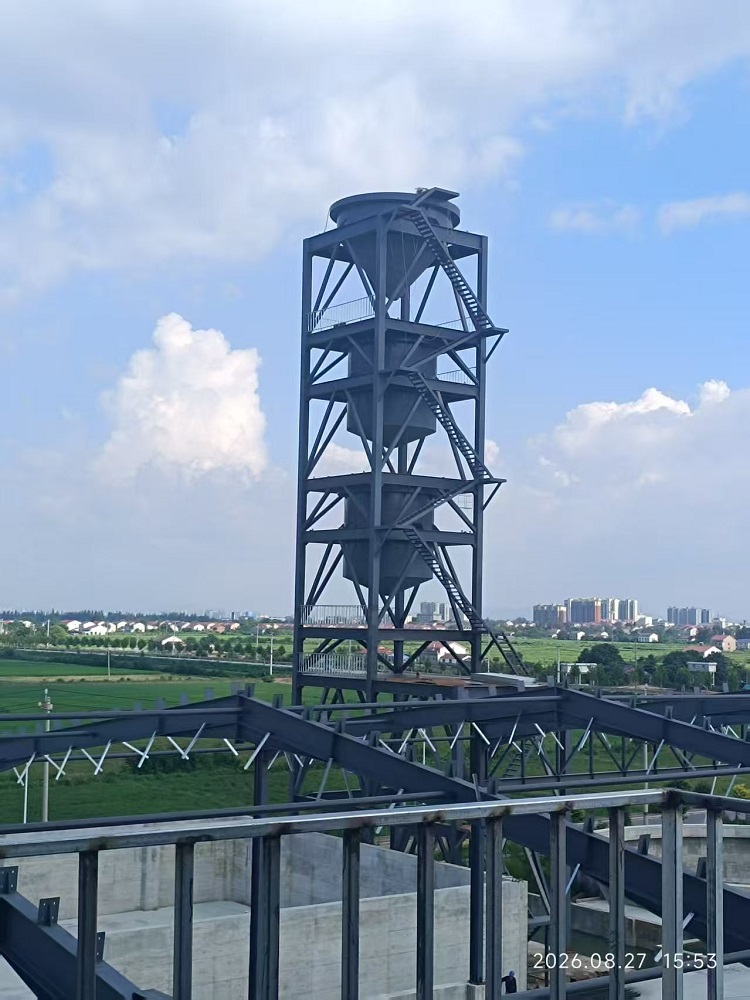
The core of evaluating the annual 50,000-metric-ton high-purity silica sand purification project is to first use mineral processing tests to determine the distribution of impurities in the raw material, establish the tiered product positioning for 3N–4N and 4N5–5N grades, and then configure modules for scrubbing, magnetic separation, flotation,calcination-acid leaching coupling, and ultra-clean automation systems. Finally, the investment should be prudently determined by balancing environmental protection, energy consumption, and the phased implementation schedule.