






Is a production capacity of 100 metric tons per hour sufficient for foundry sand?
Is a production capacity of 100 metric tons per hour sufficient for foundry sand?
The answer to the question “Is a production capacity of 100 metric tons per hour sufficient?” does not lie in the equipment itself, but rather in three factors: the product\'s market positioning, the quality of the raw ore, and the structure of downstream orders.Although foundry sand may seem like a category with a relatively low entry barrier within the silica sand sector, coated sand, washed sand, and sand used in refractory materials have strict requirements regarding clay content, particle shape, and the stability of silica content.A production capacity of 100 metric tons per hour (calculated based on 300 operating days per year and 20 hours per day, resulting in an annual output of approximately 600,000 metric tons) falls within the medium-to-large production line range in the foundry sand sector; whether this is “sufficient” must be assessed on a case-by-case basis.
I. First, let\'s look at the scale: Where does a production capacity of 100 metric tons per hour stand?
An hourly output of 100 metric tons corresponds to an annual output of approximately 600,000 metric tons, which is by no means a small scale in the foundry sand industry.By comparison: small-scale washed sand plants typically operate at 20–50 metric tons per hour, while medium-sized specialized coated sand or foundry sand production lines generally range from 50 to 100 metric tons per hour. Production lines exceeding 100 metric tons per hour typically supply regional markets or serve large foundry industry clusters.
Therefore, the first consideration in determining whether this capacity is “sufficient” is: Can your downstream orders absorb an annual production capacity of 600,000 metric tons?If your customers are just a few local foundries, their annual demand may range from only tens of thousands to over 100,000 metric tons; in this case, a production capacity of 100 metric tons per hour would be significantly excessive, resulting in wasted equipment investment and operating costs. However, if you are targeting regional markets or multiple foundry industrial clusters—or if you have your own supporting facilities for the deep processing of coated sand—this scale becomes economically viable.
II. Next, consider product positioning: The logic behind production capacity varies by foundry sand category
Foundry sand encompasses washed sand, wiped sand, coated sand, and sand for refractory materials, among others, with significant differences in processing depth:
Washed/Scrubbed Sand
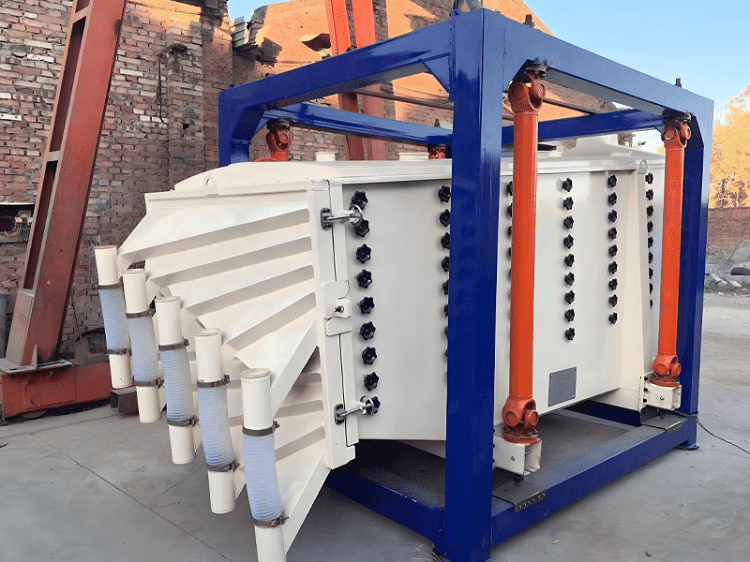
The process is relatively simple, centered on scrubbing to remove clay, washing, grading, and dewatering. Equipment configurations for a 100-metric-ton-per-hour capacity primarily consist of a scrubber, a set of hydrocyclones, a de-claying hopper, a vibrating screen, and a dewatering screen. It is relatively easy to achieve this production capacity, and there is little pressure regarding equipment selection.
Coated Sand
This process adds drying, resin coating (heated sand mixing), and screening steps to the scrubbed sand process.The coating process demands strict control over temperature and resin ratios. A 100-metric-ton-per-hour coating line is considered large-scale; the continuous stability of the drying and sand-mixing equipment is critical, and whether production capacity is “sufficient” depends on whether the coating process can operate at full capacity consistently.
Sand for Refractory Materials
These require higher stability in silicon content and stricter particle shape specifications. Additional magnetic separation for iron removal and precision classification may be necessary, and production capacity may be reduced due to the increased number of processing steps.
Key Reminder: Does the 100-metric-ton-per-hour capacity refer to finished product output or raw ore processing capacity? The scrubbing and washing processes for foundry sand result in the discharge of sludge and the loss of fine particles, so the finished product yield is typically between 70% and 90%.If planning for a finished product output of 100 metric tons per hour, the raw ore processing capacity must be configured at 110–140 metric tons per hour, and equipment selection must be scaled up accordingly. This point is very easily overlooked during planning.
III. Raw Ore Conditions Determine Equipment Configuration and Actual Production Capacity
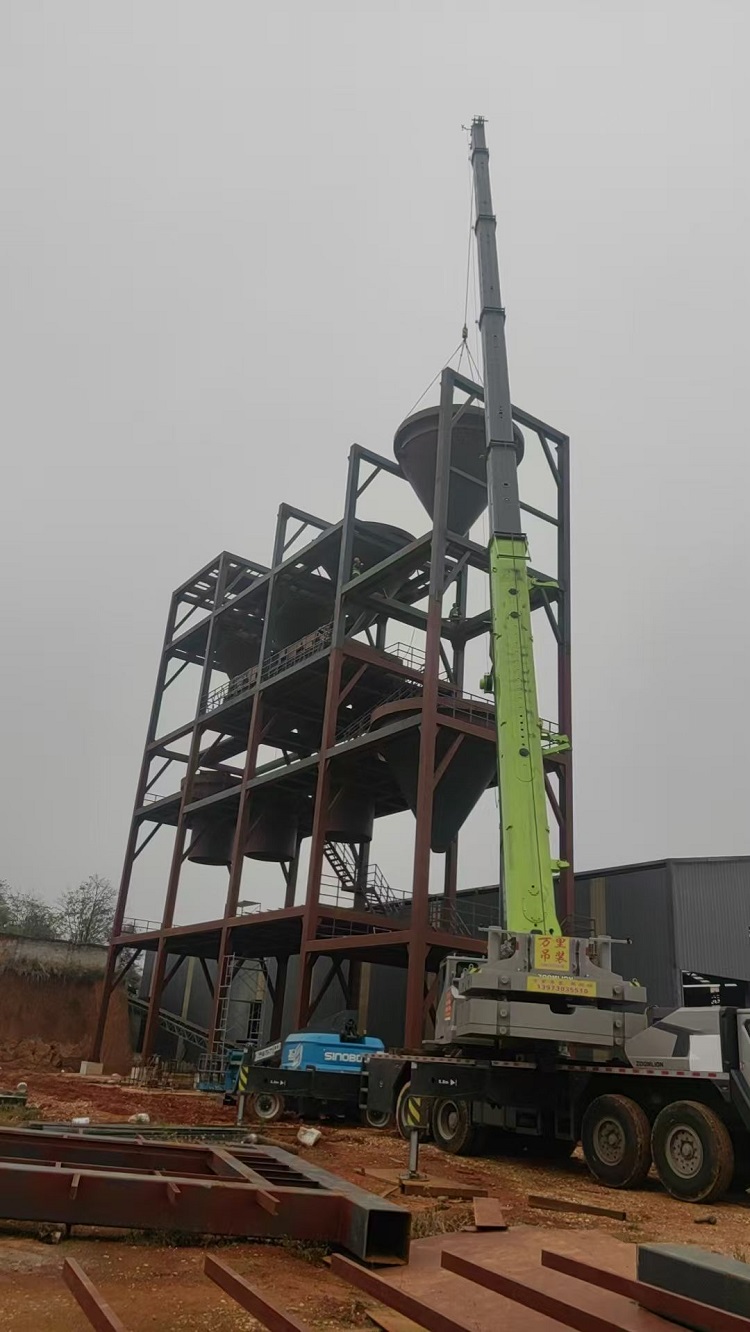
If the raw ore has a high clay content, the scrubbing and desliming stages will be heavily loaded, which will drag down actual production capacity; if the raw ore has poor particle shape, a “more crushing, less grinding” approach is required (using impact crushers or rod mills to preserve particle shape); insufficient configuration in the crushing stage will limit production capacity;If the raw ore has unstable silica content or high impurity levels, the classification and iron removal stages require greater operational margins.
The core process of ElevateSilica\'s foundry sand processing production line (L13) consists of crushing → scrubbing → washing → drying → coating → screening, with the entire plant integrated and automated.The principle for equipment selection is “match based on ore characteristics and process requirements, not based on inventory”—a configuration for 100 metric tons per hour must be determined based on ore sample testing and process design, rather than applying a standard template.
IV. Three Criteria for Determining “Sufficient” Production Capacity
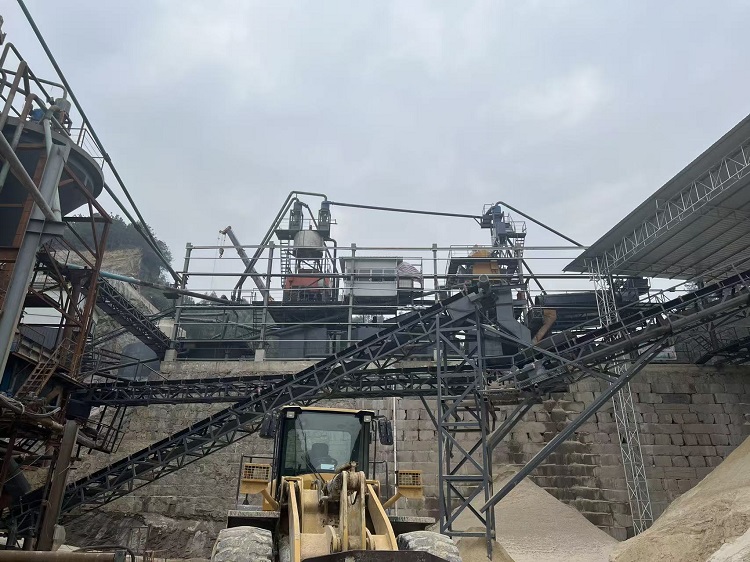
- First, can peak order volumes be accommodated? Production capacity should be designed to meet peak demand during downstream peak seasons, not average demand. If orders are concentrated during peak seasons, a 100-metric-ton-per-hour capacity may be just enough, but the facility will be idle during off-peak seasons; if orders are steady, a slightly lower configuration with reserve capacity may be considered.
- Second, is the equipment margin reasonable? Select equipment for each process stage with a margin of 1.1–1.2 times the finished product capacity. Key equipment (scrubbers, vibrating screens, dewatering screens) should be configured in parallel so that maintenance on a single unit does not disrupt continuous production. A “just enough” setup without margin often proves insufficient in actual operation.
- Third, has flexibility for future expansion been accounted for? Do the plant layout, electrical and water capacity, and equipment foundations allow for Phase 1 expansion? If a production capacity of 100 metric tons per hour is merely the starting point, the feasibility of doubling capacity in the future should be considered during planning to avoid the high costs of a second retrofit.
V. Conclusions and Recommendations
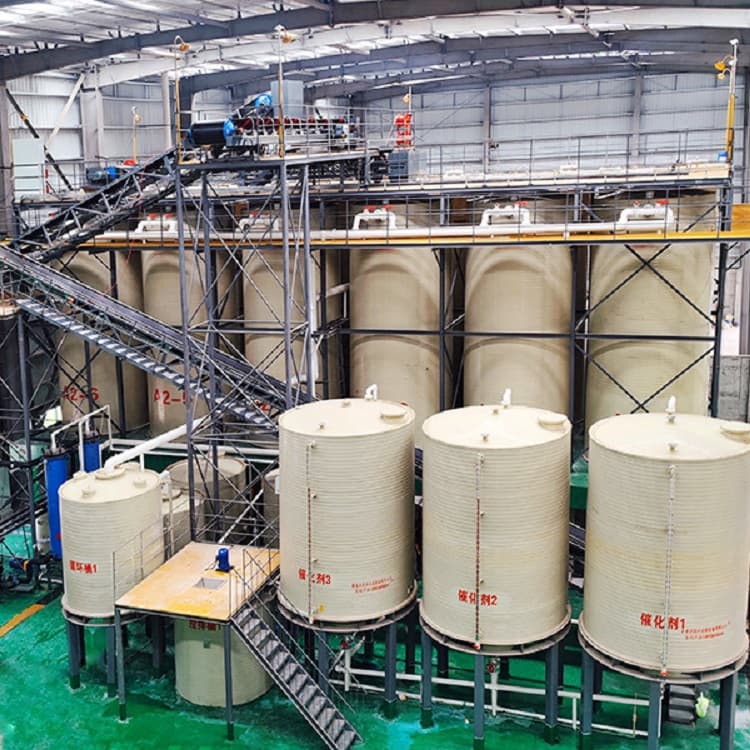
For a foundry sand project, a production capacity of 100 metric tons per hour is sufficient and economically viable when targeting regional markets, producing primarily scrubbed and washed sand, and operating with ore of moderate quality;however, if downstream orders are limited, or if the product is positioned as a value-added category such as coated sand, or if the raw ore has high clay content and poor grain shape, it is necessary to recalculate the actual effective production capacity to avoid a situation where “nominal capacity is 100 metric tons but actual output falls short.”
The most prudent approach remains: first conduct beneficiation tests using representative ore samples to determine the clay content, particle shape, and impurity characteristics; then define the product positioning (water-washed sand, coated sand, or refractory sand); and finally, based on this, prepare an equipment configuration list and capacity estimates.Testing and design fees can be fully offset against the cost of subsequent equipment or EPC contracts; this upfront investment ensures that production capacity planning remains on track.
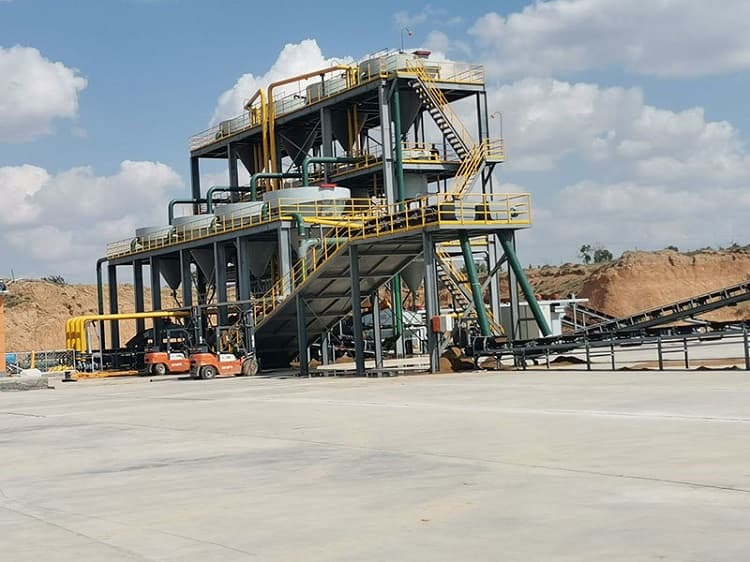
Whether a 100-metric-ton-per-hour production capacity for foundry sand is sufficient depends primarily on whether downstream orders can absorb an annual production capacity of 600,000 metric tons, whether the product is washed sand or coated sand (or other value-added categories), and whether the raw ore conditions are suitable.By first conducting mineral processing tests to determine product positioning and effective production capacity, and then working backward from the finished product output to configure equipment based on raw ore throughput, you can avoid a situation where “capacity is nominally sufficient but cannot be fully utilized in practice.”