


Reference for the Construction Scale of a 100,000-metric-ton-per-year Optical Communication Silicon Sand Plant
Reference for the Construction Scale of a 100,000-metric-ton Annual Production Capacity for Optical Communication Silica Sand
One of the core foundational materials in the optical communications industry is high-purity quartz—optical fiber preforms, quartz glass tubes for fiber drawing, and quartz materials for optical communication device encapsulation all place extremely high demands on the purity, particle size, and impurity control of the silica sand raw material.When a project is scaled at “100,000 metric tons per year,” it falls into the range of medium-to-large-scale industrial production lines, and the planning logic for its construction differs significantly from that of a 200-metric-ton-per-day project. This article provides a systematic analysis of the construction scale for a 100,000-metric-ton-per-year optical communications silica sand facility, serving as a reference for investors during the project planning phase.
I. Defining Product Positioning: Optical Communication Silica Sand Is Not a Single Product Category
“Optical-grade silica sand” corresponds to multiple product tiers within the actual industrial chain; for a 100,000-metric-ton annual production capacity, the specific product positioning must first be determined—otherwise, planning the construction scale is impossible.
Based on ElevateSilica\'s production line system, the product lines related to optical communications primarily include: a purification production line for high-purity quartz sand used in optical fiber preforms (target SiO₂ ≥ 99.99%, Fe ≤ 0.00005%),processing plants and production lines for optical communications and semiconductor-grade silica sand (meeting the extremely high purity requirements of the optical communications and semiconductor industries), as well as the even more upstream refining production lines for electronic-grade high-purity sand (3N–5N).Furthermore, when it comes to 6N–8N-grade ultra-high-purity materials, a chemical synthesis route (sol-gel method or vapor deposition) is required, which operates on an entirely different scale.
An annual production capacity of 100,000 metric tons typically corresponds to the industrial-scale supply of electronic-grade high-purity quartz sand (primarily 3N–4N grade) for the upstream optical communications supply chain or low-iron, high-purity sand for optical communications glass materials. If the entire production is positioned for optical fiber preform grade (4N or higher, iron content ≤ 0.5 ppm), a 100,000-metric-ton scale is rare even in the global market, and the market\'s absorption capacity must be carefully assessed;A more realistic approach is to make 3N–4N-grade electronic-grade high-purity sand the main product, while supplying a portion—after refinement and grading—to niche applications such as optical communication glass tubes and quartz components, thereby forming a tiered product structure.
This definition directly determines the length of the process route and the breakdown of the construction scale.
II. Annual Production Capacity of 100,000 Metric Tons and Operating Parameters
According to industry practice, annual operating time is typically calculated as 300 days; therefore, an annual production capacity of 100,000 metric tons corresponds to:
Daily processing capacity: approximately 333 metric tons/day;
Hourly processing capacity: Approximately 16.7 metric tons per hour, based on 20 hours of effective operation per day; approximately 13.9 metric tons per hour, based on 24 hours of continuous operation.
It is important to distinguish between “raw ore throughput” and “finished product output.” The purification process for electronic-grade high-purity sand involves tailings discharge and classification losses; the yield rate typically ranges between 60% and 85% (depending on the grade of the raw ore and the product specifications).If estimated at a yield rate of 75%, an annual output of 100,000 metric tons of finished product corresponds to a raw ore processing capacity of approximately 133,000 metric tons per year, or about 440 metric tons of raw ore processed per day. This data serves as a fundamental parameter for equipment selection and plant layout planning.
For optical communication-grade products, it is also necessary to consider the production of multiple varieties and particle sizes—the same raw ore may simultaneously yield materials for optical fiber tubes, device packaging, and general electronic-grade applications. The composition of finished products will affect the actual allocation of effective production capacity.
III. Process Flow Framework and Breakdown of Construction Scale
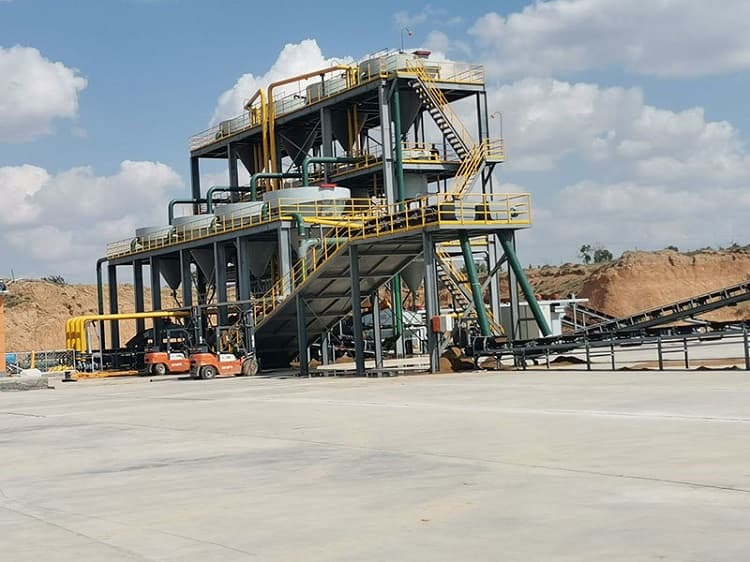
A typical process route for the annual production of 100,000 metric tons of electronic-grade high-purity sand requires scaling up and enhanced stability based on a project with a daily output of 200 metric tons. The core modules include:
1. Raw Material Preparation System
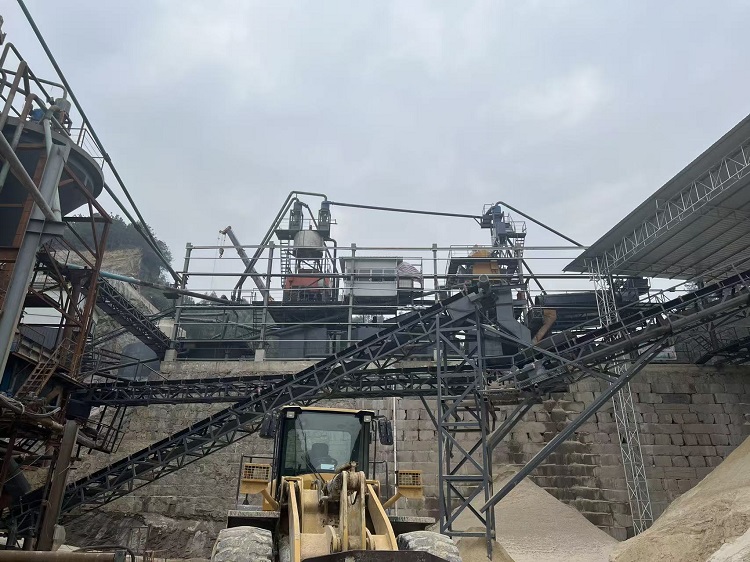
Coarse crushing using a jaw crusher, medium and fine crushing using a cone crusher or impact crusher, and grinding using a rod mill or ball mill. A 100,000-metric-ton-scale operation requires multiple units operating in parallel or a single large-capacity machine, along with a material handling system comprising vibrating feeders, belt conveyors, bucket elevators, and other equipment.The “more crushing, less grinding” principle in the grinding stage is particularly critical for preserving particle shape.
2. Scrubbing, Desliming, and Classification System
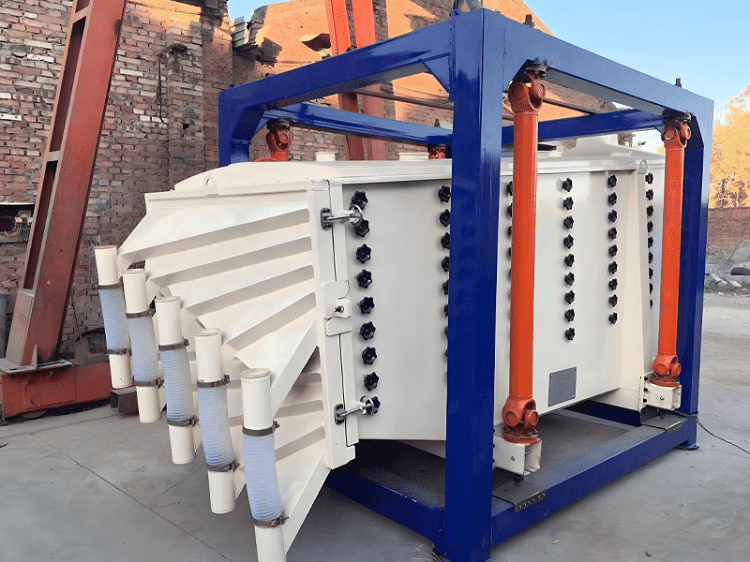
High-capacity scrubbers (multiple units in parallel), high-efficiency agitation tanks, hydrocyclone banks, desliming hoppers, bucket wheel sand washers, and high-frequency vibrating screens. Large-scale production lines must prioritize addressing issues related to slime interference and the uniform dispersion of reagents.
3. Magnetic Separation System for Iron Removal
Flat-bed magnetic separators for roughing; vertical ring high-gradient magnetic separators for scavenging and concentrating; and electromagnetic slurry magnetic separators for deep iron removal. Optical communication-grade products have extremely strict iron content requirements; magnetic separation typically requires a multi-stage, tiered configuration, with the number of units scaling linearly with throughput.
4. Flotation Purification System
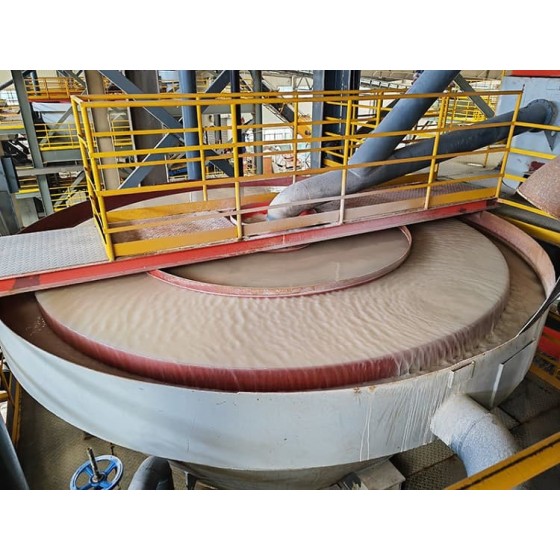
Large-scale aerated mechanically agitated flotation cells (scalable configuration), automated reagent dosing systems, slurry adjustment tanks, and concentrate/tailings thickeners. This is the stage where ElevateSilica\'s proprietary flotation reagents and technology play a central role; the stability of large-scale flotation directly determines the consistency of product specifications.
5. Acid Leaching or Calcination-Acid Leaching Coupled System
Acid leaching reactors (with corrosion-resistant linings), counter-current scrubbers/belt filters, waste acid neutralization tanks, and negative-pressure absorption towers for fluoride-containing exhaust gases; if the target purity is 4N or higher, a rotary kiln or fluidized bed furnace is configured for enhanced calcination, along with a corresponding acid leaching and scrubbing system.Environmental protection-related investments account for a significant proportion of the total investment in a 100,000-metric-ton-scale acid leaching system.
6. Precision Classification and Dehydration/Drying System
Hydraulic cyclone units, horizontal screw centrifuges, and multi-layer high-frequency vibrating screens control particle size distribution; thickeners, filter presses, dewatering screens, and dryers complete the dewatering and drying process.
7. Environmental Protection and Automation Systems
Waste acid treatment, exhaust gas absorption, water recycling, dust collection systems, electrical controls, and DCS automation systems. Large-scale production lines require a higher degree of automation to minimize the impact of manual intervention on the stability of process parameters.
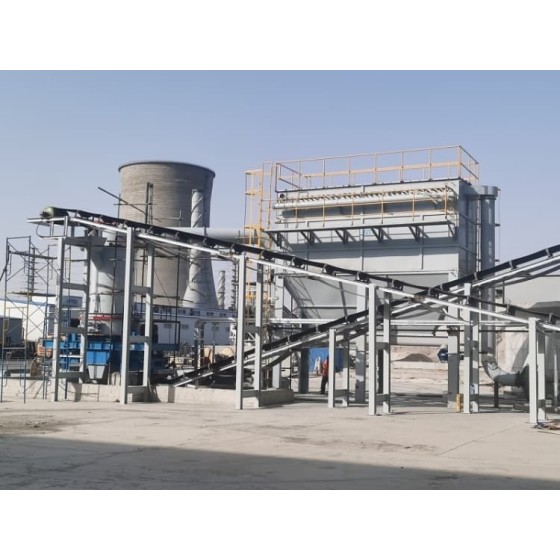
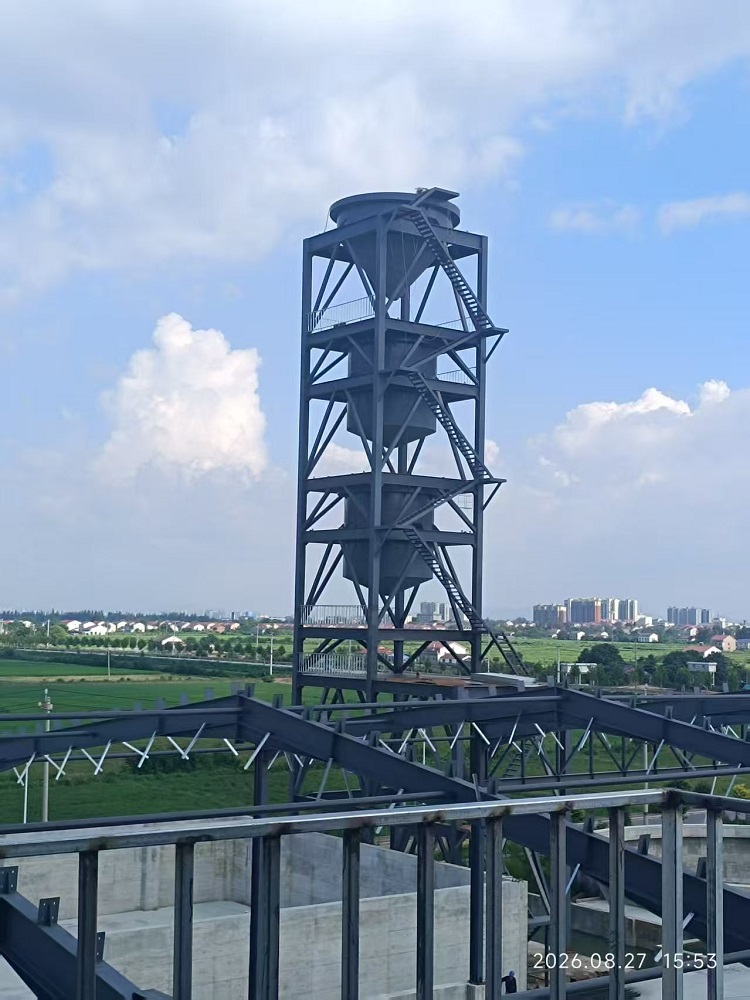
In terms of spatial layout for a 100,000-metric-ton production line, the following facilities are typically required: raw material stockpile and crushing shop; grinding and washing shop; magnetic separation and flotation shop; acid leaching and environmental protection shop; classification, dewatering, and drying shop; finished product storage and packaging shop; laboratory and central control room; and office and auxiliary facilities.Depending on the terrain and layout, the plant\'s footprint is typically in the range of several dozen mu.
IV. Empirical Framework for Investment Scale
The total investment for a 100,000-metric-ton-per-year electronic-grade high-purity sand project similarly follows the structure of “equipment as the main component, civil engineering as a secondary component, and environmental protection as a mandatory requirement”; however, due to the increased scale, the proportions of each component will vary:
Equipment investment remains the dominant component, accounting for approximately 45%–60% of the total investment. After scaling up, the equipment investment per unit of production capacity is typically slightly lower than that of small-scale production lines (economies of scale); however, optical communication-grade products have higher requirements for material quality and precision, and investments in customized corrosion protection, precision grading, and automated control will partially offset these economies of scale.
Civil engineering investment accounts for approximately 15%–25%. For 100,000-metric-ton-scale projects, the factory floor area, foundation work volume, and civil engineering for corrosion protection of pickling tanks are all significantly larger.
Installation and commissioning account for approximately 5%–10%; costs can be effectively controlled by adopting a division of labor model that combines “local unskilled workers” with “on-site guidance from our engineers.”
Environmental protection infrastructure accounts for approximately 8%–15%. If acid leaching is involved, investments in waste acid neutralization, fluorine-containing exhaust gas absorption, and wastewater reuse are mandatory; if flotation is adopted as an alternative to acid leaching, these costs can be moderately reduced, thereby lowering compliance risks.
Working capital and contingencies account for approximately 10%–15%; for large-scale projects, costs related to raw material reserves, chemical inventories, spare parts, and personnel will increase accordingly.
Overall, the total investment for a 100,000-metric-ton-per-year electronic-grade high-purity silica sand project is typically in the range of 100 million to 1 billion RMB; the specific amount depends on the characteristics of the raw ore, the precision of product specifications, environmental requirements, and the level of automation. As with a project producing 200 metric tons per day, any precise budget must be based on mineral processing test reports and process design; figures cannot be discussed in isolation from ore data.
V. Key Considerations for Planning Construction Scale
- First, market absorption capacity takes precedence over the impulse to expand production capacity. Downstream customers for optical-communication-grade high-purity sand are highly concentrated, and certification cycles are long; a 100,000-metric-ton production capacity requires corresponding long-term orders or a tiered product structure to support it. It is recommended to clarify the product tiering plan during the project planning phase to avoid idling high-end production capacity.
- Second, a secure supply of raw ore is a prerequisite for scale. A 100,000-metric-ton output of finished product corresponds to a raw ore processing volume of over 100,000 metric tons; therefore, the mine\'s resource reserves, grade stability, and mining capacity must be commensurate. Fluctuations in raw material grade will directly impact the stability of performance metrics for large-scale production lines.
- Third, mineral processing tests must be conducted early and scaled up. Optical-communication-grade products have stringent specifications; beyond laboratory testing, pilot-scale or intermediate-scale validation is typically required to confirm the limits of purification and the optimal reagent regimen under large-scale conditions. This is also why ElevateSilica emphasizes that “the sooner ore samples are provided, the better”—as testing cycles for complex ores and ultra-high-purity requirements will be correspondingly longer.
- Fourth, the process route must adhere to environmental protection red lines. A 100,000-metric-ton acid leaching system generates significant volumes of waste acid, and environmental approvals are a hard constraint on project implementation. ElevateSilica\'s “magnetic separation + proprietary flotation” alternative to acid leaching is practically significant at this scale for reducing compliance risks and environmental investment costs.
- Fifth, phased construction is an effective means of risk control. It is recommended to proceed according to a schedule of “Phase 1: 50,000-metric-ton production validation + Phase 2: capacity expansion,” using operational data from Phase 1 to calibrate the design for Phase 2, thereby avoiding the risk of failing to meet performance targets associated with a single, large-scale investment.
- Sixth, sufficient buffer time must be built into the project timeline. Conventional silica sand projects typically take 8–15 months from mineral processing trials to production. However, 100,000-metric-ton-scale electronic-grade projects generally require a longer timeline due to the complexity of testing, the prevalence of custom-built equipment, and the need for meticulous commissioning. For overseas projects, additional buffer time must be allocated for customs clearance and logistics.
For a 100,000-metric-ton-per-year optical communications silica sand project, the core of the construction planning is to first lock in the product positioning (primarily 3N–4N-grade electronic-grade high-purity sand with a tiered product structure),then working backward from the raw ore processing capacity and yield to determine production capacity parameters, configuring processes and equipment in modules, and finally prudently determining the investment scale by considering market absorption capacity, raw ore supply security, environmental protection requirements, and the phased implementation schedule.