






Want to reduce iron content and improve purity? Check out our mechanical processing line solutions for low-iron quartz sand right here.
Reducing iron content in low-iron quartz sand is costly and yields inconsistent results, making it an unavoidable challenge for many mineral processing plants.When the raw sand has high Fe₂O₃ content and a high clay content, even after running the magnetic separator for half a day, the target levels still cannot be met. To reduce iron content and improve purity, whether a low-iron quartz sand mechanical processing line can actually solve the problem depends first on identifying where the iron is located.Mechanical iron removal is not a universal solution; the form in which iron exists within the quartz sand determines the effectiveness of a low-iron quartz sand mechanical processing line. If this assessment is incorrect, even the most expensive equipment selected later will be a waste of money.
I. The Form in Which Iron Exists Determines the Method Used to Reduce Iron in Quartz Sand
Iron in quartz sand can be broadly classified into four categories based on its occurrence.
Mechanical iron consists of iron shavings and iron powder introduced by equipment wear during crushing and grinding. It is highly magnetic and can be removed by magnetic separation at medium to low field strengths; this is the easiest type to treat.Surface iron films consist of iron in the form of oxides or hydroxides adhering to the particle surface. Commonly found in weathered sand and ore sources with high clay content, these require scrubbing and desliming; magnetic separation has limited effectiveness against them.Iron-bearing mineral aggregates occur when iron minerals are not fully liberated from quartz; these require grinding to reduce particle size, followed by magnetic separation after individual liberation. Lattice iron and inclusions are trapped within the quartz crystal lattice; mechanical iron removal is largely ineffective for these, and they fall under the scope of acid leaching or roasting.
Upstream scrubbing and desliming often play a more decisive role in the success of the process than downstream magnetic separation. If the thin film of iron in the slime is not thoroughly stripped away during the scrubbing stage, subsequent grinding will re-incorporate it into the sand.Feeding weathered sand with high silt content directly into high-gradient magnetic separation without preliminary washing usually yields unsatisfactory results. Conversely, for sand that meets particle size requirements after grinding, if the proportion of mechanical iron is high, magnetic separation can resolve most of the issues.
To reduce iron content and improve purity, the first step in a mechanical processing line for low-iron quartz sand is not to select a magnetic separator, but to determine the form in which the iron exists.
II. Five Stages of Mechanical Iron Removal
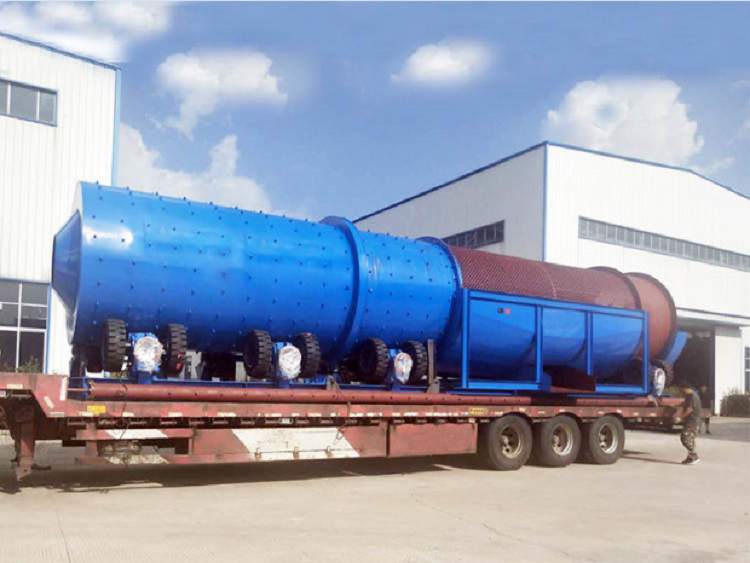
Scrubbing involves subjecting sand particles to high-speed agitation so they rub and collide with one another, stripping away surface clay and iron films. The scrubbing concentration is generally maintained at a relatively high level; if the concentration is too low, the sand particles will not come into contact with each other, and if it is too high, the equipment load will be excessive. Specific values must be determined through testing based on the ore source.The scrubbing time is determined by the clay content; ore sources with high clay content may require two consecutive scrubbing stages. As the impeller of the scrubber wears down, the stripping efficiency decreases, so regular inspections are essential.
Dewatering and classification involves feeding the scrubbed slurry into a vibrating screen or hydrocyclone to separate out the fine silt. The key to this step is to completely remove silt finer than -200 mesh; if the iron and aluminum concentrated in the silt are carried forward, it creates potential problems.Inadequate desliming will significantly increase the load on the downstream magnetic separator; in severe cases, the iron removal efficiency of the entire line will be compromised.
In the grinding stage, when the feed size is relatively coarse or when intergrown particles need to be broken up, a rod mill is more suitable than a ball mill. Rod mills use line-contact grinding, resulting in less over-grinding and better product particle shape.For grinding media, select ceramic rods or high-alumina rods to avoid introducing new mechanical iron from steel rods. The grinding fineness must be carefully controlled; grinding too coarsely prevents the separation of agglomerates, while grinding too finely causes severe sludging, complicating subsequent desliming and magnetic separation.
Magnetic separation is the core iron-removal step in the mechanical processing route for low-iron quartz sand. Coarse and fine particles are separated: coarse particles first pass through a low-field-strength circuit to remove mechanical iron, then through a high-field-strength circuit to capture weakly magnetic particles; fine particles undergo vertical-ring high-gradient magnetic separation, with the background field strength adjusted according to the ore\'s properties.The concentration of the slurry in wet magnetic separation must be carefully controlled; concentrations that are too high or too low will affect separation efficiency. Magnetic media wear out and become clogged over time, causing a decline in magnetic field strength; regular inspection and replacement are essential.
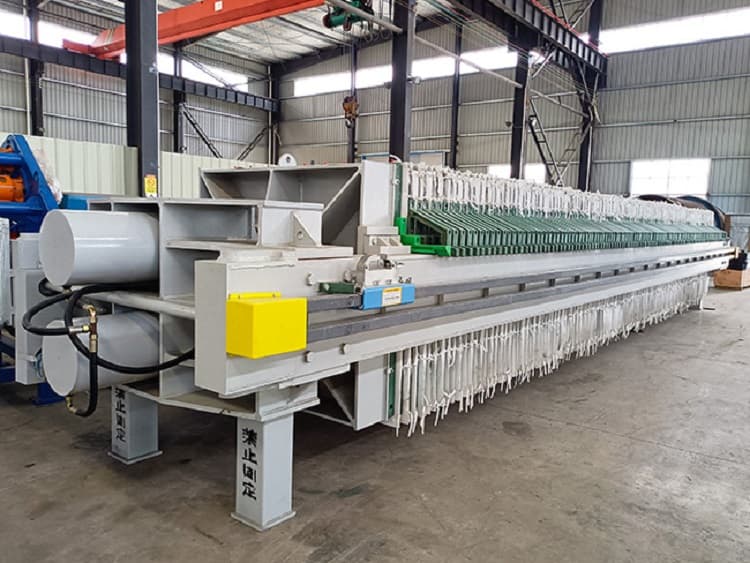
Dehydration is performed using ceramic filter presses or vacuum filters. Filtrate should be reused as much as possible; however, suspended solids in the recirculated water must be controlled, otherwise iron-containing microparticles will re-enter the system with the recirculated water. The acceptable level of suspended solids in the recirculated water depends on the feed cleanliness requirements of the subsequent magnetic separator. While there is no uniform standard, exceeding the limit will certainly cause problems.
III. Different Ore Source Conditions Require Different Approaches to Process Line Configuration
| Solution | Applicable Conditions | Advantages and Disadvantages |
|---|---|---|
| Intensive Scrubbing + Desliming + Medium-to-Low-Field Magnetic Separation | High mud content; iron primarily present as a surface film | Low chemical consumption and controllable operating costs; limited effectiveness on agglomerated and lattice-bound iron |
| Scrubbing + grinding + double-drum magnetic separation | Low sludge content; high proportion of mechanical iron | Significant iron removal efficiency; the grinding stage increases energy consumption and wear |
| Grinding + classification + vertical-ring high-gradient magnetic separation | Many intergrown iron minerals; insufficient liberation | Capable of processing weakly magnetic fine particles; must be ground to the appropriate particle size to be effective |
| Mechanical processing in the front end + acid leaching in the back end | Predominantly lattice iron or inclusions | Significant iron reduction; corresponding increase in chemical costs and wastewater treatment demands |
This table serves as a general guide; specific configurations must be determined based on test data from the raw sand. Differences between ore sources are significant; the processing routes for marine sedimentary sand and weathered sand, for example, are distinct. When aiming to reduce iron content and enhance purity, there is no one-size-fits-all solution for a mechanical processing line for low-iron quartz sand—only the solution best suited to the specific ore source.
The practical approach adopted by most processing plants is as follows: first, implement a mechanical line to remove as much iron as possible, then assess whether the residual iron content meets the target product requirements. If the iron content still fails to meet standards after mechanical removal, acid leaching or roasting should be considered.This sequence should not be reversed; performing acid leaching before mechanical removal is not cost-effective.
IV. Key Considerations for Equipment Configuration and Selection
| Solution | Applicable Conditions | Advantages and Disadvantages |
|---|---|---|
| High-Efficiency Scrubber | High mud content, primarily consisting of a ferrous film on the surface | Excellent stripping performance; when sludge content is high, two stages must be connected in series, increasing floor space and energy consumption |
| Vibrating Screen + Hydrocyclone | Dewatering and classification by particle size | High classification efficiency; hydrocyclone parameters must be adjusted based on particle size distribution |
| Rod mill | Requires grinding of agglomerated particles | Minimal overgrinding and good particle shape; ceramic or high-alumina media rods are used, which are more expensive than steel rods |
| Wet double-drum magnetic separator + vertical ring high-gradient magnetic separator | Coarse and fine separation and iron removal | High separation efficiency by particle size; magnetic field strength and rotational speed must be adjusted according to particle size |
| Ceramic filter | Concentrate dewatering | Clear filtrate that can be reused; filter plates require periodic inspection and replacement |
When selecting equipment, more expensive does not necessarily mean better; matching the equipment to the characteristics of the ore source is key. No matter how high the nominal magnetic field strength of a magnetic separator is, separation efficiency will not improve if the feed particle size and concentration are outside the appropriate range. If a scrubber is undersized, it cannot handle ore sources with high clay content; if it is oversized, it results in wasted energy and space.
The effectiveness of quartz sand in removing iron depends equally on the equipment and the ore itself. Some ores are inherently easy to process, while others cannot meet the requirements for high-end products no matter how the equipment is adjusted.
V. Common Technical Issues
Q: To what level can mechanical iron removal reduce Fe₂O₃?
This depends on the form in which iron is present in the raw sand and the specifications of the target product. For ore sources where iron primarily exists as mechanical iron and surface films, mechanical methods can achieve relatively low levels; for those where iron is mainly present in the crystal lattice or as inclusions, it is difficult to meet standards using mechanical methods alone, and follow-up acid washing is typically required.There are significant differences between different ore sources, so it is not appropriate to apply a single fixed value to all situations.
Q: Is a higher magnetic field strength always better for magnetic separation?
No. For coarse-grained material, a low magnetic field strength should be used first to remove strongly magnetic iron, followed by a high magnetic field strength to capture weakly magnetic particles; grade-specific separation is more effective than a “one-pot” approach.Excessively high magnetic field strength can sometimes cause gangue minerals to be recovered along with the target ore, thereby affecting concentrate yield and grade. Magnetic field strength must be matched to particle size; using high field strength for coarse particles and low field strength for fine particles are both common misconceptions.
Q: How should one choose between a mechanical line and an acid leaching process?
First, assess the capabilities of the mechanical method. If the Fe₂O₃ meets the target product requirements after mechanical iron removal, acid leaching is unnecessary. If the mechanical method reaches its limits and still fails to meet standards, then evaluate the cost and environmental feasibility of acid leaching.The costs of acid leaching reagents, wastewater treatment, and equipment corrosion protection all represent actual investments, and this process is not suitable for every plant. It is also necessary to determine in advance whether environmental approval can be obtained.
Q: How significant are the front-end scrubbing and desliming processes?
For ore sources with high slime content and a surface layer of iron film, the contribution of front-end scrubbing and desliming to the final iron removal efficiency is often no less than that of the downstream magnetic separation. If the iron film in the slime is not stripped away during the scrubbing stage, subsequent grinding will reintroduce the iron into the sand, thereby increasing the load on the magnetic separation process.To determine the feasibility of a mechanical processing line, one should first assess whether the washing and desliming stages can effectively remove surface iron, and then evaluate the magnetic separation configuration.
VI. Conclusion
There are limits to the purification of low-iron quartz sand, and it is subject to specific conditions.The value of mechanical iron removal lies in removing as much iron as possible at a relatively controllable cost. To determine whether a mechanical processing line for low-iron quartz sand is suitable for a specific ore source, one must consider the iron distribution in the raw sand, its clay content, particle size distribution, and the target product\'s iron content requirements.
When aiming to reduce iron content and improve purity, a mechanical processing line for low-iron quartz sand is not necessarily better the more complex it is; the key lies in proper matching. A solution is only meaningful when the data is clear. For further information, please submit the raw sand test data and target product specifications to receive tailored process configuration recommendations.