






Equipment Selection List for a 10-Metric-Tons-Per-Hour Acid Leaching and Purification Line for Iron Removal
Let\'s start with three key points.
First, the mechanical production line solution for low-iron quartz sand with an hourly output of 10 metric tons is of moderate scale, but it places high demands on equipment compatibility. This line falls between a small-scale pilot line and a large-scale mass production line; therefore, the selection criteria cannot simply be copied from small-scale lines, nor can solutions for large-scale lines be directly applied.
Second, the mechanical production line for low-iron quartz sand has only one core objective: reducing iron content and enhancing purity. If iron content cannot be reduced, whiteness cannot be improved, and subsequent applications such as panel-grade sand, photovoltaic sand, and electronic-grade fillers become impossible. The entire logic behind equipment selection revolves around these four words: reducing iron content and enhancing purity.
Third, this list outlines six items in the order of the production process. You can use it as a reference checklist for equipment procurement or to identify any missing components in your existing low-iron quartz sand mechanical line design. Let\'s move directly to the main content.
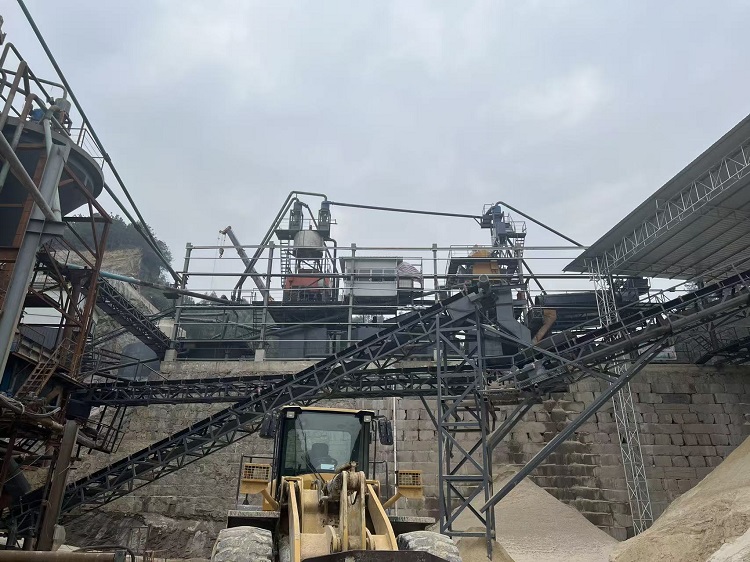
I. Feeding and Pretreatment Equipment: Remove Sludge and Iron First, Then Proceed to Acid Washing
Before quartz sand enters the acid washing tank, it must be screened, de-ironed, and washed to remove silt. For a line with a production capacity of 10 metric tons per hour, we recommend equipping it with a circular vibrating screen and a permanent magnet drum separator. Allow for an appropriate margin in processing capacity; there is no need to aim for excessively high capacity.
Why is this important? If mud and mechanical iron enter the acid washing tank along with the sand, acid consumption will increase significantly. Mud coats the surface of the sand particles, preventing the acid solution from coming into contact with the quartz itself, which directly compromises the effectiveness of iron removal and purification.
Common mistake: Some people think, “Since it\'s going to be acid-washed later anyway, a quick rinse up front is enough.” In practice, many issues with low-iron quartz sand processing lines stem from inadequate sludge removal at the feed end. Any shortcuts taken in pretreatment will come back to haunt you twofold in the acid-washing stage.
At a quartz mine in Jiangxi, the raw sand\'s clay content wasn\'t particularly high, but the clay was of a sticky variety. As soon as it entered the acid-washing tank, it turned into a paste, clumping the sand together. After adding a spiral sand washer paired with a vibrating screen, acid consumption decreased, and the stability of iron removal and purification improved significantly.
II. Acid Washing Reaction System: The Heart of the Quartz Sand Acid Washing and Purification Line
For a production capacity of 10 metric tons per hour, the acid washing reaction system is typically equipped with 2 to 3 acid washing tanks operating in rotation. In terms of materials, fiberglass-reinforced plastic (FRP) or polypropylene (PP) are both viable options; however, costs must not be cut on details such as flanges and valves, which must be acid- and heat-resistant.
Operationally, three factors must be controlled: acid concentration, liquid-to-solid ratio, and reaction time. The liquid-to-solid ratio is typically maintained within a reasonable range. Acid concentration is determined based on the iron content of the raw sand; both oxalic acid and mixed acid systems are used. Reaction time must be determined through small-scale testing and cannot be decided based on experience alone.
Why is this important? The design of the acid washing tank directly determines whether the acid solution can penetrate the sand layer uniformly. If the tank is too tall or the sand layer too thick, the sand at the bottom will not have come into contact with fresh acid solution before the sand above has completed its reaction. If the tank is too short, the processing capacity will be insufficient.
Common Mistake: To save on equipment costs, some use ordinary carbon steel tanks lined with only a thin layer of anti-corrosion coating. Everything works fine for the first two months, but leaks begin in the third month.Acid has extremely strong penetrating power. Any money saved on tank materials will eventually be spent on repair costs and production downtime. The reliability of a quartz sand acid washing and purification line depends first and foremost on the corrosion resistance of the tanks and piping.
Another detail to consider is the heating method. Acid washing reactions typically require heating; raising the temperature appropriately will significantly accelerate the reaction rate.For a line with a capacity of 10 metric tons per hour, we recommend using a graphite heat exchanger or PTFE heating tubes. Do not insert steam pipes directly into the tank, as localized overheating can “burn” new impurities onto the surface of the sand, which will actually impair the iron-reduction and purification process.
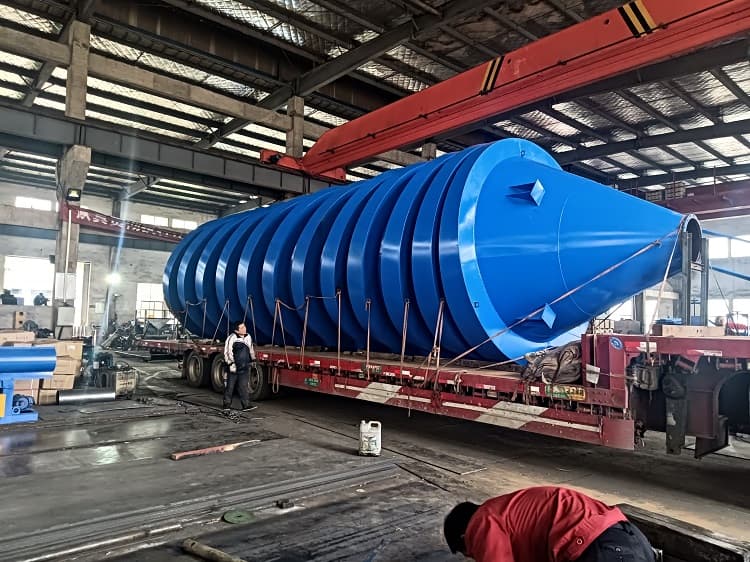
III. Solid-Liquid Separation and Washing: The Second Half of Iron Removal and Purification
Once the reaction is complete, the sand must be separated from the acid solution and then repeatedly washed until the solution becomes neutral. The choice of equipment for this stage directly determines daily fresh water consumption and wastewater treatment costs.
For a production capacity of 10 metric tons per hour, we recommend using a vacuum belt filter or a plate-and-frame filter press for preliminary solid-liquid separation, followed by 2 to 3 stages of counter-current rinsing. Counter-current rinsing means that clean water flows backward from the final stage, while the sand moves forward from the first stage, ensuring the cleanest sand is produced with the least amount of water.
Why is this important? After acid washing, the surface and pores of quartz sand are filled with residual acid. If not washed thoroughly, the residual acid ions will severely compromise performance when used in high-end products. Furthermore, residual acid introduced into the wastewater treatment system will significantly increase the amount of neutralizing agent required.
Common mistake: Using only a single washing stage, assuming “a quick rinse is enough.” The result is unstable pH levels in the sand—meeting standards one day and exceeding limits the next. While counter-current rinsing may seem to require additional pumps and piping, the long-term savings on water and wastewater treatment costs are substantial.
Many small factories cut corners during the cleaning process. They assume the sand is good enough once it looks white, but when used for precision casting or as electronic-grade filler, a simple pH or conductivity test is enough to get it rejected. In a quartz sand acid washing and purification line, the “purification” process relies equally on acid washing and thorough rinsing.In mechanical processing solutions for low-iron quartz sand, the number of washing stages must not be reduced.
IV. Dehydration and Drying: Don\'t Let Moisture Eat Into Your Output
Washed quartz sand typically has a relatively high moisture content. For a line with an hourly output of 10 metric tons, it is recommended to use a centrifugal dewatering machine or a vacuum dewatering machine to first reduce the moisture content to a lower level, followed by further drying using a rotary dryer or a belt dryer.
Why is this important? Moisture equals weight. You\'re selling dry sand, not wet sand. If the moisture content is too high, you\'ll end up paying significantly more for water with every truckload. If the downstream application involves resin sand or coatings, the moisture requirements are even stricter.
Common Mistakes: Selecting a dewatering unit with insufficient capacity causes the feed to the dryer to fluctuate between dry and wet, resulting in significant variations in the moisture content of the output. Another common issue is setting the dryer temperature too high, which causes micro-cracks to form on the surface of the quartz sand; this makes the sand prone to breaking down into fine powder during subsequent use.
My recommendation is that the processing capacity of the dewatering equipment should be at least slightly greater than that of the acid washing stage. Washed sand has poor flowability and is prone to clogging, which reduces actual throughput. In mechanical processing lines for low-iron quartz sand, dewatering and drying are often underestimated steps.
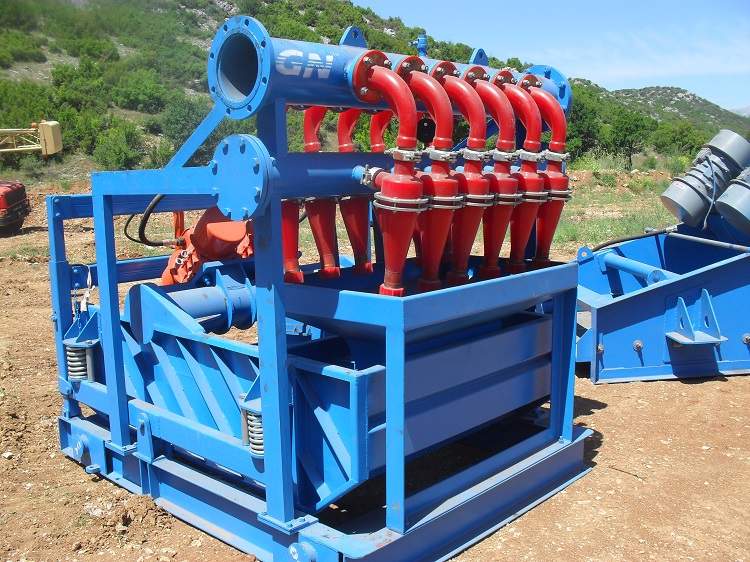
V. Wastewater and Acid Mist Treatment: Environmental Protection Is Non-Negotiable
In an acid washing and purification line, environmental protection equipment is not a secondary consideration. For a 10-metric-ton-per-hour operation, wastewater treatment should include a neutralization tank, a sedimentation tank, and a filter press, while acid mist treatment should incorporate an alkali solution spray tower.
Why is this important? Acid washing wastewater has a low pH and contains fluoride ions and heavy metal ions; direct discharge is absolutely unacceptable. If acid mist is not collected, the workshop will be filled with a pungent odor, making it unbearable for workers and resulting in failure to pass environmental inspections.
Common Mistakes: The neutralization tank\'s volume is insufficient, resulting in a short wastewater retention time and incomplete neutralization. Alternatively, if no one monitors the alkaline solution concentration in the scrubber tower, it eventually turns into an “acid tower” over time, rendering it ineffective.
There\'s no need to dwell on the big picture here. The operating costs of environmental protection equipment must be factored into the processing cost per metric ton of sand from the outset. If, after calculating these costs, you find the profit margin is too thin, it indicates that the scale or process route of the low-iron quartz sand production line needs further optimization. Iron reduction and purification are the goals; compliant operation is the bottom line.
VI. Auxiliary Equipment and Control Systems: Don\'t Let the Details Hold You Back
This includes acid-resistant pumps, piping, valves, level gauges, online pH monitoring, temperature sensors, and the PLC control system.
Why is this important? On a line with a production capacity of 10 metric tons per hour, it\'s impossible for an operator to monitor the liquid level and temperature of every tank 24 hours a day. Online pH monitoring helps you determine the end point of a reaction, while temperature sensors prevent overheating. These investments represent a small portion of the total cost but can significantly reduce the pressure on night shift staff.
Common Mistakes: Using standard cast iron valves, which need to be replaced every few months; using PPR piping, where the joints corrode from acid and leak; and using basic level gauges that malfunction when exposed to acid fumes.
In my experience, auxiliary equipment accounts for only a small portion of the total investment, but it determines the availability of the entire quartz sand acid washing and purification line. Frequent production shutdowns to replace valves result in lost output that is far more valuable than the valves themselves.
Tips for Avoiding Pitfalls: These Three Areas Are Most Prone to Problems
Pitfall #1: Skipping sufficient pilot testing and scaling up directly to full-scale production. Stirring a beaker in the lab yields excellent results. But once transferred to the actual production tank, mass transfer and heat transfer dynamics change entirely. It is recommended to conduct comparative tests under at least several different liquid-to-solid ratios and temperature conditions to identify the optimal range for your raw sand. There are no one-size-fits-all parameters for iron removal and purification.
Pitfall #2: Taking a “good enough” approach to equipment materials. In an acid washing line, there\'s no such thing as “good enough”—only “acceptable” or “unacceptable.” Use the right materials for the job: fiberglass tanks, polypropylene piping, and PTFE seals. The money saved won\'t even cover a fraction of the losses from a single production shutdown.
Third Pitfall: Poor Design for Water Reuse. The effluent from the final stage of counter-current rinsing can be recirculated to the previous stage. Discharging it directly will increase both water consumption and wastewater treatment volume. This design consideration must be raised during the equipment selection phase of the low-iron quartz sand mechanical processing line; don\'t wait until the system is installed to modify the piping.
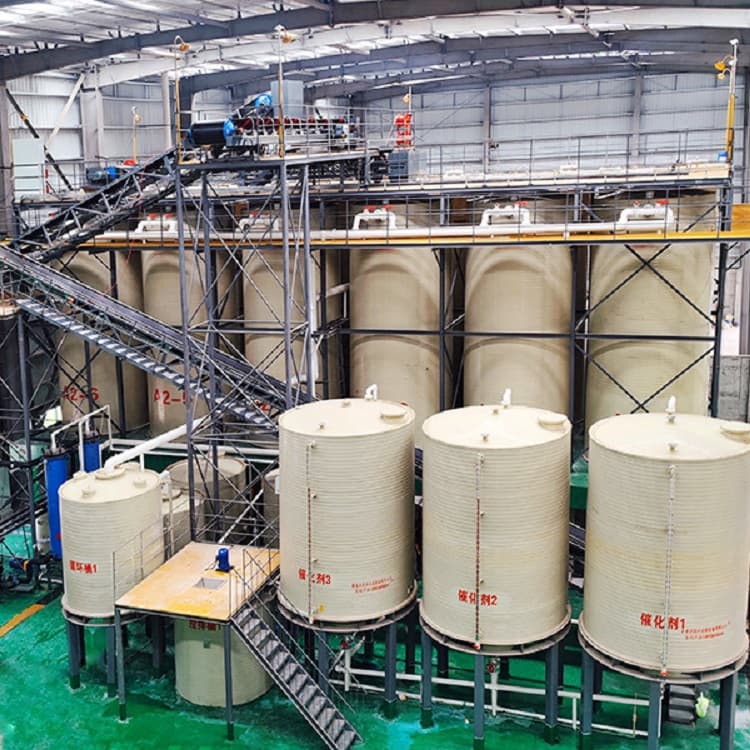
Quick Checklist: Review the following during equipment selection
-
Vibrating screens and magnetic separators: Is pretreatment for sludge and iron removal adequate?
-
Number of acid washing tanks: At least 2, made of fiberglass or PP
-
Heating method: Graphite heat exchanger or PTFE heating tubes
-
Solid-liquid separation: Vacuum belt filter or plate-and-frame filter press
-
Number of washing stages: At least 2 stages of counter-current rinsing
-
Dehydration and drying: Reduce moisture content as much as possible after dehydration; ensure the dried product meets downstream requirements
-
Wastewater treatment: Are the three steps—neutralization, sedimentation, and filter press—fully implemented?
-
Acid mist treatment: Is the alkali spray tower operating normally?
-
Online pH Monitoring: Are all critical points covered?
-
Control System: Does the PLC have basic interlock and alarm functions?
This checklist is not a substitute for specific process design, but it can help you establish the proper framework for equipment selection. The parameters for a 10-metric-ton-per-hour quartz sand acid washing and purification line must be determined based on the composition of the raw sand, the target whiteness, and local environmental regulations. The effectiveness of iron removal and purification ultimately depends on the degree of alignment between the process, equipment, and operation.
If you need
a mechanical production line solution for 10 metric tons per hour of low-iron quartz sand—which is essentially a combination of “process + equipment + operation”—this checklist can help you establish the right framework. However, specific parameters such as acid concentration, temperature, and duration must be determined based on the test results of the raw sand.
For further information on the equipment configuration and iron-reduction purification process for a quartz sand acid washing and purification line, please submit your raw sand test report and site conditions. Based on this information, we will provide tailored recommendations for a low-iron quartz sand production line and assist you in implementing every step of the iron-reduction purification process effectively.