


Purification Solution for Ultra-White, Low-Iron Quartz Sand: Turnkey Delivery of the Entire Production Line, from Raw Sand to Finished Product
- The core of the purification process for ultra-white, low-iron quartz sand lies in step-by-step separation based on the state of impurity distribution, rather than relying on a single piece of equipment to handle everything.
- The iron-reduction and purification process consists of several stages—including pre-classification, scrubbing, magnetic separation, flotation, acid washing, and high-temperature chlorination—with the specific combination depending on the characteristics of the raw sand.
- The value of a mechanical processing line for low-iron quartz sand lies in the closed-loop design of material flow, water flow, and chemical dosing, as well as the ability to adjust and control on-site parameters.
- Delivering a complete line—from raw sand to finished product—tests the stability of the entire line, not the capacity of individual machines.
I. Core Issues Addressed by the Solution
The raw sand has high iron content and low whiteness, while downstream applications require ultra-white, low-iron quartz sand. Bridging this gap is precisely the challenge the low-iron quartz sand mechanical processing line solution is designed to address.
The problem often lies not in the quality of the raw sand, but in a breakdown at a specific stage in the process chain: insufficient scrubbing time, resulting in incomplete removal of the surface iron film; low magnetic separation field strength, failing to capture weakly magnetic iron minerals; or incorrect acid washing concentration, failing to remove what should have been removed.Individually, these may seem like minor issues, but when combined, they are the root cause of the persistent high iron content in the final product.
Iron in quartz sand typically exists in three forms: as discrete iron minerals, as a surface iron film, and as iron in lattice substitution. The first two can be addressed through a combination of physical and chemical methods, while the third requires high-temperature chlorination or strong acid leaching.First, determine which form of iron predominates in the raw sand, then establish the iron-reduction and purification route. If this step is done incorrectly, all subsequent efforts will be in vain.
II. Process Routes for Iron Reduction and Purification
Pre-Classification and Washing
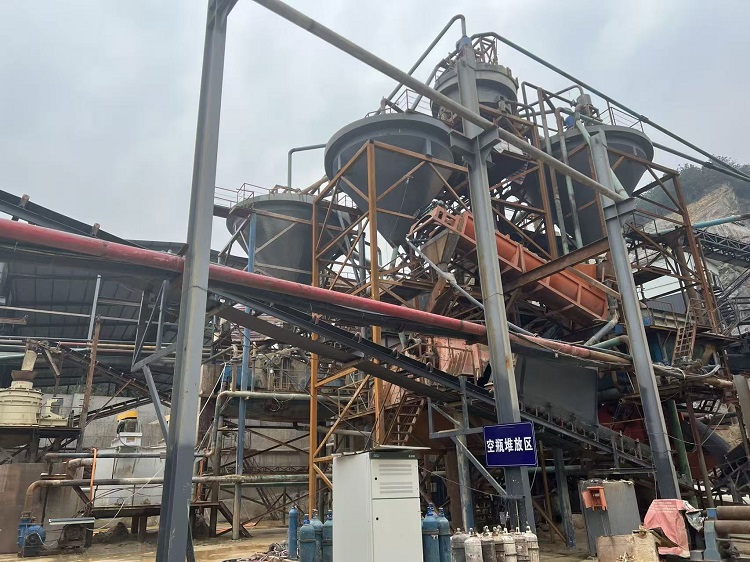
The raw sand is first passed through a trommel screen or hydrocyclone to separate coarse particles from fine silt; the coarse fraction is then fed into a rod mill and ground to the target particle size.Scrubbing is performed using a high-powered scrubber with water and a small amount of dispersant to remove surface clay and the iron film. The scrubbing time and concentration should be determined through testing based on the raw sand\'s clay content and the thickness of the iron film; fixed values should not be applied indiscriminately. Omitting the scrubbing step significantly increases the burden on subsequent magnetic separation and acid leaching processes.
Magnetic Separation for Iron Removal
After scrubbing, the slurry first undergoes weak magnetic separation to remove magnetite and mechanically introduced iron, then proceeds to a high-gradient magnetic separator to capture weakly magnetic particles.Use medium magnetic field strength for hematite and limonite, and higher field strength for ilmenite. However, a higher magnetic field strength is not always better; excessively high field strength may carry away quartz, thereby affecting recovery rates. It is recommended to first conduct a mineralogical analysis to determine the types of magnetic minerals and their grain sizes before setting the magnetic field strength and selecting the magnetic media.
Flotation Purification
When raw ore contains feldspar, mica, or weakly magnetic black spot minerals such as tourmaline and hornblende—which have densities close to that of quartz—magnetic separation alone cannot achieve complete removal. Flotation must be incorporated before or after magnetic separation to achieve selective separation through an appropriate reagent regimen.In scenarios with strict iron content requirements and significant environmental pressure regarding acid leaching, the feasibility of using a magnetic separation plus flotation process to replace acid leaching should be evaluated. Whether this can serve as a substitute—and to what extent—depends on the properties of the raw ore and the target specifications, and must be verified through testing.
Acid Leaching Purification
Magnetic separation can reduce the iron content in the sand by one level; further reduction requires acid leaching. Hydrochloric acid, sulfuric acid, and oxalic acid are all effective, with mixed acids providing more consistent results. The core of acid leaching is selective dissolution—quartz is inert in acid, while iron minerals and iron films are reactive.Oxalic acid is effective against surface iron films but is expensive, while hydrochloric acid is inexpensive but ineffective against iron bound within the crystal lattice. Systems for neutralizing, precipitating, and reusing waste acid, as well as for absorbing fluoride-containing exhaust gases, must be fully implemented simultaneously.
High-Temperature Chlorination
If the sand still fails to meet standards after acid leaching, or if the raw sand contains lattice-substituted iron, high-temperature chlorination must be employed: chlorine gas or hydrogen chloride is introduced at high temperatures, causing iron, aluminum, and titanium to form volatile chlorides that are carried away.Although costly, this process is highly effective; the material of the chlorination furnace and exhaust gas treatment pose significant technical challenges. To achieve high-purity sand of 4N or higher, an enhanced calcination–acid leaching coupled process can be introduced prior to acid washing, utilizing high-temperature phase transitions to open inclusions for subsequent deep acid leaching.
Classification and Final Product Processing
The purified sand is graded by particle size, then passed through a dewatering screen and a dryer before being packaged. The finished product silo is treated to prevent iron contamination and is lined with ceramic or polyurethane.
III. Iron-Removal and Purification Routes for Different Types of Raw Sand
| Raw Sand Type | Form of Iron | Recommended Process Route | Applicable Products |
|---|---|---|---|
| Weathered Granite | Surface iron film with clay | Scrubbing followed by high-gradient magnetic separation and oxalic acid leaching | Photovoltaic Glass |
| Veined quartz | Free iron minerals | Crushing, magnetic separation, and hydrochloric acid pickling | Electronic glass |
| Quartz sandstone | Iron film with a small amount of lattice iron | Scrubbing, magnetic separation, mixed acid leaching, and high-temperature chlorination | High-purity quartz |
| River sand, sea sand | Surface iron film, often accompanied by shells and mica | Screening and pre-enrichment, followed by scrubbing, magnetic separation, and acid leaching | Float glass |
| Pegmatite | Lattice iron plus inclusions | Magnetic separation, acid leaching, and high-temperature chlorination | Semiconductor-grade |
| Granite-derived manufactured sand | Free iron minerals plus mica and tourmaline | Grinding and liberation, followed by weak magnetic separation, enhanced magnetic separation, flotation, and acid leaching | Sheet sand, photovoltaic sand |
For the same type of raw sand, the iron content can vary by several times depending on the origin. It is recommended to conduct a process mineralogy analysis first before determining the processing route.
IV. Equipment Configuration for the Low-Iron Quartz Sand Processing Line
| Process Steps | Core Equipment | Key Parameters | Function |
|---|---|---|---|
| Pre-classification | Trommel Screen Combined with Hydrocyclone | Classification Efficiency | Coarse Material and Silt Removal |
| Scrubbing | High-Power Scrubber | Concentration and Time | Removal of Surface Iron Scale |
| Grinding | Rod Mill | Particle Size Control | Mineral liberation and particle shape retention |
| Weak magnetic separation | Permanent-magnet drum separators, flat-bed separators | Magnetic Field Strength | Removal of strongly magnetic iron |
| High-gradient magnetic separation | Vertical-ring high-gradient magnetic separators, electromagnetic slurry magnetic separators | Magnetic Field Strength and Media | Removal of Weakly Magnetic Iron |
| Flotation | Aerated mechanical agitation flotation cell with automatic chemical dosing system | Reagent Regimen | Separation of feldspar, mica, and black spots |
| Acid washing | Reactor with acid-resistant pump and counter-current scrubbing tower | Temperature and Time | Dissolving iron oxides |
| High-temperature chlorination and calcination | Chlorination furnace, rotary kiln, and exhaust gas treatment | Temperature | Removal of lattice impurities, opening of inclusions |
| Classification | Multi-layer vibrating screens, hydrostatic classifiers | Precision | Finished Product Classification |
| Dehydration and drying | Dewatering Screen with Dryer | Moisture | Finished Product Processing |
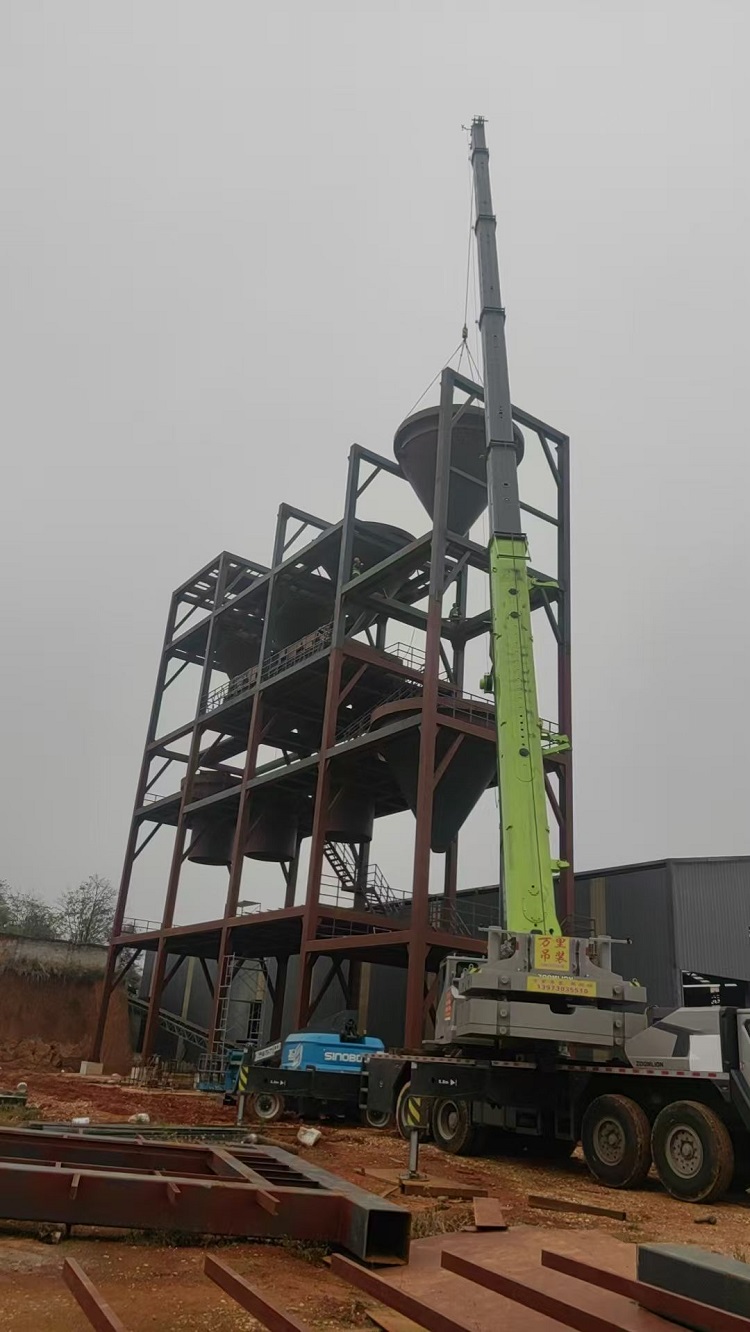
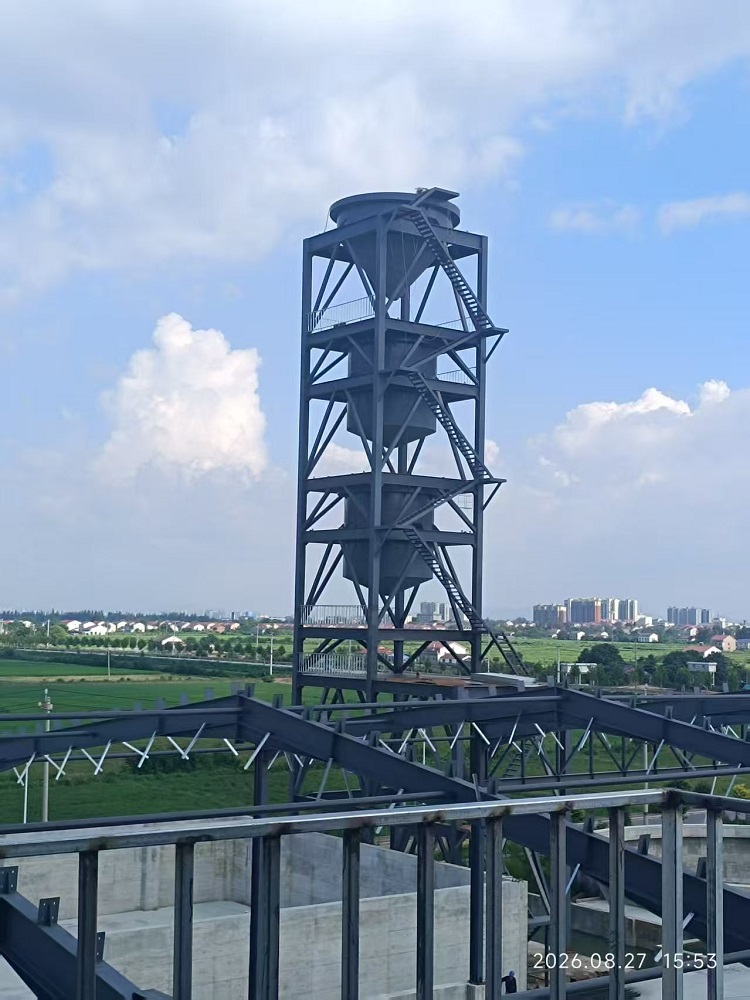
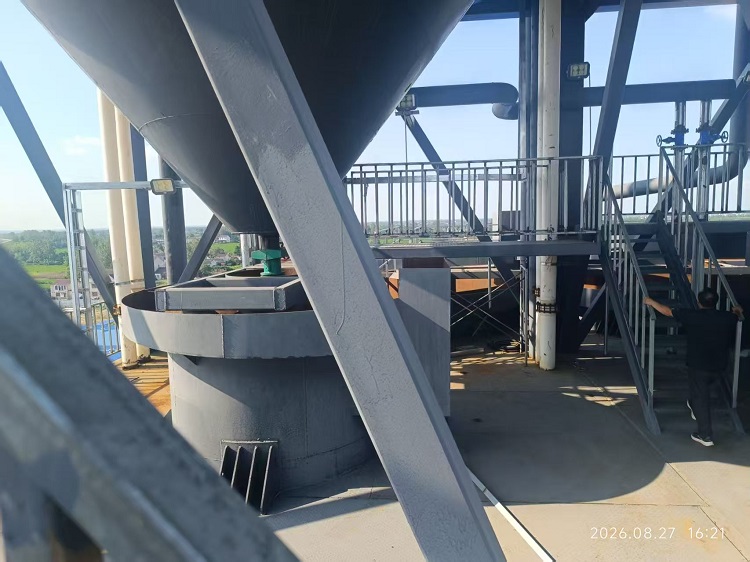
Selection Principles: The capacity of upstream equipment should be slightly greater than that of downstream equipment—for example, the scrubber\'s throughput should exceed that of the magnetic separator—to prevent material buildup and stoppages in intermediate hoppers.For turnkey line delivery, material flow, water balance, and chemical balance must be accurately calculated. For abrasive materials, flow components can be upgraded to high-chromium alloy or wear-resistant rubber; in acid washing environments, corrosion-resistant stainless steel, duplex steel, or lined coatings should be selected based on the acid type and temperature.
V. Key Variables Affecting Iron Reduction and Purification Efficiency
Mineralogical Characteristics of the Raw Ore: The form in which iron is present determines the processing route, while the size of the embedded particles determines the grinding fineness. Insufficient grinding prevents the liberation of iron minerals; excessive grinding leads to severe sludging, which adversely affects both magnetic separation and acid leaching.
Water Quality and Reagent Regimen: High water hardness in the acid leaching process causes calcium and magnesium ions to consume acid. Reagent concentration, temperature, and time must be properly balanced; adjusting a single parameter is often ineffective. The ratio of mixed acids and the combination of flotation reagents must be determined through testing.
Magnetic Separation Media and Field Strength: High-gradient magnetic separation media must be replaced regularly; once clogged, the field strength distribution becomes uneven, and the iron retention rate decreases. Field strength selection must balance iron removal efficiency and quartz recovery rate.
Tailings and Waste Liquid Treatment: Acid leaching waste liquids contain iron and residual acid; the neutralization, precipitation, and filter press processes must be properly configured. Consider environmentally friendly alternatives for flotation reagents. Whether to opt for dry stacking or wet discharge of tailings depends on local environmental regulations.
VI. Key Considerations for Solutions Categorized by Downstream Applications
Sand for Photovoltaic Glass and Ultra-White Glass: The key requirement is low iron content, while balancing cost and environmental considerations. Emphasis is placed on multi-stage screening, cascading magnetic separation, and deep iron removal; for projects with high acid washing pressure, evaluating a flotation process as an alternative to acid washing is recommended.
Sand for Engineered Quartz Slabs: The key priorities are whiteness, black spot removal, and particle size distribution. Emphasis is placed on scrubbing and desliming, magnetic separation, and flotation to remove black spots caused by tourmaline and amphibole, combined with precise classification to control particle shape.
Sand for Electronic Glass and Display Substrates: The key is dual control of purity and particle size distribution. Emphasis is placed on grinding and precision classification after purification; iron content, D50, and D90 must be stabilized simultaneously.
Sand for high-purity quartz and semiconductor-grade applications: The key lies in extreme impurity removal. When conventional magnetic separation combined with acid leaching reaches a bottleneck, an enhanced calcination–acid leaching coupling process is introduced; for even higher purity targets, the focus shifts to chemical synthesis routes, and feasibility must be thoroughly assessed during the mineral processing test phase.
VII. Common Issues in Equipment Selection and Decision-Making
VIII. Case Study: Complete Line Retrofit at a Mine
The raw ore from a certain mine had a high iron content, low whiteness, and a broad particle size distribution. Previously, the process consisted only of washing followed by magnetic separation, resulting in a finished product with an iron content that fell in the middle range, making it difficult to command a high price.
Subsequently, a full-line solution was implemented: scrubbing followed by rod milling, high-gradient magnetic separation, mixed acid leaching, and classification. The acid leaching process used a mixture of hydrochloric acid and oxalic acid, with concentration, temperature, and duration determined through testing. After the retrofit, the iron content in the finished product decreased significantly, whiteness improved, and light transmittance increased.
There were two key modifications: first, extending the scrubbing time to more thoroughly remove the surface iron film; second, adjusting the magnetic field strength of the high-gradient magnetic separation to an optimal range, thereby increasing the retention rate of weakly magnetic iron minerals. The lesson learned is: do not expect a single piece of equipment to solve all problems; scrubbing, magnetic separation, and acid washing each handle a specific stage, and the process only works when these stages are linked together.
IX. Implementation Path for the Ultra-White, Low-Iron Quartz Sand Purification Solution and Turnkey Line Delivery
There is no one-size-fits-all solution for the purification of ultra-white, low-iron quartz sand.First, conduct a process mineralogy analysis and beneficiation tests on the raw sand to determine the state of iron occurrence and its grain size distribution, and then establish the iron-reduction and purification route. The test report not only provides recommended processes and expected indicators but also includes a list of equipment selections and a preliminary budget, facilitating a direct transition to scheme design.
Equipment selection does not rigidly favor any specific model: high-gradient magnetic separators are categorized as vertical-ring, horizontal-ring, electromagnetic, or permanent-magnet types; acid-leaching reactors are categorized as enamel-lined, rubber-lined, or titanium-lined, depending on the acid type and temperature.Equipment for each stage—crushing, grinding, screening and classification, magnetic separation, flotation, acid leaching, concentration and dewatering, and ultrafine grinding—can be supplied as individual units or as complete sets.
In addition to conventional washing, magnetic separation, and acid leaching, the process also includes flotation purification capabilities. The reagent regimen is optimized for the separation of quartz from feldspar, mica, and iron-bearing minerals, making it suitable for applications such as improving the whiteness of slab sand, replacing acid leaching with flotation for photovoltaic glass sand, and removing black spots from tourmaline and hornblende.For high-purity sand (4N and above), an enhanced calcination-acid leaching coupling process can be implemented; for even higher purity, a chemical synthesis route is recommended.
During the on-site commissioning phase, parameters such as acid leaching concentration, temperature, and duration; magnetic separation field strength, media, and flow rate; scrubbing concentration, duration, and chemical dosage; as well as flotation reagent ratios and addition sequences must be adjusted on-site.
From raw sand to the delivery of the complete finished product line, we provide a closed-loop design encompassing process, equipment, reagents, water systems, and tailings treatment. Civil engineering and general installation workers are organized locally by the project owner, while our on-site engineers provide technical briefings and on-site guidance, ensuring both engineering quality and reduced costs for dispatched personnel.Upfront payments for mineral processing test fees and design fees can be offset against the equipment cost when a subsequent contract for equipment or the entire production line is signed.
If you have raw ore data, please send it to us so we can develop a customized solution; if your production line is already operational but iron content levels remain too high, please send us your current data so we can diagnose the bottleneck.