


How to Select Quartz Powder, Flotation Reagents, and Acid Washing Processes for TFT Glass
Quartz powder used for TFT-LCD substrate glass is subject to extremely stringent requirements regarding iron content. Fe₂O₃ levels must typically be controlled to within a few dozen ppm; high-end production lines set even stricter standards—one order of magnitude stricter than those for ultra-white float glass sand and several orders of magnitude stricter than those for ordinary low-iron quartz sand.Precisely for this reason, when it comes to reducing iron content and purifying quartz powder for TFT glass, selecting the appropriate flotation reagents and optimizing the acid washing process have become the two most critical issues in the design of mechanical production lines for low-iron quartz sand.
This article focuses on the iron-reduction and purification process for quartz powder used in TFT glass. It covers several key areas—including the state of iron in the raw ore, the selection of flotation reagents for quartz powder, the combination of acid washing processes, the sequence of flotation and acid washing, and the configuration of mechanical processing lines for low-iron quartz sand—to thoroughly address the concerns of project stakeholders.
I. First, Understand Where the Iron Is; Then Address Iron Reduction and Purification
Many projects get stuck at the iron reduction and purification stage—not because the equipment is inadequate, but because they failed to clarify from the outset exactly in what form the iron exists.
Iron in quartz powder used for TFT glass can be broadly categorized into three types:
- Surface iron: A thin film of iron oxide adhering to the particle surface, primarily resulting from contamination during weathering, transportation, and crushing processes. Most of this iron can be removed through acid washing with hydrochloric acid or sulfuric acid.
- Discrete iron minerals: Discrete mineral phases such as magnetite, hematite, and limonite. This type of iron can be separated using magnetic separation, gravity separation, or flotation, with acid washing as a supplementary method.
- Lattice-substituted iron and inclusional iron: Iron ions that have substituted for silicon in the quartz lattice, or iron present as fine inclusions within the particles. This type of iron is the toughest challenge in iron-reduction and purification; single acids are largely ineffective, and mixed acids—or even fluorinated acid systems—are required to extract it.
Before designing a mechanical processing line for low-iron quartz sand, it is essential to thoroughly understand the iron occurrence in the ore. If surface iron predominates, the acid leaching process can be simplified; if lattice iron accounts for a high proportion, both the intensity of flotation and acid leaching must be increased. Without this step, all subsequent process selections amount to blind guesswork.
Different forms of iron result in completely different routes for iron reduction and purification. Even for projects producing quartz powder for TFT glass, the process schemes for different mines may differ by several steps. This is why mechanical processing line designs for low-iron quartz sand cannot be copied directly; they must be based on tests of the raw ore.
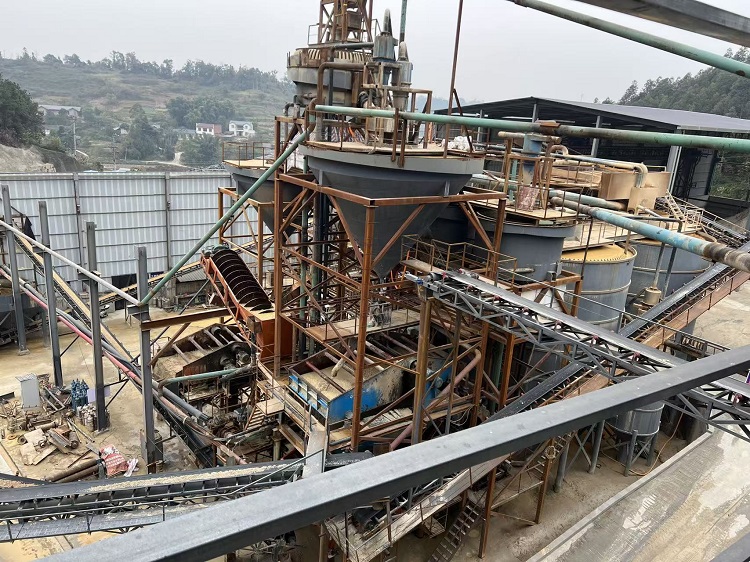
II. How to Select Flotation Reagents for Quartz Powder: Fluoride-Based vs. Fluoride-Free—Each Has Its Own Application Limits
The core objective of quartz powder flotation is to remove aluminosilicate impurities such as feldspar and mica. These impurity minerals contain iron themselves, and their presence interferes with the thorough removal of iron during subsequent acid leaching.
Currently, the two most common industrial routes for quartz powder flotation are fluoride-based and fluoride-free flotation.
Fluoride-based flotation uses hydrofluoric acid as an activator and dodecylamine or mixed amines as collectors to separate quartz from feldspar under strongly acidic conditions.This process offers good selectivity, high aluminum removal efficiency, and relatively greater tolerance for fluctuations in the feed ore. However, environmental regulations regarding hydrofluoric acid, wastewater treatment costs, and equipment corrosion protection requirements are unavoidable practical challenges.
Fluoride-free flotation exploits the difference in surface potential between quartz and feldspar, using a mixture of cationic and anionic collectors to achieve separation under neutral or weakly acidic conditions. This process is equipment-friendly and places a light burden on wastewater treatment, but it is more sensitive to fluctuations in ore properties.Any change in the intergrowth relationship between feldspar and quartz in the raw ore may require an adjustment to the reagent ratio.
Specifically for quartz powder used in TFT glass, the choice between fluoride-containing and fluoride-free flotation primarily depends on two factors: the Al₂O₃ content of the raw ore and the particle size of the feldspar inclusions.For ores with relatively high Al₂O₃ content and fine feldspar embedding, fluoride flotation yields more stable performance indicators; for projects with lower Al₂O₃ content and strict environmental requirements, fluoride-free flotation under neutral conditions may offer better long-term overall cost-effectiveness.
Regardless of the approach chosen, the selection of flotation reagents for quartz powder must be based on actual ore test results.Directly applying reagent schemes from other mines carries a high risk of failure at the TFT level. Flotation is only the first step in iron removal and purification; if the wrong reagents are selected, the burden of subsequent acid leaching will increase exponentially.
The scope for optimizing the flotation reagent system for quartz powder extends beyond simply choosing between fluorinated and fluorine-free options.For the separation of quartz from feldspar, mica, and iron-bearing minerals, optimizing the reagent regimen through a proprietary flotation reagent system can improve flotation selectivity and stability at scale; the cleaner the flotation, the lower the pressure and acid consumption in the acid leaching stage.
III. How to Formulate the Quartz Powder Acid Leaching Process: A Single Acid Is Insufficient; Mixed Acids Are a Must
While quartz powder flotation addresses aluminosilicate impurities, the acid leaching process targets iron. For quartz powder used in TFT glass, acid leaching is the final step in iron reduction and purification, and it is the critical process that determines whether the product meets the required standards.
Acid leaching with a single acid—such as hydrochloric acid or sulfuric acid—primarily targets surface iron and some free iron minerals. However, the iron in TFT-grade quartz powder is often not confined to the surface. Lattice-substituted iron and inclusional iron cannot be removed by hydrochloric acid alone. Therefore, mixed-acid leaching is virtually mandatory.
There are several common approaches to mixed-acid combinations:
| Acid System Combinations | Primary Function | Applicable Scenarios | Precautions |
|---|---|---|---|
| HCl + H₂SO₄ | Removes surface iron, calcium, and magnesium | Generally used for low-iron sand and ultra-white sand | Limited effectiveness against lattice iron and inclusion iron |
| HCl + HNO₃ | Removes iron and some aluminum | For applications requiring moderate purity | Nitric acid is relatively expensive; nitrogen oxides must be controlled |
| HF + HCl or HF + HNO₃ | Breaks down silicate inclusions; deep de-aluminum and de-iron processes | TFT-grade, high-purity quartz | Significant environmental pressure; strict safety precautions and wastewater treatment are required |
| Oxalic acid/citric acid | Complexes iron for gentle iron removal | Situations where surface iron is predominant | Slow reaction rate; requires high concentrations and temperatures |
In practical engineering applications, the key is to select a chemical system based on the form of iron in the raw material and environmental requirements, and to integrate supporting environmental facilities such as neutralization, precipitation, reuse, and negative-pressure absorption of fluoride-containing exhaust gases—the quartz powder acid washing process is not as simple as just mixing a batch of acid; chemical selection, spent acid treatment, and exhaust gas absorption constitute an integrated system.
The effects of acid-leaching temperature, duration, and liquid-to-solid ratio on iron reduction are not linear. For similar processing durations, different temperatures can result in significantly different iron removal rates; adjusting the liquid-to-solid ratio also causes noticeable changes in acid consumption and reaction uniformity. These parameters must be determined through semi-industrial trials and cannot be directly applied based on laboratory data.
Another point that is often overlooked is the rinsing step following acid washing. If residual acid and salts are not thoroughly rinsed away, they will directly affect the service life of the refractory materials in the subsequent melting furnace and the quality of the glass melt.Quartz powder used for TFT glass typically requires washing to ensure the total content of chloride and nitrate ions falls below a certain limit; therefore, sufficient washing sections must be allocated in the mechanical processing line design for low-iron quartz sand.
The choice of acid leaching process for quartz powder directly determines the degree of iron reduction and purification. If the acid mixture is incorrect, iron levels cannot be reduced; if rinsing is incomplete, all preceding processes are rendered ineffective.
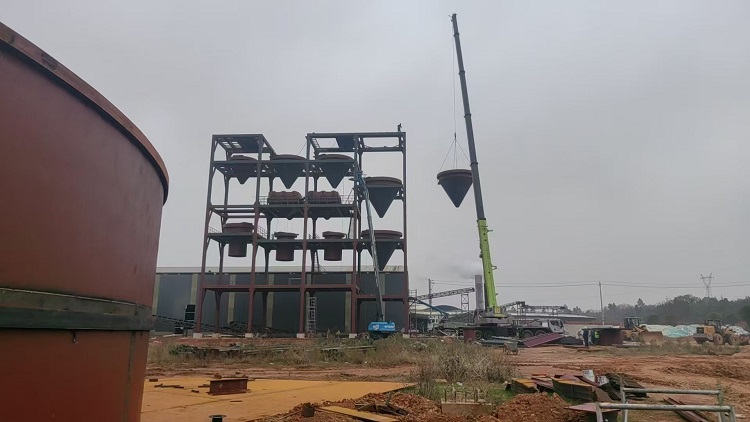
IV. Determining the Sequence of Flotation and Acid Washing
Whether to perform flotation before acid washing or acid washing before flotation is a critical question that must be addressed in the design of a low-iron quartz sand mechanical processing line.
The rationale for flotation before acid washing is as follows: flotation is used first to remove aluminosilicate minerals such as feldspar and mica, thereby reducing the load on the subsequent acid washing stage and lowering acid consumption. Once aluminum and sodium levels have been reduced, the acid washing process can focus solely on iron, resulting in higher efficiency and allowing for a more compact design of the acid washing section.
The rationale for acid leaching followed by flotation is to first use acid leaching to break down the protective layers on the mineral surfaces, making it easier for subsequent flotation to separate intergrown minerals. This approach is suitable for ores where aluminum and iron are closely associated and where feldspar and quartz are firmly bonded to the surface.
Neither sequence is inherently superior. For ores with high aluminum and low iron content and coarsely disseminated feldspar, flotation followed by acid leaching is more reasonable; for ores with tight aluminum-iron association and well-developed inclusions, acid leaching followed by flotation may be more effective. The decision ultimately depends on the results of the raw ore\'s process mineralogy study.
In the practical design of mechanical processing lines for low-iron quartz sand, there are also cases where flotation and acid leaching are arranged alternately. For example, an open-circuit roughing flotation stage is followed by acid leaching, then a concentrating flotation stage, and then another acid leaching stage. This combined process is suitable for projects involving complex ores that cannot be handled by a single process, but the equipment configuration and operational management will also be more complex.
V. How to Configure Key Equipment for a Low-Iron Quartz Sand Processing Line
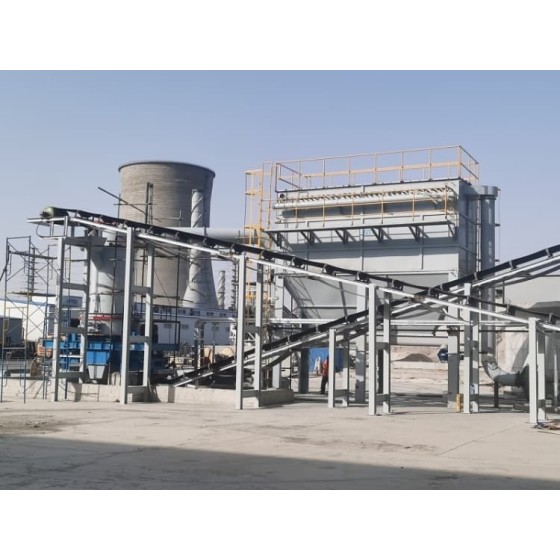
A complete low-iron quartz sand processing line typically encompasses several process stages: crushing, grinding, classification, magnetic separation, flotation, acid leaching, washing, dewatering, and drying. Equipment configurations vary significantly depending on the properties of the ore and the target product specifications.
The following is a common framework for equipment configuration:
| Process Stage | Main Equipment | Function |
|---|---|---|
| Crushing and Grinding | Jaw crusher, cone crusher/impact crusher, rod mill, or ball mill | Crush and grind the raw ore to the target particle size |
| Classification | Hydraulic cyclone bank, high-frequency vibrating screen, spiral classifier | Control particle size distribution to provide suitable feed for flotation and acid leaching |
| Magnetic Separation | Flat-bed magnetic separators, vertical-ring high-gradient magnetic separators, electromagnetic slurry magnetic separators | Removes free iron minerals and weakly magnetic minerals, reducing the load on subsequent acid leaching processes |
| Flotation | Aerated mechanical agitation flotation cells, automated dosing systems | Removes aluminosilicate impurities such as feldspar and mica |
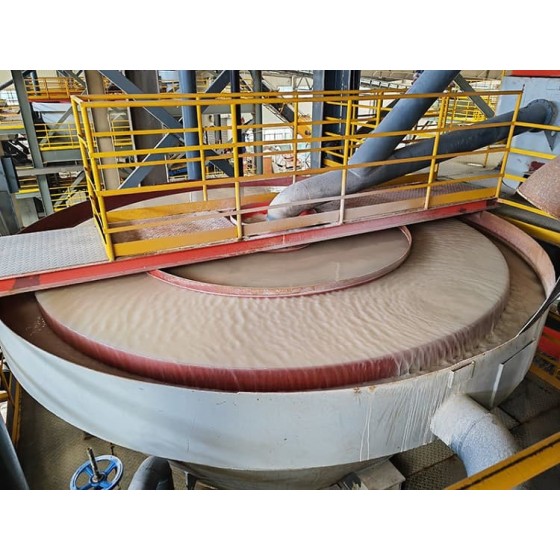
| Acid Leaching | Acid leaching reactors, acid leaching tanks, heating systems, and acid circulation systems | Deep removal of impurities such as iron and aluminum |
| Washing | Countercurrent scrubbing tower/belt filter, multi-stage countercurrent scrubbing | Removal of residual acid and salts to ensure product purity |
| Environmental Protection Support | Waste acid neutralization tank, negative-pressure absorption tower for fluorine-containing exhaust gas | Treatment of waste acid and exhaust gases to meet environmental requirements |
| Dehydration and Drying | Filter presses, centrifuges, dryers | Controlling product moisture content to facilitate packaging and transportation |
Corrosion protection for equipment in the acid leaching section, the wastewater treatment system, and the water recirculation system in the washing section are key areas requiring significant investment in a low-iron quartz sand processing line design. The reagent regimen and automated control in the flotation section, meanwhile, directly impact long-term operating costs.
There is no one-size-fits-all answer for equipment configuration. Depending on the iron content and occurrence in the raw ore, as well as the number of flotation and acid leaching stages, the quantity and specifications of equipment will vary accordingly. Thorough ore testing during the design phase is essential to avoid additional investments resulting from process route adjustments after the production line is completed.
VI. Frequently Asked Questions
Q: For the iron-reduction and purification of quartz powder used in TFT glass, is it possible to rely solely on flotation without acid leaching?
A: For TFT-grade products requiring Fe₂O₃ levels within the range of tens of ppm, achieving this through flotation alone is essentially impossible. Flotation can address aluminosilicate impurities and some free iron minerals, but lattice iron and inclusional iron must be removed through acid leaching—particularly mixed-acid leaching—to achieve deep removal.To achieve this level of iron reduction, both flotation and acid leaching are indispensable.
Q: In a mechanical processing line for low-iron quartz sand, is a longer acid leaching stage always better?
A: No. The number and configuration of acid leaching stages depend on the iron content in the ore and the target product specifications. Too many acid leaching stages will increase acid consumption, water consumption, and wastewater treatment costs, thereby reducing economic efficiency. A reasonable approach is to achieve iron reduction and purification using as few acid leaching stages as possible and with the lowest possible acid consumption, while still meeting the required specifications.
Q: Can fluoride-free flotation meet the requirements for quartz powder used in TFT glass?
A: There are successful cases, but fluoride-free flotation has a narrower range of adaptability to raw ore compared to fluoride flotation.If the Al₂O₃ content in the raw ore is inherently low and the feldspar is coarsely disseminated, it is possible to achieve TFT-grade specifications by combining fluoride-free flotation with subsequent mixed-acid leaching. However, if the raw ore is complex, fluoride flotation offers greater operational stability. To determine the specific route to take, ore processability tests must be conducted.
Q: What are the key investment areas for a mechanical processing line for low-iron quartz sand?
A: The investment composition varies significantly depending on the ore properties and product specifications of each project. Generally speaking, corrosion protection for equipment in the acid leaching section, the wastewater treatment system, and the water recirculation system in the washing section are key areas requiring careful consideration in the investment plan. The reagent regimen and automation controls in the flotation section also directly impact long-term operating costs.
VII. What We Can Do for You
The iron-reduction and purification of quartz powder for TFT glass—from raw ore testing to the implementation of a low-iron quartz sand mechanical processing line—involves numerous steps and variables. We can provide support in the following areas:
- Process mineralogy study of the raw ore: Analyze the state of iron occurrence, characteristics of aluminosilicate impurities, and the relationship between particle size and mineral distribution to provide a basis for selecting the iron-reduction and purification route.
- Flotation Reagent Selection Tests for Quartz Powder: For both fluoride-containing and fluoride-free routes, we compare reagent regimes based on the properties of the raw ore to determine the most suitable solution.
- Optimization of acid leaching process parameters for quartz powder: Through semi-industrial trials, we determine key parameters such as mixed acid composition, temperature, time, and liquid-to-solid ratio to verify the effectiveness of iron reduction and purification.
- Design of a Mechanical Processing Line for Low-Iron Quartz Sand: Based on the test results, configure equipment for each process stage—crushing, grinding, magnetic separation, flotation, acid leaching, washing, dewatering, and drying—to provide a comprehensive mechanical processing line plan.
- Commissioning and Operational Support: After the production line is completed, we will assist in optimizing and adjusting the flotation reagent regime and acid washing parameters to shorten the time required to meet quality standards.
Iron reduction and purification of quartz powder for TFT glass is essentially a matter of matching the flotation reagent regimen with the acid leaching process for quartz powder; it is also a systematic issue involving the low-iron quartz sand processing line—from raw ore testing to equipment configuration.If you have specific ore samples on hand or are currently comparing different approaches for the iron-reduction and purification of quartz powder for TFT glass, please bring your raw ore data and target specifications for discussion. We can provide technical support at both the ore testing and mechanical line design stages for low-iron quartz sand.