


Equipment Configuration Plan for Purifying Seawater Sand into Quartz Sand at a Rate of 30 Metric Tons Per Hour
Even with the same type of sea sand, some processing plants can turn a profit at an hourly output of 30 metric tons, while others can\'t even cover their electricity costs. The difference doesn\'t lie in the cost of the equipment, but in whether the process sequence is correct.
When it comes to purifying sea sand into quartz sand, the biggest pitfall is directly applying the same approach used for hard rock mining. Running through a full production line—crushing, grinding, classification, magnetic separation, and acid washing—can cost a lot of money without necessarily yielding good results.Seasand naturally has a particle size distribution concentrated within a narrow range, which happens to fall precisely within the mainstream application range for low-iron quartz sand. Its impurities are not embedded deep within the crystal lattice but are found on the particle surfaces and between particles. Treating the “surface” is entirely different from treating the “whole.”
The logical starting point for a 30-metric-ton-per-hour seawater sand purification plant configuration is to acknowledge this difference.
I. The process begins where the impurities in sea sand are found
Seasand is the product of centuries of seawater erosion. Its uniform particle size is a natural advantage—there is no need to destroy it with a crusher.
Impurities are primarily found in three locations. First, there is a thin film of iron-rich deposits on the particle surfaces; though thin, it contains a significant amount of iron. Second, there is iron and salt adhering to the clay between the particles. Third, there are associated heavy minerals—such as ilmenite, hematite, and zircon—which have high density and varying magnetic properties.
Different forms of iron require different removal methods. The surface iron film is stripped away by scrubbing; iron bound to clay is dispersed through washing; and heavy minerals are separated via magnetic and gravity separation. Chloride ions, which originate from residual seawater, are removed by freshwater washing.The process sequence is not arbitrarily determined; it is dictated by the nature of the impurities. The combination of processes for iron reduction and purification of sea sand essentially corresponds to the specific forms in which the impurities are present.
II. How to Sequence Processes for Iron Reduction and Purification in a Mechanical Line for Low-Iron Quartz Sand
For a mechanical processing line for low-iron quartz sand, the key lies in the word “mechanical.” Whenever possible, avoid using acid to remove iron that can be eliminated through physical methods. Environmental approvals, spent acid treatment, and operating costs—each of these represents a tangible burden. If you can skip one acid washing step, do so.
Screening: First, Keep Out What Doesn\'t Belong
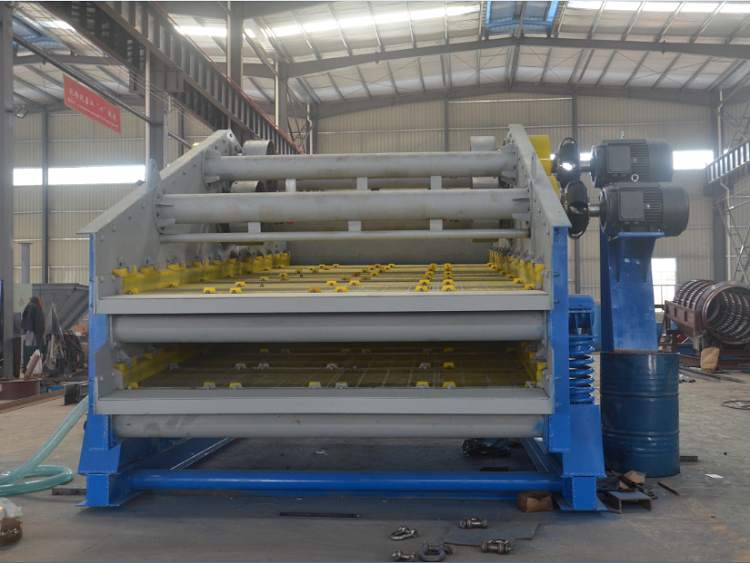
When raw sea sand arrives at the plant, the first step is screening. Either a trommel screen or a linear screen can be used to remove shell fragments and coarse gravel.Shells are primarily composed of calcium carbonate, which has a lower density than quartz; if mixed in, they will disrupt the magnetic separation process. Screen mesh size should be determined based on the particle size distribution of the raw ore, ensuring effective retention of shells and coarse gravel.
This step isn\'t complicated, but don\'t skip it. If you skip screening, every subsequent process will have to clean up the mess.
Washing: The Foundation of the Entire Line
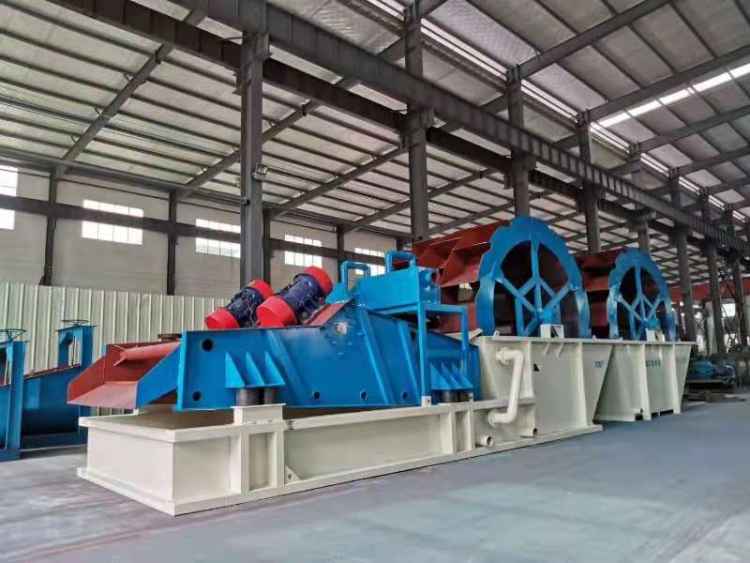
Scrubbing is a process that utilizes the frictional shear forces between particles in the slurry to strip away surface contaminants; it is one of the most critical steps in purifying sea sand into quartz sand. The slurry concentration and scrubbing time should be determined through testing based on the raw ore\'s clay content and the thickness of the iron film; parameters from other ores should not be applied directly.
In sea sand processing lines where scrubbing is incomplete, problems often arise downstream: the magnetic separator cannot fully remove impurities even after repeated passes, acid consumption increases uncontrollably, and the final cost ends up being higher. The electricity consumption for scrubbing is typically lower than the costs of acid consumption and waste acid treatment. This cost analysis should be thoroughly evaluated before plant construction.
For a 30-metric-ton-per-hour capacity, a series-connected horizontal scrubber is recommended. In applications requiring high-quality products, scrubbing agents can be used during the scrubbing stage to enhance the removal of the surface iron film, thereby reducing the load on subsequent magnetic separation and flotation processes. Specific parameters should be based on test data, as other mines\' conditions differ from yours.
Magnetic Separation: Start with a Strong Magnet, Then Move to a High-Gradient Magnet
Once the washing is complete and the iron content is exposed, magnetic separation becomes effective.
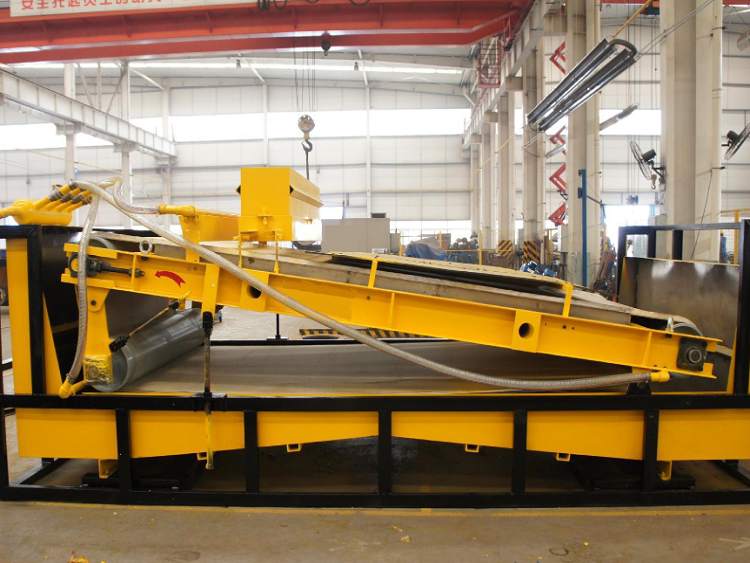
For the iron in sea sand—specifically the strongly magnetic components such as magnetite and titanomagnetite—a permanent magnet drum separator or a flat-bed magnetic separator can effectively handle the rough separation. This method is low-cost and easy to maintain.
The real challenge lies in the weakly magnetic fraction. Hematite, limonite, and ilmenite are largely unaffected by standard magnetic separators. A vertical-ring high-gradient magnetic separator is required, relying on a high background magnetic field strength and high-gradient media to capture these weakly magnetic minerals.If the magnetic field strength is insufficient, ilmenite will escape into the tailings, and no amount of subsequent washing will recover it.
There is no standard answer for the number of magnetic separation stages. If the ore has a high iron content and the target product specifications are strict, two or even three stages may be required. For operations with thorough washing, one stage of roughing followed by one stage of high-gradient separation may be sufficient.For a 30-metric-ton-per-hour seawater sand purification plant designed to produce quartz sand, the recommended configuration includes at least two stages: “roughing + vertical ring high-gradient scavenging.” Whether to add a plate-type strong magnetic separator in between depends on the laboratory test results.If the raw ore contains feldspar, mica, or tourmaline-type associated minerals that are difficult to separate via physical magnetic separation, a flotation unit can be introduced; this is also one of the methods to partially replace acid leaching.
Gravity Separation and Chloride Removal: Key Steps for Seawater Sand
Spiral chutes perform two functions in a seawater sand processing line. First, they remove light materials such as shell fragments; second, they work in conjunction with the downstream washing system to reduce chloride ion content.
Chloride removal involves using fresh water to wash away chloride ions remaining on the surface of and between the grains of sea sand; this is the key process that distinguishes sea sand from river sand.Chloride ions in seawater are adsorbed by clay and fine particles; if not thoroughly washed away, the finished sand will have an acidic pH, which can cause problems when used in photovoltaic glass furnaces.
Desalination and dechlorination consume a significant amount of fresh water; the exact volume depends on the salt content of the raw material and the number of washing stages. For a facility with a production capacity of 30 metric tons per hour, water supply issues must be resolved before construction begins. Process water should be recycled as much as possible, and the discharge of saline wastewater must comply with local environmental regulations.
Dehydration and Environmental Protection
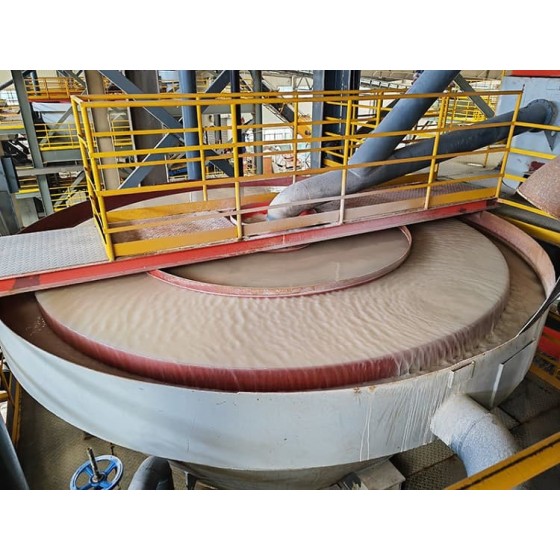
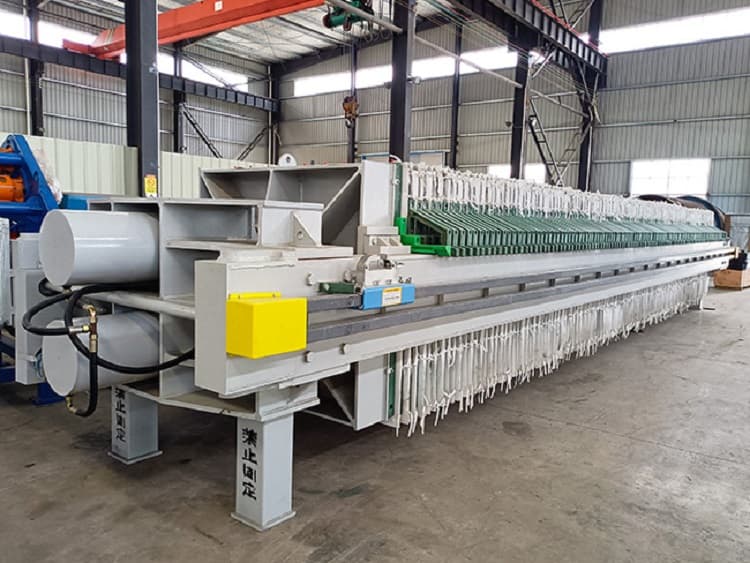
A thickener, in conjunction with a dewatering screen, separates the refined sand from the water. Process water is recycled, while the slurry is fed into a chamber filter press, and the sludge cake is transported off-site. This step presents no significant technical challenges; however, during environmental inspection, selecting a filter press that is too small can create a bottleneck.
III. Reference Configuration Plan for a 30-Metric-Tons-Per-Hour Seawater Sand Purification Plant for Quartz Sand
The table below is designed for seawater sand as the raw material, with the target product being low-iron quartz sand intended for photovoltaic glass, float glass, or foundry sand. Specific equipment selection must be adjusted based on the raw ore\'s laboratory test data. The types and concentrations of impurities vary significantly among seawater sands from different sources.
| Process Step | Equipment Name | Selection Criteria | Reference Quantity |
|---|---|---|---|
| Screening | Drum Screen/Linear Screen | Allow for excess capacity; screen out shell fragments and coarse gravel | 1 unit |
| Scrubbing | Series-connected horizontal scrubber | Concentration and time determined by testing; wear-resistant lining | 1 unit |
| Re-selection | Spiral Chute | Shell removal, auxiliary chlorine reduction | 2–3 units |
| High-intensity magnetic separation | Permanent-magnet drum/plate magnetic separators | Removes strongly magnetic minerals such as magnetite | 1 unit |
| High-gradient magnetic separation | Vertical Ring High-Gradient Magnetic Separator | Higher background magnetic field strength for capturing weakly magnetic minerals | 1 unit |
| Dewatering | Thickener + Dewatering Screen | Process Water Reuse | 1 set |
| Dechlorination Washing | Countercurrent washing system | Freshwater washing to control chloride ions | 1 set |
| Environmental Protection | Chamber Filter Press | Slurry treatment, sludge cake removal | 1 unit |
| Electrical | Main Control System | Total power matched to transformer capacity | 1 set |
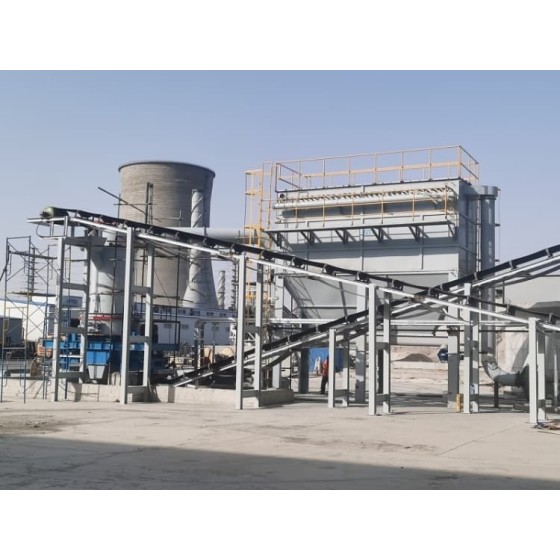
The total power of this line depends on the number of units and the number of magnetic separation sections; confirm the transformer capacity before plant construction. Since seawater sand is highly saline and abrasive, it is recommended that components in contact with water and sand be made of stainless steel or undergo anti-corrosion treatment. Ordinary carbon steel will not last long in a seawater sand environment.
IV. Your Product Determines Your Production Line—Don\'t Do It the Other Way Around
Even though both involve sea sand, the equipment configurations for producing photovoltaic glass sand and foundry sand differ significantly. First, clearly define your target market, then work backward to determine the production process.
| Target Product | Iron Content Requirements | Recommended Process Combination | Pickling Requirements |
|---|---|---|---|
| Sand for Photovoltaic Glass | Relatively Strict | Scrubbing + two-stage magnetic separation + gravity separation + dechlorination | Depends on the raw ore |
| Sand for Float Glass | Moderate | Scrubbing + single-stage strong magnetic separation + gravity separation + dechlorination | Most cases do not require this step |
| Foundry sand | Relatively lenient | Scrubbing + Magnetic Separation + Dewatering | Generally not required |
| Electronics-grade/high-purity sand | Strict | Physical purification + flotation/acid leaching + deep impurity removal | Required |
Low-iron quartz sand for photovoltaic glass has strict requirements for both iron and chloride ions. Whether physical purification can meet these standards depends on the raw ore itself. If the raw ore has high iron content or complex ilmenite deposits, acid leaching is often unavoidable.This decision involves environmental approvals and waste acid treatment, so it must be finalized during the design phase—do not wait until the equipment arrives on site to make changes. Seawater sand, after screening for pre-enrichment, scrubbing, and magnetic separation, combined with subsequent deep purification, can be processed to achieve higher purity levels; however, the exact level attainable is ultimately determined by the raw ore and experimental data.
V. Frequently Asked Questions
Q: What is the approximate investment for a sea sand purification plant with a capacity of 30 metric tons per hour to produce quartz sand?
The investment depends on the impurity content of the raw ore, the target product grade, the number of magnetic separation stages, whether flotation or acid washing is included, and the extent of environmental protection measures. Even for the same hourly capacity of 30 metric tons, the investment can vary significantly depending on whether the configuration involves only physical purification or includes acid washing.We recommend conducting raw ore analysis and pilot testing first before discussing investment estimates. Quotes provided without data have limited reference value. Investment variations primarily stem from the number of magnetic separation stages, whether flotation or acid washing is incorporated, and the level of environmental protection measures. Conducting pilot testing before discussing estimates can help avoid rework caused by over-specification or under-specification of equipment.
Q: Can the order of scrubbing and magnetic separation be reversed?
We do not recommend changing the order. Scrubbing removes the surface iron film to expose the iron as a distinct mineral, allowing magnetic separation to capture it effectively. If magnetic separation is performed before scrubbing, the magnetic separator will be processing “encapsulated” particles, which reduces separation efficiency. This sequence is dictated by physical logic.
Q: Is acid washing absolutely necessary when purifying seashore sand into quartz sand?
Not necessarily. For foundry sand and some types of float glass sand, physical purification is usually sufficient. However, low-iron quartz sand used in photovoltaic glass has strict iron content requirements; if the iron content in the raw ore is too high, acid washing may be necessary. Alternatively, you can evaluate replacing part of the acid washing process with a combination of magnetic separation and flotation to reduce environmental impact.To determine whether acid washing is needed, conduct small-scale tests using the raw ore to see if the iron content can consistently meet standards after physical purification. Let the data speak for itself.
Q: Why is ilmenite difficult to remove?
Ilmenite is a weakly magnetic mineral with a low magnetic susceptibility.The magnetic field strength and gradient of standard magnetic separators have limited effect on it. A high-gradient magnetic separator must be used, with the background field strength increased; the separation gap and rinse water pressure must also be adjusted to accommodate the narrow particle size distribution characteristic of sea sand. If parameters designed for coarse-grained ore are used, significant iron loss in the tailings will occur.
VI. About Us
We specialize in the configuration of quartz sand purification equipment and the design of process solutions, covering iron-reduction and purification projects for various raw materials such as sea sand, river sand, and vein quartz. The equipment configuration plan for a 30-metric-ton-per-hour sea sand-to-quartz sand purification plant is never a fixed template.Since raw ore data varies, the number of scrubbing stages, magnetic separation field strength, chlorine removal process, and acid washing decisions will all change accordingly.Our approach is to test first and finalize later: we use ore sample analysis and pilot tests to determine the distribution of impurities and the target product specifications. Based on this, we configure the process sequence and select equipment for the low-iron quartz sand production line, and then optimize parameters during the installation and commissioning phase until the project meets both quality standards and production targets.
If you already have laboratory test data for the raw seawater sand—including iron content, titanium content, loss on ignition, particle size distribution, and residual chloride ions—please submit it in advance. We will use this information to develop a technical roadmap for iron reduction and purification of the seawater sand, after which we can discuss the specific configuration of the low-iron quartz sand processing line.