






Low-Iron Quartz Sand Processing Line Solution: Equipment Configuration for Iron Removal and Purification, and Turnkey Analysis
The core of the low-iron quartz sand mechanical production line plan lies in configuring equipment and organizing processes to reduce iron content and enhance purity. Downstream requirements for Fe₂O₃ continue to tighten; the stability of the iron-reduction and purification process directly determines whether the low-iron quartz sand mechanical production line can operate in the long term.
01 Process Section Configuration
The low-iron quartz sand mechanical production line is divided into five sections based on material flow:
-
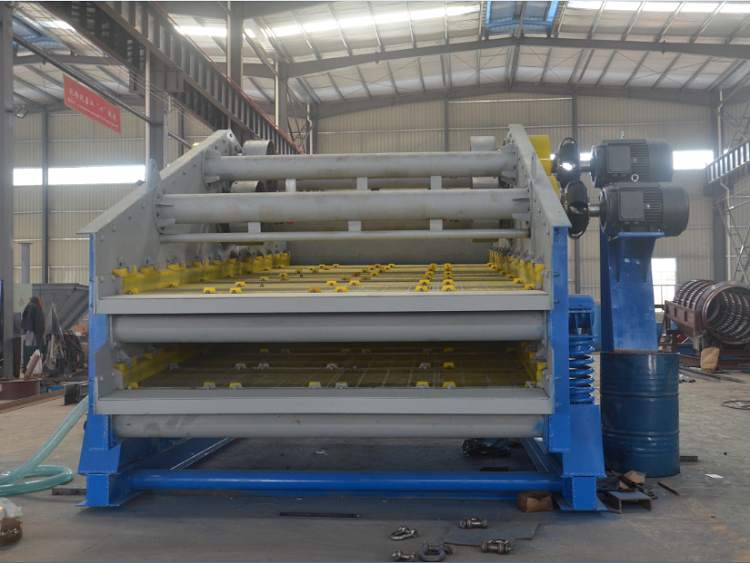
Crushing and Sand Making: Jaw crusher, cone crusher, or impact crusher, combined with a rod mill and vibrating screen, to grind the material to a size where individual particles are liberated. If the particles are too coarse, iron minerals will remain intergrown with quartz; if too fine, over-grinding will reduce yield.
-
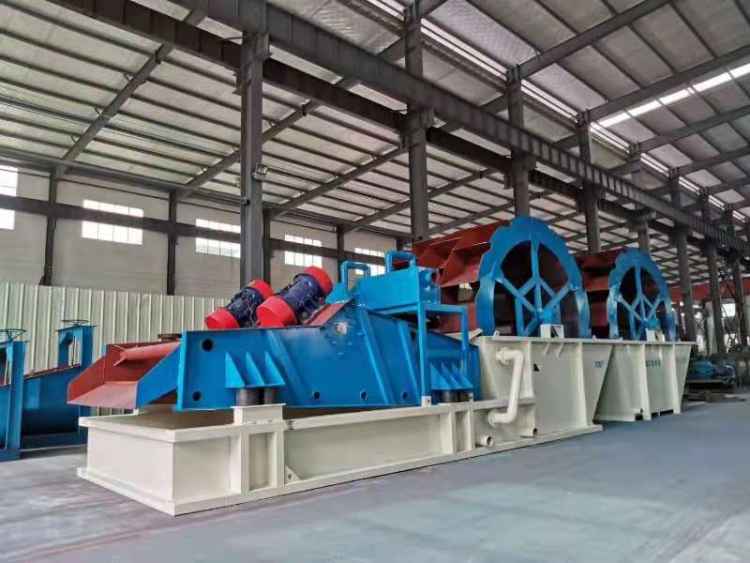
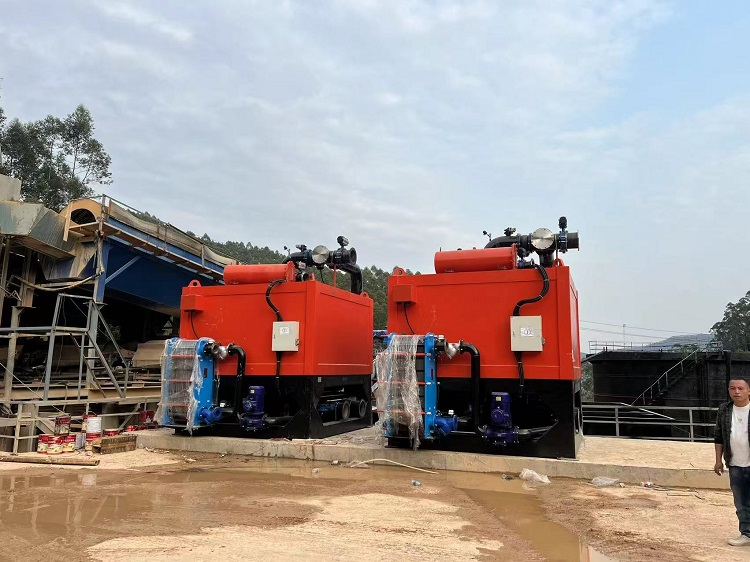
Physical Iron Removal: A scrubber washes away surface clay and adhering iron; a flat-bed magnetic separator performs rough separation, followed by scavenging and fine separation using a vertical ring high-gradient magnetic separator. Magnetic separation is effective for isolated iron minerals but has limited effect on intergrown minerals; its purpose is to reduce the load on the purification stage.
-
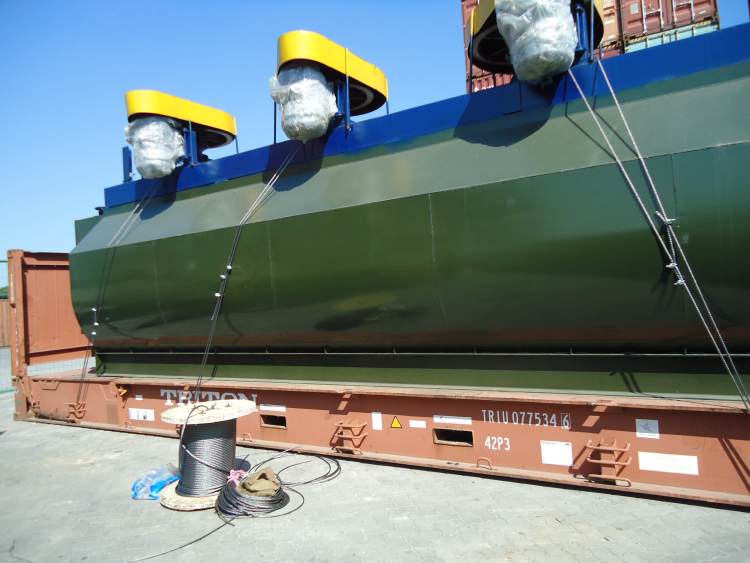
Flotation and Acid Leaching for Purification: The most critical stage in a low-iron quartz sand processing line. Flotation separates feldspar, mica, tourmaline, and hornblende black spots; it operates under neutral conditions with minimal environmental impact. Acid leaching extracts iron from intergrown minerals and partially leaches lattice-bound iron. The combination of these two processes depends on the iron content in the ore and environmental requirements.
-
Dehydration and Drying: Thickening tanks, vacuum belt conveyors, centrifugal dehydrators, and dryers are used to remove acid and dehydrate the material before it is stored.
-
Environmental Protection Support Systems: Acid mist collection, wastewater treatment, and hazardous waste temporary storage—failure to implement any one of these poses a compliance risk.
02 Iron Reduction and Purification Technology Routes
Iron exists in three forms—separate iron minerals, intergrown iron, and lattice iron—each corresponding to a different processing route:
-
Magnetic Separation Route: Suitable for free iron minerals; low cost, chemical-free, and minimal environmental pressure, but only processes physically free iron.
-
Flotation Route: Suitable for ores with high feldspar and mica content and difficult-to-remove black spots. Separation occurs under near-neutral conditions, avoiding pressure from waste acid discharge; reagent selectivity must be verified through testing.
-
Acid Leaching Route: Suitable for intergrown minerals and some lattice iron. Hydrochloric acid dissolves iron rapidly; sulfuric acid is low-cost; fluoride-based systems are effective for lattice iron but have high environmental compliance barriers. The choice must be based on the characteristics of the raw ore and environmental requirements.
-
Combined Process: Magnetic separation followed by flotation or magnetic separation followed by acid leaching. This involves physical iron removal followed by deep purification; it offers the greatest adaptability and is the most common approach.
The choice of process depends on the iron content in the raw ore and environmental constraints, and must be based on mineral processing tests.
03 Equipment Configuration List
| Process Section | Core Equipment | Primary Function |
|---|---|---|
| Crushing and Sand Making | Jaw Crusher, Cone Crusher/Impact Crusher, Rod Mill, Circular Vibrating Screen | Grinding and liberation; control of particle size and shape |
| Physical Iron Removal | Scrubbers, flat-bed magnetic separators, vertical ring high-gradient magnetic separators | Slurry washing, removal of strongly and weakly magnetic iron |
| Flotation and Purification | Aerated mechanical agitation flotation cells, automatic dosing systems | Separation of feldspar and mica; removal of black spots |
| Acid Leaching and Purification | Acid leaching reactors/fluidized beds, counter-current scrubbers, exhaust gas absorption systems | Leaching of intergrown iron and some lattice iron |
| Dehydration and drying | Thickener, vacuum belt conveyor, centrifugal dewatering machine, dryer | Deacidification and dehydration; product storage |
| Environmental Protection Support | Wastewater treatment, acid mist scrubbing, hazardous waste temporary storage | Compliance with Environmental Standards, Stable Operation |
Investment scale varies significantly depending on the choice of materials for acid leaching, whether flotation is included, the degree of automation, and environmental standards; it must be calculated based on the characteristics of the ore and the intended product and cannot be summarized by a single figure. Matching the processing capacity of the magnetic separator is more important than the capacity of a single unit; overfeeding will cause quartz to be lost along with the iron concentrate.Investment is most concentrated in the acid leaching stage; for larger-scale operations, fluidized-bed acid leaching is typically more economical than traditional acid leaching tanks. When environmental regulations prohibit acid leaching, the “magnetic separation + flotation” alternative route can be evaluated.
04 Scope of Turnkey Solutions
Turnkey solutions reduce the number of interfaces, but several points must be clarified before implementation:
-
Raw ore fluctuations: Since iron content varies across different mining areas, a processing capacity margin should be built in, or pre-concentration with tailings disposal should be implemented at the front end.
-
Environmental Compliance: It must be clarified whether acid mist, wastewater, and hazardous waste treatment are included; local approval procedures are typically handled by the project owner, with the equipment supplier providing supporting documentation.
-
Scope of Delivery: A well-established division of labor assigns responsibility for testing, design, drawings, core equipment, reagents, installation guidance, and commissioning training to the equipment supplier; civil engineering and general installation labor are organized locally by the project owner, with the equipment supplier dispatching engineers to the site for technical handover—ensuring compliance with standards while reducing costs associated with sending personnel from outside the region.A turnkey scope should be separately agreed upon only when the project owner is unable to organize a local construction team.
-
Level of Automation: PLC-controlled parameters such as acid dosage, temperature, and liquid level are the foundation for batch consistency.
-
Mineral Processing Tests: Proposals lacking test data tend to be either overly conservative or overly aggressive. Test reports include product positioning, recommended processes, equipment selection, and preliminary budgets; upfront testing and design fees are typically offset against subsequent equipment or EPC contracts.
05 Applicable Ore Types
-
Quartzite: High hardness; iron primarily exists as discrete minerals and intergrowths; a combined magnetic separation and acid leaching process yields good results.
-
Quartz sandstone: The cement matrix contains iron; a portion is removed via scrubbing and magnetic separation, while the remainder is treated by flotation or acid leaching.
-
Quartz Vein: High grade, low iron content; light acid leaching load; suitable for high-end products.
-
Weathered granite sand/manufactured sand: High clay content; the scrubbing stage is heavily loaded; evaluate a flotation route when feldspar and mica are present.
-
Seasand: Contains lightweight minerals such as shell mica; undergoes front-end pretreatment before proceeding to a combined magnetic separation and flotation process.
-
Tailings: Conduct a properties diagnosis first, then determine a combined magnetic separation–flotation–acid leaching process.
Configurations vary significantly; it is not advisable to simply replicate approaches from similar projects.
06 Configuration Priorities by End-Use Industry
-
Photovoltaic Glass and Ultra-White Glass: The core requirements are low iron content and batch-to-batch consistency. The focus is on a combination of multi-stage cascading magnetic separation and flotation; when environmental regulations are strict, flotation is prioritized over acid leaching.
-
Electronic displays and semiconductors: In addition to iron removal, greater emphasis is placed on particle size distribution and total impurity content. The focus is on wet precision classification, deep magnetic separation, and multi-stage purification; in some high-purity applications, calcination coupled with acid leaching is required.
-
Engineered Quartz Slabs: Emphasis is placed on whiteness, black spot removal, and particle size distribution. The focus is on a combination of scrubbing agents, magnetic separation, and flotation to remove black spots.
-
High-end Household Glass: Focus on harmful elements and refractory minerals, with an emphasis on water-based iron removal and precise process control.
-
Foundry and Refractory Materials: Emphasis is placed on clay content, particle shape, and stable silicon content, with a focus on de-silting through scrubbing and minimizing grinding while maximizing crushing to preserve particle shape.
07 Frequently Asked Questions
08 Equipment Selection Recommendations
- Conduct mineral processing tests to determine the iron\'s occurrence, particle size characteristics, and processability.
- Define the product positioning; base production on the ore characteristics, and do not pursue purity targets that deviate from the actual properties of the ore.
- Evaluate the equipment supplier\'s experience; prioritize teams where process design and equipment manufacturing are handled by the same entity, and where the drawings match the actual equipment.
- Clearly define the scope of the turnkey project, and specify in the contract what is and is not included; phased services may also be negotiated.
A low-iron quartz sand processing line solution delivers more than just equipment—it provides a system capable of consistently producing qualified products. Only when all three criteria—effective iron reduction and purification, controllable costs, and compliance with environmental regulations—are met can the low-iron quartz sand processing line be considered truly delivered.
09 Consultation and Cooperation
If you already have ore samples, you may send them to us in advance to conduct mineral processing tests. The report will provide recommendations on the iron-reduction and purification process, equipment configuration, and estimated investment range. You can decide whether to proceed once the data is confirmed. Preliminary testing and design fees can be offset against the cost of subsequent equipment or EPC contracts.
If you already have a low-iron quartz sand processing line project under construction or in the planning stages, we welcome you to bring your raw ore data and product positioning details for discussion. We can provide a customized equipment configuration plan and a turnkey implementation plan tailored to your specific project.