






Key Points of a Combined Magnetic Separation and Flotation Process for Refining High-Purity Silicon-Rich Sea Sand
- The low-iron quartz sand processing line solution centers on a combined purification process of “magnetic separation for iron removal and flotation for feldspar and mica removal,” with the goal of upgrading seashore quartz feedstock to low-iron refined silica grade.
- This solution addresses the issues of insufficient iron removal through magnetic separation alone and inadequate silicon recovery through flotation alone; the two-stage process complements each other, resulting in more stable performance metrics.
- This solution is suitable for marine sand quartz deposits along the coasts of Fujian, Guangdong, Guangxi, and Hainan, particularly for medium- to low-grade raw materials with high iron content and high feldspar and mica impurities.
- The key to iron reduction and purification lies in first determining the state of iron occurrence, and then establishing the number of stages for magnetic separation and flotation, as well as the reagent regimens.
- Not suitable for ores where iron is embedded within the quartz crystal lattice as extremely fine inclusions; such ores require acid leaching or roasting processes.
1. What Is This Process?
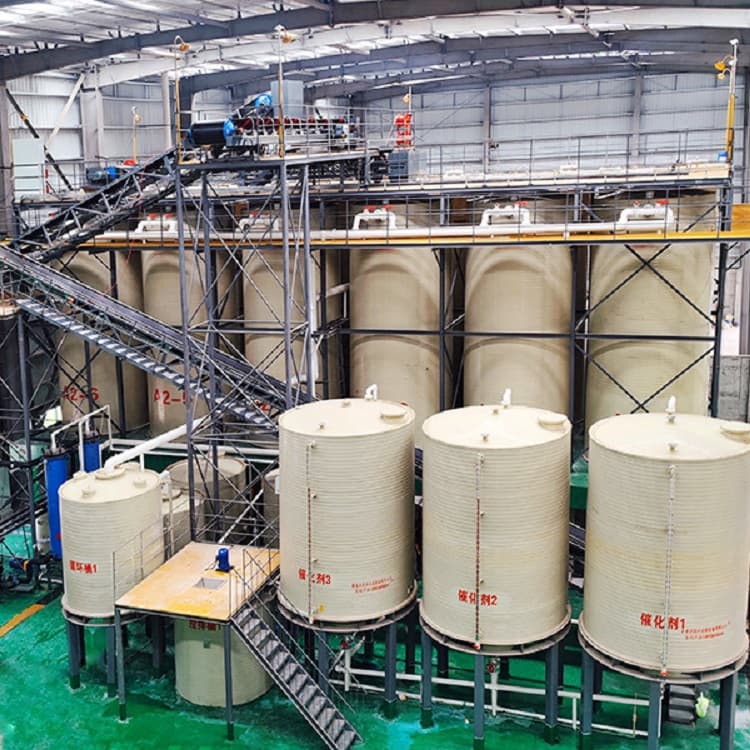
The mechanical processing line for low-iron quartz sand, in essence,串联s two mature processes into a single line: magnetic separation removes strongly and moderately magnetic iron minerals, while flotation separates feldspar, mica, and iron-bearing silicates. Each stage handles its own portion of the process without interfering with the other.
This is not a new invention, but rather a solution designed for marine sand where “a single method is insufficient.” It combines magnetic separation and flotation into a complete mechanical line for iron-reduction purification. This approach is frequently used for the pretreatment of glass sand for photovoltaic applications and high-purity quartz feedstock.
2. What Problems Does It Solve?
Anyone familiar with marine sand beneficiation has likely encountered the following scenarios:
- The raw sand has an excessively high Fe₂O₃ content. After running it through a magnetic separator once, the iron content does decrease, but it plateaus at a certain level—and adjusting the magnetic field strength is ineffective—because the remaining iron is not in magnetite but in mica and feldspar.
- Conversely, if flotation is performed first, the mica is floated out, but fine-grained magnetite and mechanical iron remain, preventing the SiO₂ grade from increasing.
- Processing in two separate stages, with repeated dewatering and transfer operations in between, drives up costs while reducing recovery rates.
The low-iron quartz sand mechanical processing solution is specifically designed for this type of ore where “a single method falls short.” Who needs it most? Processing plants that hold seabed sand mining rights, wish to move into the photovoltaic glass sand or high-purity quartz sectors, but have raw ore grades that are average to below average. There are many such mines along the coasts of Fujian, Guangdong, and Guangxi.
3. Core Components and Principles
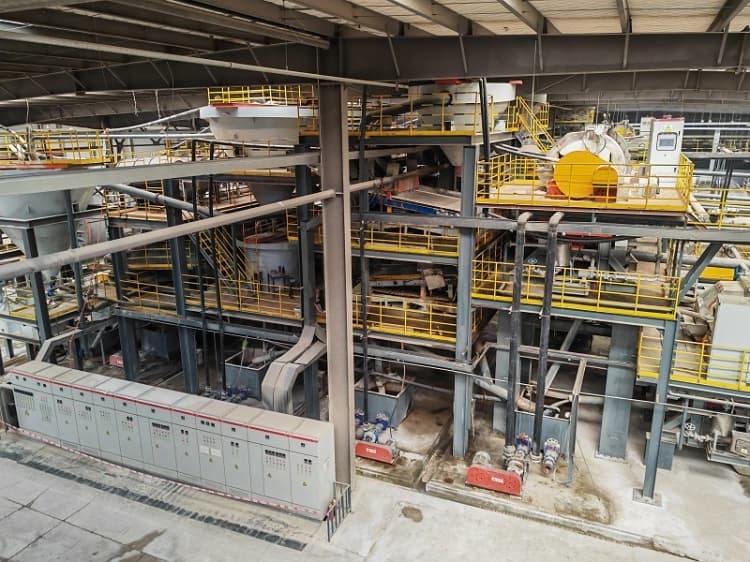
By breaking it down into these three sections, it becomes immediately clear what each stage handles.
Section 1: Pretreatment (Screening + Desliming)
Raw seawater sand ore is often mixed with shell fragments, coarse gravel, and fine silt. First, the ore passes through a trommel screen or linear screen to remove coarse particles and shells.The material then enters a hydrocyclone for desliming, with the fine silt processed separately. If this step is skipped, both subsequent magnetic separation and flotation will be compromised—the fine silt will coat the mineral surfaces, rendering the flotation reagents ineffective.
Second Stage: Magnetic Separation (Roughing + Concentration)
The purpose of magnetic separation is to remove strongly and moderately magnetic iron minerals. Magnetite, ilmenite, and limonite—commonly found in marine sand—are all captured during this stage.
- Roughing: A medium-to-high-field magnetic separator is used to first remove the bulk of the iron.
- Enrichment: A high-gradient magnetic separator is used to further recover fine-grained and weakly magnetic iron minerals.
The key parameters are magnetic field strength and slurry flow rate. If the magnetic field strength is insufficient, fine-grained hematite will not be captured; if the flow rate is too fast, the magnetic minerals will be washed away before they can be adsorbed.
Step 3: Flotation (Reverse flotation to remove feldspar and mica)
After magnetic separation, the iron content in the sand has been significantly reduced, but feldspar and mica remain. These two minerals contain aluminum and silicon, and their density is similar to that of quartz, so magnetic separation cannot remove them.
The flotation process involves using amine collectors under acidic or neutral conditions to float the feldspar and mica to the surface, while quartz remains at the bottom of the cell. This is called reverse flotation—floating away the unwanted minerals and retaining the desired ones.A flotation machine is used for roughing, while a flotation column is recommended for scavenging, as it produces a thicker foam layer and offers better selectivity.
The entire iron removal and purification process proceeds as follows:
- Step 1: Screening — Pass the raw seawater sand through a trommel screen to remove coarse gravel and shell fragments.
- Step 2: Desliming — The material is fed into a hydrocyclone to separate fine silt, preventing interference with subsequent magnetic separation and flotation.
- Step 3: Magnetic Separation (Roughing) — A medium-to-high-field-strength magnetic separator is used to remove strongly magnetic iron minerals.
- Step 4: Magnetic Concentration — A high-gradient magnetic separator is used to remove fine-grained, weakly magnetic iron minerals.
- Step 5: Reverse Flotation — An amine-based collector is added to the flotation cell to float feldspar and mica, while quartz remains at the bottom of the cell.
- Step 6: Flotation Concentration — Flotation columns are used to further reduce aluminum and iron content and improve selectivity.
- Step 7: Dewatering and Drying — Concentration, filtration, and drying to produce low-iron quartz sand.
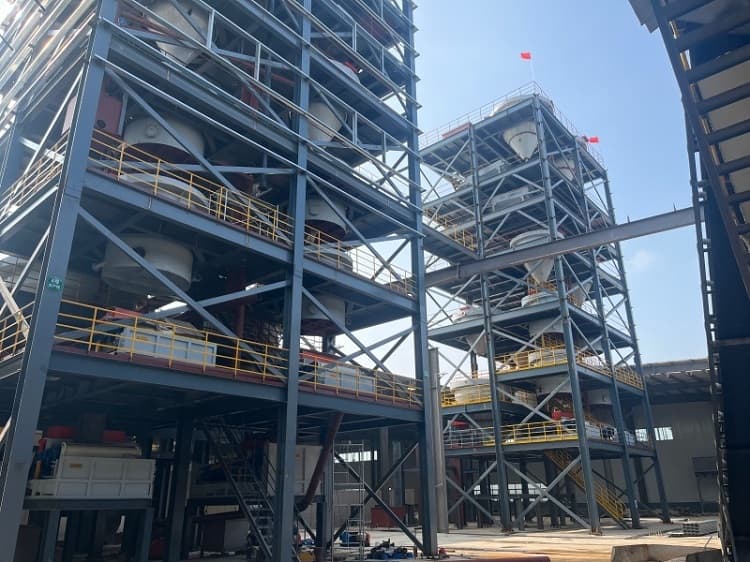
The entire process line is as follows: screening → desliming → magnetic separation (roughing) → magnetic separation (enrichment) → reverse flotation → flotation (enrichment) → dewatering and drying.
This mechanical processing line for low-iron quartz sand operates like two screens: magnetic separation screens out magnetic materials, while flotation screens out non-magnetic materials that resemble quartz. These two screening processes, one preceding the other, complement each other\'s shortcomings.
4. Why Choose It
Let\'s look at some real-world comparisons—no exaggeration.
Advantage 1: More thorough iron reduction
With magnetic separation alone, Fe₂O₃ typically reaches a certain level and cannot be reduced further. With the combined process incorporating flotation, Fe₂O₃ can be reduced even further. Don\'t underestimate this difference—the iron content requirements for photovoltaic glass sand are very strict, and magnetic separation alone often falls just short of meeting them.
Advantage 2: Higher SiO₂ Grade
Sand produced by magnetic separation alone has a limited SiO₂ grade. After flotation removes feldspar and mica, the SiO₂ grade can be raised to high-purity silicon levels. This grade has already reached the threshold for low-iron quartz sand.
Advantage 3: Recovery Rate Is Not Significantly Compromised
Some worry that adding a flotation stage will increase quartz loss. In actual production, while the recovery rate of the combined process is slightly lower than that of single magnetic separation, the higher concentrate grade makes it more cost-effective overall.
Advantage 4: Greater Tolerance for Ore Fluctuations
Iron and mica content fluctuate significantly across different sections of the seashore sand deposit. Stand-alone magnetic separation is sensitive to fluctuations in magnetic iron content, while stand-alone flotation is sensitive to fluctuations in mica content. In the combined process, the two stages operate independently; fluctuations in one stage can be offset by the other, resulting in more stable production metrics.
When it comes to iron reduction and purification, the challenge lies not in removing the iron, but in removing the iron without simultaneously removing quartz. The value of this solution lies precisely in striking this balance.
5. Applicable Scenarios and Limitations
Under What Conditions Does It Work Best?
- Raw ore with high Fe₂O₃ content and moderate SiO₂ grade, typical of medium- to low-grade sea sand.
- Iron minerals exist as discrete minerals such as magnetite, limonite, and ilmenite, rather than being embedded within the quartz crystal lattice.
- The mica and feldspar content is moderate, and the embedded particle size is 0.05 mm or larger.
- The ore consists primarily of medium- to fine-grained particles.
When Is It Not Recommended?
- Iron is primarily present as ferrosilicate or in the form of inclusions, making it unrecoverable by either magnetic separation or flotation.
- The Fe₂O₃ content in the raw ore is already very low; adding flotation would be superfluous, and the costs would not be recouped.
- The mica and feldspar content is very low, making the flotation circuit economically unfeasible.
- In areas with water shortages or where reagent supply is inconvenient, the flotation stage will increase management difficulties.
Frankly speaking, the biggest concern with this low-iron quartz sand processing line is that the “ore may not be suitable.” We recommend conducting a process mineralogy analysis and small-scale trials first to confirm that the ore properties are compatible before scaling up the process; it is not advisable to skip the trial phase entirely.
6. Implementation
Step 1: Sampling and Process Mineralogy Analysis
Collect representative ore samples and perform multi-element chemical analysis, XRD, and MLA. Clarify three key aspects: the form of iron, the content of mica and feldspar, and the degree of quartz liberation. This step doesn\'t cost much, but it can save you a lot of unnecessary expenses down the line.
Step 2: Small-Scale Testing
Conduct magnetic separation and flotation condition tests in the laboratory. Integrate the two stages into a continuous process to achieve target performance metrics. Thorough testing in this phase lays a solid foundation for subsequent scale-up.
Step 3: Process Design
Based on the test results, determine: the number of magnetic separation stages; the number of rough and concentrate stages in flotation; how to treat the intermediate product; and how to utilize the return water. For sea sand processing plants, the generally recommended configuration is “one rough and one concentrate stage of magnetic separation + one rough, one concentrate, and one scavenger stage of flotation.”
Step 4: Equipment Selection
- Magnetic Separation: Use vertical ring high-gradient magnetic separators for roughing and electromagnetic slurry magnetic separators for concentrating.
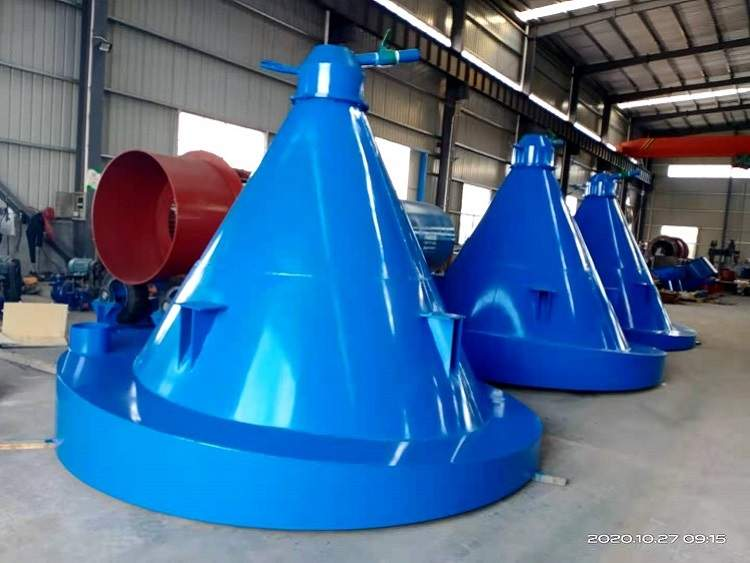
- Flotation: Use aerated mechanically agitated flotation cells for roughing, and flotation columns for concentration.
- Auxiliary Equipment: Hydrocyclones, thickeners, and ceramic filters.
Step 5: Installation and Commissioning
After the equipment is installed, conduct a water test first, followed by a mineral test. In the magnetic separation section, focus on adjusting the magnetic field strength and flow velocity; in the flotation section, focus on adjusting the pH and reagent dosage. The commissioning period generally lasts several weeks.
Step 6: Performance Evaluation and Optimization
After continuous operation for a period, evaluate the three key indicators: Fe₂O₃, SiO₂, and recovery rate. Once standards are met, the plant enters normal production, with parameters fine-tuned subsequently based on changes in the ore.
The timeline from sampling to production varies depending on the project\'s scale. The critical stages are the testing and commissioning phases, which require patience and cannot be rushed.
7. Common Questions
Generally, magnetic separation is performed first. Magnetic separation removes the bulk of the iron upfront, reducing the load on the flotation process and lowering reagent consumption. If the raw ore contains exceptionally high levels of mica, flotation first may be considered; however, for most marine sand deposits, starting with magnetic separation is the more reliable approach.
It depends on the processing capacity. One machine can be used for each of the rough and fine separation stages, or two machines can be operated in parallel for rough separation. High-gradient magnetic separators have limited processing capacity, so large-scale processing plants may need to operate multiple units in parallel in the rough separation stage.
Amine collectors are the main cost component. With an optimized reagent regimen, consumption can be kept under control. Recycling return water can also reduce specific reagent consumption.
The mechanical processing line for low-iron quartz sand is primarily designed to produce raw material at the refined silicon grade. To produce high-purity quartz, additional deep purification steps—such as acid washing and chlorination roasting—must be added downstream. This line can be considered a pretreatment stage.
Magnetic separation tailings consist mainly of iron minerals and can be considered for comprehensive recovery. Flotation tailings consist of feldspar and mica and can be used as raw materials for building materials. Tailings treatment plans should be considered during the design phase.
8 About Us
We specialize in the design of iron-reduction and purification processes for marine sand-type quartz feedstock, providing end-to-end services ranging from process mineralogy analysis, small-scale testing, and process design to equipment selection, installation, and commissioning. The low-iron quartz sand mechanical processing line solution is one of our proven process routes developed specifically for coastal marine sand deposits.
If you own a marine sand deposit and want to determine whether this low-iron quartz sand mechanical processing line solution is suitable for your ore, you can start by conducting a process mineralogical analysis and small-scale trials. Once the properties of the ore are clear, the appropriate solution will naturally become apparent.