


How to Configure a Machinery Line: FAQs on the Process for Purifying Quartz Sand from Granite-Based Manufactured Sand
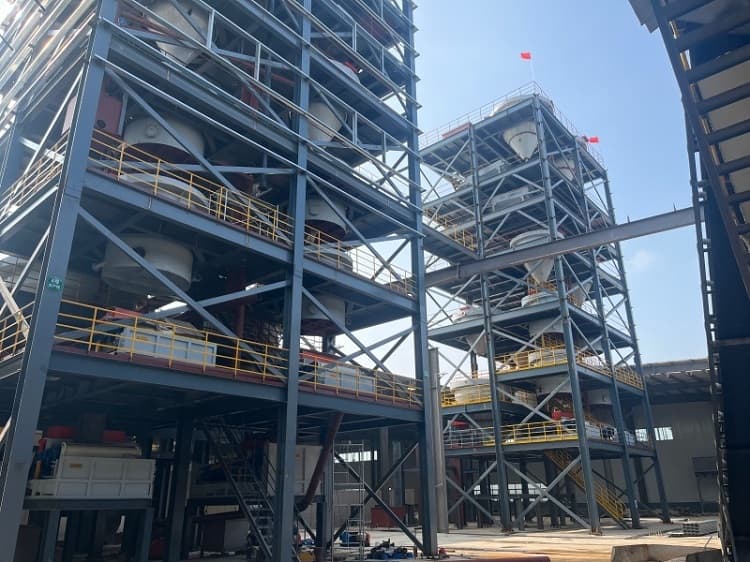
How to configure a mechanical production line for low-iron quartz sand is the most frequently asked question in Q&A sessions regarding the purification of quartz sand from granite-based manufactured sand. First, the conclusion: reducing iron content and achieving purification are the core objectives. The configuration of the mechanical production line depends on the properties of the raw ore and the intended product specifications; there is no one-size-fits-all template.For the granite-based manufactured sand production route, there are already relatively mature combinations of process units in the industry that can be referenced—grinding and liberation, weak-to-strong magnetic iron removal, flotation separation of feldspar and mica, and acid washing for deep purification. Among these, high-gradient magnetic separation is responsible for removing mica, tourmaline, and hornblende.However, when it comes to implementing a specific mechanical processing line design for low-iron quartz sand, the process must still be tailored based on the raw ore data.
I. Properties of the Raw Ore: The Starting Point for a Low-Iron Quartz Sand Processing Line Design
When purifying quartz sand from granite-based manufactured sand, the first step is not to select equipment, but to thoroughly understand the raw ore.Quartz content, the proportion of feldspar and mica, and the form in which iron is present—these three factors directly determine the basic direction of the low-iron quartz sand processing line design. Whether iron is present within mica flakes or as an independent mineral results in significantly different process routes for iron reduction and purification. Without conducting a process mineralogy analysis, subsequent equipment configuration will amount to trial and error.
In engineering practice, the standard procedure for this step is to conduct mineral processing tests upfront: use spectral analysis, microscopic observation, and multi-element chemical analysis to determine the distribution of impurities, then perform comparative testing of multiple scenarios in the laboratory to assess whether magnetic separation can meet iron-reduction requirements, whether flotation must be introduced, and to what extent acid leaching can reduce iron content.In addition to recommending a process flow and expected purity targets, the test report should include a list of equipment selections and a preliminary budget, allowing for a direct transition to process design. Skipping this step and proceeding directly to drawing production makes it difficult to guarantee successful implementation. The configuration of the mechanical line depends first and foremost on what the test data reveals.
II. Iron Occurrence: The Deciding Factor for the Combination of Iron-Reduction and Purification Equipment
The core of a mechanical processing line design for low-iron quartz sand is iron reduction and purification, and the key lies in determining the form in which the iron is present.
If iron is embedded in mica flakes, the grinding fineness must prioritize the liberation of individual mica particles; consider using gravity separation or classification to remove the mica before magnetic separation. If iron exists as a separate mineral, the grinding fineness can be appropriately coarsened, and strong magnetic separation can be applied directly, keeping the process as short as possible.
Magnetic separation is the primary method for iron reduction, but a higher magnetic field strength is not necessarily better; it must be determined based on the form in which the iron is present. The conventional configuration uses a flat-bed magnetic separator for roughing and a vertical ring high-gradient magnetic separator for scavenging and concentrating to remove weakly magnetic minerals;For black-spot impurities such as tourmaline and amphibole—which are weakly magnetic or have densities close to that of quartz—magnetic separation alone is insufficient for removal; a combination of high-gradient magnetic separation and flotation is required. Removing heavy minerals via gravity separation beforehand can reduce the load on the magnetic separation process.The flotation stage is responsible for separating quartz from feldspar and mica; the selectivity of the reagent system directly determines operational stability at scale. A flotation reagent system optimized for separating quartz from feldspar, mica, and iron-bearing minerals can achieve highly efficient separation under neutral conditions and serves as the technical foundation for using flotation purification as an alternative to acid leaching.Only when all stages are properly coordinated can stable iron reduction and purification be achieved. The configuration of the mechanical processing line, in this context, is reflected in the sequence of equipment operations and the distribution of processing loads.
III. Product Focus: The End Goal of the Low-Iron Quartz Sand Processing Line
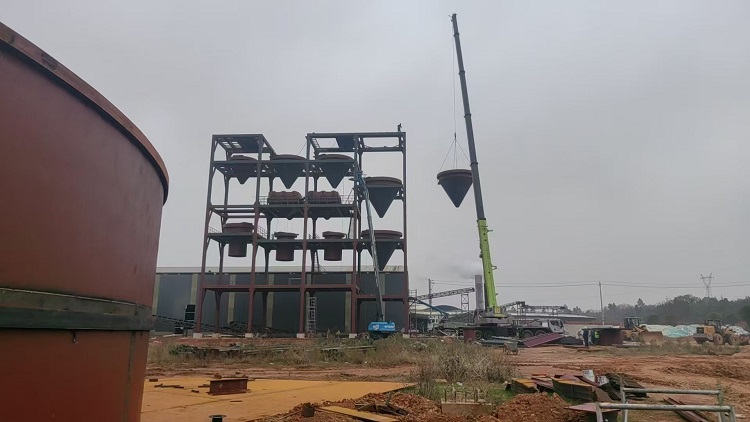
Whether producing glass sand or panel-grade sand, the target grades differ, resulting in significant variations in the configuration of low-iron quartz sand mechanical line solutions.
Glass sand has strict iron requirements; therefore, sufficient margins must be built into the grinding and magnetic separation stages, and classification precision must also be ensured.The typical process for photovoltaic glass sand and ultra-white glass sand involves crushing, multi-stage screening, cascaded magnetic separation, and flotation purification. Flotation replaces acid leaching to achieve low-iron control while avoiding the environmental pressures associated with acid leaching.The requirements for sheet glass sand are relatively less stringent; the focus is on maintaining whiteness, removing black spots, and controlling particle shape. The process typically involves washing, flat-bed magnetic separation, flotation to remove tourmaline and amphibole, and precision classification. The process can be appropriately simplified to increase throughput.
It is not recommended to aim for the highest grade in a single step; each additional piece of equipment adds to operational pressure, and achieving a comprehensive balance is more important than simply piling on equipment.In areas with strict regulations on waste acid discharge, prioritize magnetic separation combined with flotation to replace traditional acid washing; where budgets are limited, prioritize maximizing the role of physical separation, with chemical purification serving as a backup. The length of the mechanical processing line for low-iron quartz sand is determined by the target product specifications.
IV. Process Combination: A Modular Breakdown of Mechanical Line Configuration
When configuring a mechanical processing line, the process is broken down into several combinable modules, derived from both the feed ore and the target product.
Crushing and Grinding Section. Jaw crushers are used for coarse crushing; cone crushers or impact crushers for medium and fine crushing; rod mills for grinding to prevent over-grinding and preserve particle shape; and ball mills for fine grinding. The grinding fineness should meet the requirements for single-particle liberation—finer is not necessarily better.
Scrubbing and Desliming Section. High-performance scrubbers are paired with high-efficiency agitation tanks to target surface iron films and clay content. For high-grade products, scrubbing agents can be introduced to enhance stripping, thereby reducing the load on subsequent magnetic separation and flotation processes.
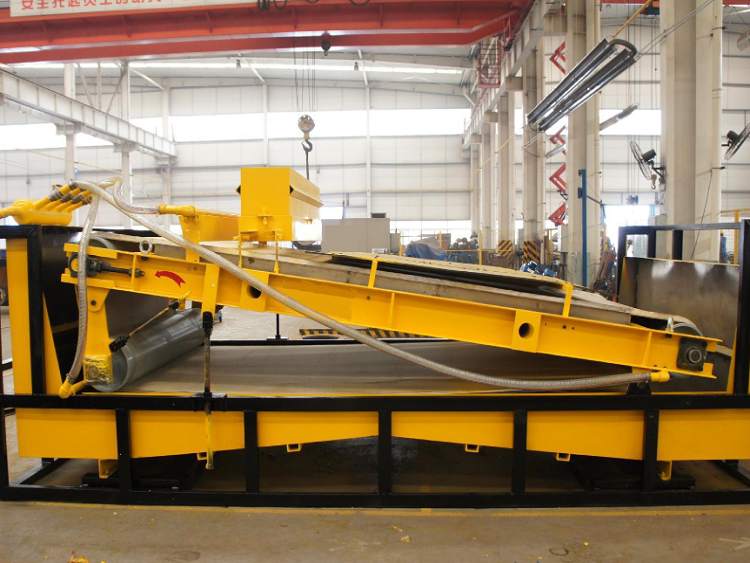
Magnetic Separation and Iron Removal Section. Flat-bed magnetic separators are used for roughing, vertical ring high-gradient magnetic separators for scavenging and concentrating, and electromagnetic slurry magnetic separators for supplementary processing. Together, they form a tiered magnetic separation and iron removal configuration to remove weakly magnetic iron-bearing minerals.
Flotation Purification Section. Aerated mechanically agitated flotation cells equipped with automated dosing systems separate quartz from feldspar and mica, while specifically removing tourmaline and hornblende black spots. This is the core process in flotation purification, serving as an alternative to acid leaching.
Gravity Separation and Classification Section. Hydraulic classifiers, spiral chutes, and high-frequency vibrating screens utilize density differences to remove heavy minerals while controlling the particle size distribution of the product.
Acid Leaching and Purification Section. Acid leaching reactors, equipped with counter-current scrubbing towers, waste acid neutralization systems, and negative-pressure absorption towers for fluoride-containing exhaust gases, deeply dissolve iron and aluminum impurities from surfaces and fissures; environmental protection systems must be designed in tandem.
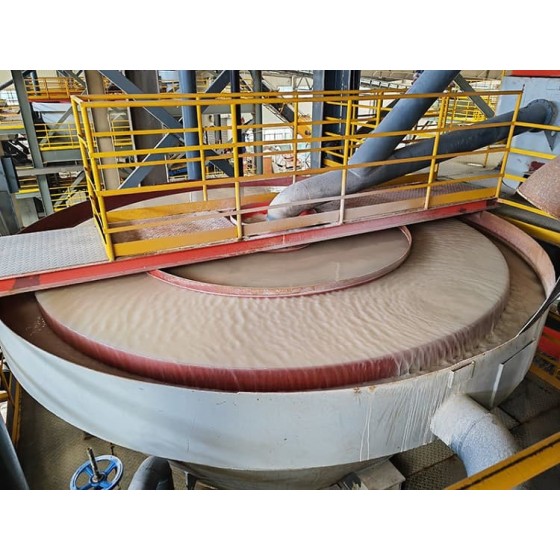
Dehydration and Powder Processing Section. Thickening tanks, filter presses, dewatering screens, and dryers complete the dehydration process; for silicon micropowder production, additional equipment includes air-jet mills, ultrafine agitation mills, and precision classification and spheronization systems.
The essence of configuring a mechanical production line lies in selecting suitable units from these segments and assembling them into an integrated process tailored to the raw ore and final product—rather than simply stacking equipment based on an inventory list.
V. Common Misconceptions: Pitfalls in Low-Iron Quartz Sand Processing Line Designs
Misconception 1: Skipping trials and proceeding directly to equipment selection. Without data from representative ore samples, any equipment selection lacks a solid basis, posing the highest risk of failing to meet performance standards after the line is built.
Misconception 2: Blindly pursuing high magnetic field strength. Field strength must be determined based on the form in which iron is present; excessively high field strength not only increases energy consumption but may not necessarily improve iron removal efficiency.
Misconception 3: Overloading the system with equipment to achieve high grade. Grade is determined by the natural characteristics of the ore; pursuing unrealistic targets will only increase operational pressure.
Misconception 4: Delaying the design of environmental protection systems. The treatment of waste acid and exhaust gases from acid leaching-related processes must be designed in tandem with the main process; adding these systems later often leads to corrective actions and production shutdowns.
Misconception 5: Design is Disconnected from Equipment. Insufficient collaboration between process engineers and mechanical engineers can easily lead to discrepancies between drawings and actual equipment dimensions, hindering the successful commissioning of the entire line.
VI. Testing and Calculations: The Ultimate Basis for Mechanical Line Configuration
There is no one-size-fits-all solution for iron reduction and purification. The sequence—conducting tests first, determining the process next, and finally selecting equipment—must not be reversed.The duration of mineral processing trials depends on the complexity of the ore; for ores with complex properties or those requiring high-purity products, scaled-up trials or chemical synthesis verification may be necessary. From the start of trials to final production, the overall cycle for a typical project ranges from several months to over a year, during which design and equipment manufacturing can be reasonably interleaved to shorten the total project duration.
Q&A on the process for purifying quartz sand from granite-based manufactured sand: Ultimately, it boils down to one thing—whether a mechanical line solution for low-iron quartz sand is suitable depends on the comprehensive balance between the raw ore, the product, and operating costs. Only after selecting the correct route for iron reduction and purification does the configuration of the mechanical line become meaningful.
If you\'d like to further discuss the configuration of mechanical production lines for iron reduction and purification, please provide data on the raw ore and your target product specifications. Based on this information, we can assess the technical direction for a low-iron quartz sand production line solution.