






Silica Sand Acid Leaching and Purification Process and Production Line Configuration: A Comprehensive Analysis from Acid Systems to Production Line Layout
The acid washing and purification process for silica sand, as well as the configuration of the production line, must be comprehensively tailored to the conditions of the raw sand, the target purity, and environmental requirements. Even within the realm of quartz sand acid washing, the acid systems, reactor materials, and waste liquid treatment capacities required for producing slab-grade sand versus photovoltaic-grade sand are often on entirely different scales.The length of the quartz sand acid washing and purification process route depends on the state of the impurities, while the complexity of the quartz sand acid washing production line configuration depends on the purity targets and environmental constraints. Below, we will break down the process layer by layer, starting with the acid solution system and working up to the overall line layout.
I. Overview of This Article
-
The quartz sand acid system determines the upper limit of impurity removal; mixed acid systems typically outperform single-acid systems
-
Reactor materials and heating methods affect equipment lifespan and operating costs
-
The configuration of a silica sand acid washing production line forms a closed loop centered on “feeding—acid washing—deacidification—water washing—wastewater treatment”
-
Different types of raw ore and purity targets correspond to different quartz sand acid leaching and purification process routes
II. The Role of Acid Washing and Purification in Quartz Sand Processing
Quartz sand purification follows two distinct routes: physical and chemical. Scrubbing, magnetic separation, gravity separation, and flotation are physical purification methods, primarily designed to remove individually dissociated impurity minerals and surface deposits; quartz sand acid washing is a chemical purification method that achieves deep impurity removal through chemical reactions between the acid solution and impurities.
The distinction between the two is quite clear. Physical purification is effective against impurities on the particle surface but has limited effect on iron, aluminum, potassium, and sodium trapped within the quartz crystal lattice or in fissures; the quartz sand acid washing process can handle these impurities, though at the cost of higher expenses and the need for waste liquid treatment.In actual production lines, these two methods are often used in combination: physical purification is performed first to remove most impurities, followed by acid washing to complete deep impurity removal.
The decision to use acid washing depends primarily on two factors: the proportion of inclusions in the raw sand and the target product\'s requirements for iron and aluminum content.In cases where surface iron is the primary impurity and purity requirements are not high, physical purification combined with mild acid washing is sufficient; in cases where there are many inclusion impurities and high purity is required, the silica sand acid washing purification process is an indispensable step.
III. How to Select a Silica Sand Acid System
Oxalic acid was the first acid leaching agent to be widely used. It reacts with iron oxide to form soluble iron oxalate complexes, which are effective at removing surface iron contamination. It is relatively safe to operate and involves moderate difficulty in waste liquid treatment. Its limitation lies in its limited effect on impurities inside inclusions; relying solely on oxalic acid makes it difficult to reduce iron content to very low levels.
Hydrofluoric acid operates through a different mechanism. It dissolves the silica on the quartz surface, forming microscopic etched channels on the particle surface that expose the inclusions. Its dosage must be strictly controlled; excessive amounts can lead to over-dissolution of the quartz itself, affecting particle size and yield.
In actual production, mixed acid systems are commonly used.A combination of nitric acid, hydrochloric acid, and hydrofluoric acid is common: hydrofluoric acid opens pathways to the inclusions, while hydrochloric acid and nitric acid dissolve metal oxides; oxalic acid or other complexing agents chelate free iron ions to prevent their re-precipitation in subsequent processes.This synergistic effect is key to improving the impurity removal efficiency of the silica sand acid leaching system.
There is no universal formula for the proportions. When impurities consist mainly of surface iron, the proportion of oxalic acid can be appropriately increased; when there are many inclusion impurities, hydrofluoric acid is indispensable, but its dosage must be used with caution.The overarching principle of the silica sand-acid system is to minimize the use of hydrofluoric acid as much as possible while achieving the target purity, thereby reducing environmental impact and equipment corrosion.
IV. Temperature, Time, and Agitation Conditions
The acid leaching reaction is temperature-sensitive. At room temperature, the reaction rate between oxalic acid and iron oxide is slow, prolonging the production cycle; appropriately raising the temperature can significantly accelerate the reaction, but excessively high temperatures lead to increased acid vaporization, a heavier burden on acid mist treatment, and accelerated equipment corrosion.Temperature is typically controlled within a range that balances efficiency and cost; specific values are determined based on the individual silica sand acid leaching system.
Reaction time also requires careful consideration. Insufficient time results in incomplete leaching of impurities; excessive time increases energy consumption, reduces production capacity, and may also affect particle size. In production, reaction time is often adjusted in conjunction with acid solution concentration, temperature, and stirring intensity.
Agitation or fluidization operations must not be overlooked.The acid solution must maintain constant contact with fresh quartz surfaces, and reaction products must be promptly removed from the particle surfaces; otherwise, a layer of reaction products will form, hindering further reaction. Moderate agitation promotes uniform reaction, but excessive agitation intensifies particle friction, leading to over-grinding. The degree to which these conditions are optimized directly determines the lower limit of effectiveness for the silica sand acid leaching and purification process.
V. Selection of Reactors and Core Equipment
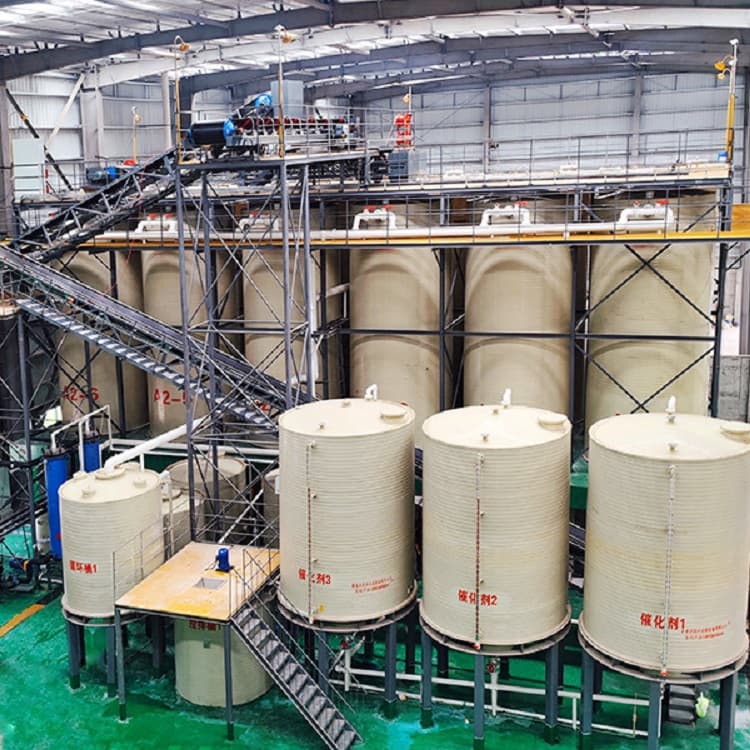
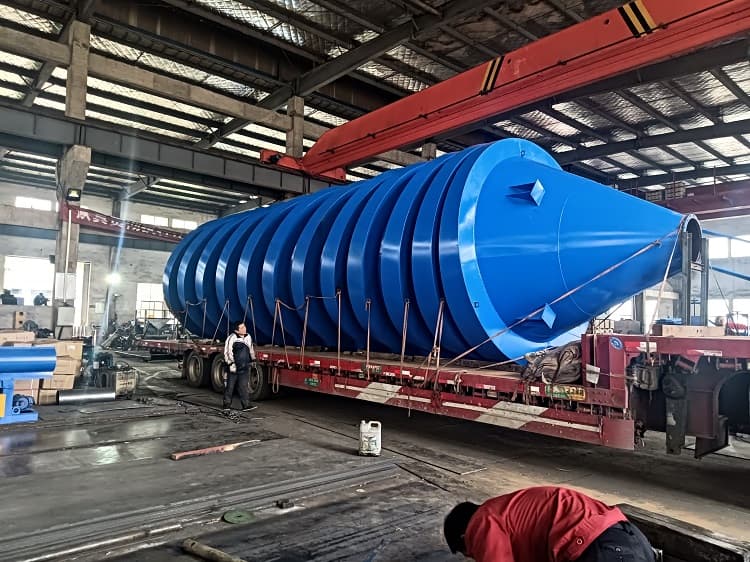
The reactor is the core equipment in a silica sand acid washing and purification production line; its material and structure directly affect the equipment\'s service life and operational stability.
The reactor vessel typically uses carbon steel or stainless steel as the pressure-bearing layer, lined with acid-resistant material. The selection of the lining requires a comprehensive consideration of acid resistance, temperature resistance, and installation difficulty. PTFE linings offer excellent corrosion resistance but are more expensive; PP linings are less expensive but have a relatively limited upper temperature limit.Selection should be based on a comprehensive assessment of the type of acid solution, reaction temperature, and budget.
The primary heating methods are jacket heating and electric heating. Jacket heating using thermal oil provides uniform temperature distribution and is suitable for larger-volume reactors; electric heating has a relatively simple structure and is more commonly used in small- and medium-sized production lines. The heating method affects energy consumption patterns and temperature control accuracy and must be considered in conjunction with local energy conditions.
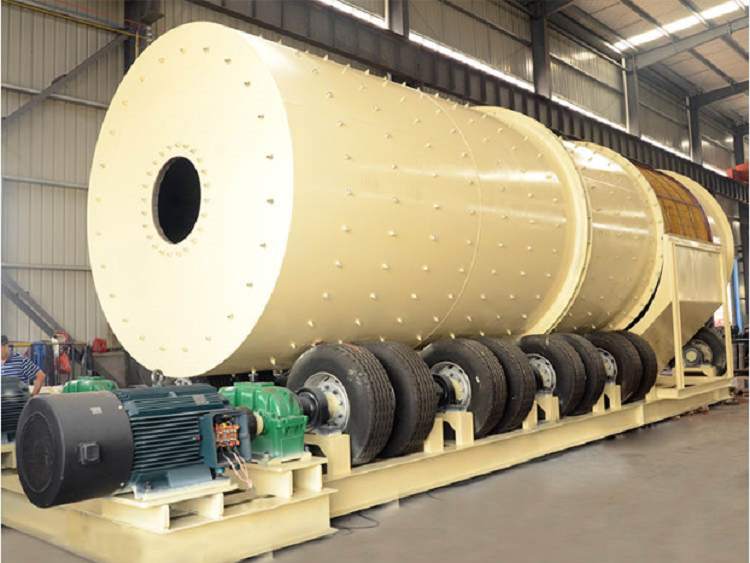
There are also various options for agitation types. Paddle-type agitation is suitable for large-volume reactors, but the shaft seal is a weak point that requires regular maintenance and replacement; rotary-type reactors have fewer sealing points and a lower risk of acid mist leakage, but require higher drive power as reactor size increases. Both types have their respective applications, and neither is inherently superior to the other.
VI. What Are the Components of a Silica Sand Acid Washing Production Line?
A typical silica sand acid washing and purification production line generally includes the following stages.
Feeding and Metering. Raw sand is metered by a weighing feeder and then fed into the reactor. Metering accuracy directly affects the precision of the acid-to-sand ratio and is a fundamental step in ensuring batch consistency.
Acid Washing Reaction. Sand and acid solution are added to the reactor in the specified proportions, heated to a set temperature, and allowed to react for a certain period under stirring or rotary conditions. Acid fumes are vented from the top of the reactor, treated via alkali spray absorption, and discharged in compliance with standards.
Deacidification and Acid Recovery. After the reaction is complete, the acid solution is separated from the sand via vacuum filtration or pumping. The separated acid solution is transferred to a storage tank, where fresh acid is added before it is recycled for reuse. The efficiency of acid recovery directly affects acid consumption per metric ton of sand and must be given priority consideration during the design phase of the silica sand acid washing production line.
Wash and Neutralization. The quartz sand, after acid removal, still contains residual acid and must be washed with clean water and neutralized with an alkaline solution until it reaches a neutral pH. The wash water is collected and fed into the wastewater treatment system.
Dehydration and Drying. After washing, the refined sand passes through dehydration equipment to reduce its moisture content, then enters drying equipment to be processed to a moisture level below the specified limit, after which it is stored or packaged.
Wastewater Treatment. Acidic wastewater enters an equalization tank for homogenization; neutralizing agents are added to adjust the pH. After sedimentation, the supernatant is reused, while the sludge is dewatered via filter press and transported off-site for disposal. Against the backdrop of increasingly stringent environmental regulations, this process has become an indispensable part of the configuration for quartz sand acid washing and purification production lines.
VII. The Effect of Acid Washing on Quartz Particle Size
During the acid washing process, the particle size distribution of quartz may change, primarily due to two factors: the dissolution of the quartz surface by the acid solution and friction between particles during agitation.
Particle size changes caused by dissolution are typically minor, especially when the use of hydrofluoric acid is properly controlled. Over-grinding caused by agitation warrants greater attention; the higher the agitation intensity and the longer the reaction time, the more pronounced the increase in the fine particle fraction.For applications with strict requirements on particle size distribution, the configuration of the silica sand acid washing production line must consider optimizing the agitation method and include appropriate desliming or classification steps after acid washing.
Another approach to controlling particle size variation is to pre-classify the raw sand before acid washing, separating excessively fine particles in advance to prevent them from becoming even finer during the quartz sand acid washing process.
VIII. Waste Liquid Reuse and Environmental Compliance
The treatment of acid-washing waste liquid is an indispensable step in the silica sand acid-washing and purification process. Waste liquid primarily consists of recovered acid generated during the deacidification process and acidic wastewater generated during the washing process.
The concentration of metal ions dissolved in the recovered acid increases with each recirculation cycle; therefore, the reuse ratio must be carefully controlled to prevent adverse effects on the impurity removal efficiency of subsequent batches. Some production lines are equipped with acid purification systems that remove certain metal ions through adsorption or precipitation, thereby maintaining the acid\'s activity.
Acidic wastewater is typically treated using neutralization and precipitation: lime or caustic soda is added to adjust the pH, causing metal ions to form hydroxide precipitates. The supernatant is reused or discharged after meeting regulatory standards, while the sludge is transported off-site for disposal after being dewatered via filter press.As environmental protection requirements become stricter, some project locations have set higher standards for wastewater reuse; therefore, the design of silica sand acid washing production lines must include provisions for the corresponding treatment capacity.
For production lines using hydrofluoric acid, special attention must be paid to the treatment of fluoride-containing wastewater; fluoride ions require specialized treatment to meet discharge standards, and these costs should be factored into the planning phase of the silica sand acid washing production line.
IX. Adapting the Quartz Sand Acid Washing and Purification Process to Different Types of Raw Ore
Quartz sand from different mining sites varies significantly in impurity content and occurrence conditions; accordingly, the silica sand acid washing and purification processes and production line configurations must be adjusted accordingly.
For raw sand primarily contaminated with surface iron, acid leaching is relatively straightforward; a process using oxalic acid alone or oxalic acid combined with a small amount of hydrofluoric acid can meet the requirements. The reactor volume can be appropriately reduced, batch processing times are relatively short, and the wastewater treatment system can also be simplified accordingly.
Raw sand containing primarily inclusional impurities requires a stronger acid leaching system and a longer reaction time. The amount of hydrofluoric acid used depends on the degree of inclusion development, and the reactor material and acid mist treatment system must also be correspondingly reinforced.
Raw sand with high iron and aluminum content may require multiple acid leaching cycles or the incorporation of a pretreatment process.Some production lines employ a calcination-water quenching pretreatment to induce microcracks in the inclusions before proceeding to the acid washing stage, thereby improving impurity removal efficiency. The configuration of silica sand acid washing production lines using this combined process is more complex, and equipment investment and operating costs increase accordingly.
X. Differences in Silicon Sand Acid Washing and Purification Process Routes Based on Product Positioning
The requirements for silica sand acid washing and purification processes vary significantly among panel-grade sand, photovoltaic sand, and electronic-grade high-purity sand—this is the primary consideration when configuring a silica sand acid washing production line.
For sheet glass sand, the key objectives are maintaining whiteness, removing black spots, and controlling particle shape. The common process involves scrubbing combined with magnetic separation, followed by flotation to remove black spot impurities such as tourmaline and hornblende. Acid washing is primarily used to control residual iron on the surface and to neutralize and rinse away residual acid.For photovoltaic sand and ultra-white glass sand, the key focus is low iron content, with the process primarily involving multi-stage magnetic separation combined with flotation; in scenarios with strict environmental regulations, flotation can replace acid leaching to reduce the burden of treating fluoride-containing wastewater and waste acid.For electronic-grade high-purity sand, the key is extreme impurity removal. Conventional magnetic separation and acid washing have nearly reached their limits, requiring an enhanced calcination–acid leaching coupled process; for even higher purity targets, a chemical synthesis route must be pursued.
The most prudent approach to configuring a silica sand acid washing production line is to first clarify the target product, and then determine the position and weight of the acid washing section within the entire line.
XI. Areas of Technical Support
We can provide the following technical support regarding silica sand acid washing and purification processes and production line configuration:
-
Feasibility Analysis for Raw Sand Purification: Based on raw sand laboratory test data, determine the appropriate silica sand acid leaching system and process route
-
Recommendations for Acid Washing Process Parameters: Provide guidance on parameters such as acid solution ratios, temperature, and duration based on the target purity level
-
Production Line Configuration Plan: Plan reactor selection, acid solution recovery methods, and wastewater treatment capacity based on processing capacity and site conditions
-
Pilot and Intermediate-Scale Testing Support: Provide experimental validation prior to equipment selection to mitigate investment risks
-
Environmental Compliance Recommendations: Assist in planning waste liquid treatment and reuse solutions in accordance with local discharge requirements
If you would like to discuss specific plans for the silica sand acid leaching and purification process and production line configuration, please submit raw sand test data and target product specifications. We will conduct a tailored analysis based on this information and provide preliminary recommendations.The feasibility of the silica sand acid washing and purification process and the configuration of the quartz sand acid washing production line ultimately depends on striking a balance among the raw sand data, product specifications, and environmental regulations.